
Description
Harmonized Rhythm and Visual Balance in a Young Pied Cockatiel Pair
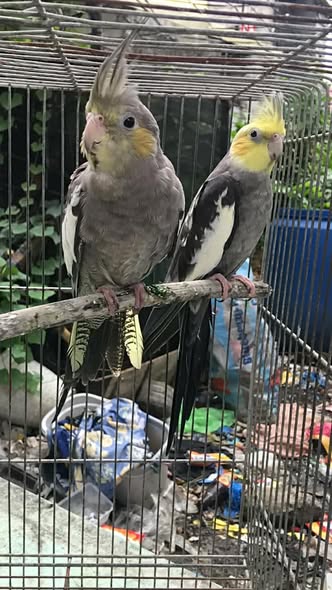
Aleron and Miralise represent the essence of a young pied cockatiel pair whose bond forms naturally through shared routines, synchronized exploration and mutual reassurance. This pied cockatiel pair displays soft mosaic brilliance, with Aleron carrying bold charcoal arcs while Miralise exhibits warm cream and pale-yellow accents. Their contrasting yet complementary patterns enhance their visual harmony, and moreover, their movements reveal a shared sensitivity that strengthens their connection day by day.
When perched together, Aleron often stands slightly higher, offering subtle protection, while Miralise leans closer with quiet confidence. Their emotional alignment emerges through soft chirps, mirrored head tilts and slow, synchronized steps across their perch. Consequently, they radiate calm partnership and young-adult maturity.
Feather Pattern Synergy and Early Pair-Bond Development in a Pied Cockatiel Pair
Aleron’s darker pied sections form sharp, distinguished borders, whereas Miralise’s markings soften into delicate transitions. Together, their patterns feel balanced and aesthetically complete. The pied cockatiel pair expresses their bond through shared preening moments, during which they smooth feathers around each other’s crest and neck with gentle precision.
Visual Complementarity
Their feather colors shift subtly under natural light, creating a polished tableau of movement and tone.
Early Pair-Bond Formation
Because they were raised together, their trust is foundational, stable and emotionally consistent.
Emotional Intelligence and Interpersonal Harmony Within the Pied Bonded Duo
Cooperative Awareness
Both birds exhibit strong situational awareness. When one becomes curious about a sound or object, the other follows with measured attention.
Mutual Reassurance
Miralise often emits soft melodic murmurs, prompting Aleron to respond with quiet echoing chirps that reinforce their pair unity. Furthermore, these exchanges reveal their emotional reciprocity.
Comfortable Proximity
Their feathers remain smooth and relaxed when near one another, indicating confidence and peace.
Training Progress, Shared Coordination and Behavioral Precision Among the Pied Pair
Dual Step-Up Alignment
Aleron steps up with crisp determination, while Miralise follows with elegant, lighter footing. As a pied cockatiel pair, they perform joint step-up exercises with impressive synchronization.
Paired Perch Navigation
They glide along their perch with parallel pacing, shifting in natural alignment as if reading each other's rhythm.
Vocal Duet Formation
Aleron’s tonal patterns lean brighter and sharper, while Miralise contributes rounder, softer whistles. Together, they create a charming duet-like soundscape.
Daily Pair Rhythm, Shared Curiosity and Environmental Comfort
Morning Unity
At sunrise, they awaken with soft, layered calls that blend into a tender chorus. Their crest positions mirror each other’s as they prepare for the day.
Midday Exploration
They enjoy paired enrichment activities: lightweight puzzle trays, textured palm leaves and sensory-safe chew pieces. Additionally, they often take turns investigating new objects before exploring them together.
Evening Calm
As daylight fades, they nestle into close proximity, smoothing each other’s feathers and producing faint, comforting murmurs.
Nutrition for Feather Integrity, Color Saturation and Pair Harmony
Balanced Pair Diet
Their meals include pellets, leafy greens, shredded root vegetables, bell pepper slivers and small seed portions. This diet ensures vibrant coloration and long-term health.
Shared Enrichment Feeding
Berry clusters, vegetable threads and dual foraging trays support cooperative interaction and cognitive stimulation.
Cognitive Development, Shared Learning and Intellectual Growth
Enrichment Tools Built for Duo Engagement
Perch ladders, twin foraging mats and paired rattan clusters promote teamwork and mental challenge.
Memory Expansion and Pattern Interpretation
They recall training cues, identify familiar voices and adapt quickly to new routines. Moreover, their learning aligns naturally, allowing them to reinforce each other’s growth.
Ideal Home Environment for A Young Pied Cockatiel Pair
Suitable Household Dynamics
This pied cockatiel pair thrives in homes that value emotional connection, consistent routines and calm interaction. They suit families, couples or individuals seeking a visually beautiful and emotionally cohesive bonded duo.
Habitat Structure, Perch Arrangement and Comfort Design
Spacious Interior Layout
Their enclosure should include multi-textured perches, rope pathways, soft shreddables and open space for flight hops.
Pair Comfort Zones
Alder branches, rope rests and shared platform perches encourage cooperative roosting.
Bond-Building Methods, Reinforcement Rituals and Pair Development
Paired Interaction Sessions
Speaking with both birds simultaneously strengthens their emotional unity. Additionally, offering treats to both birds evenly reinforces equality and trust.
Reward-Based Pair Training
Millet sprays reinforce cooperative behaviors and help synchronize step-up sequences.
Health Verification, Documentation and Owner Support
Veterinary Screening
Both birds demonstrate clear respiration, stable hydration, aligned feathers and negative PBFD/Polyoma results.
Ownership Materials
Included are DNA certificates, hatch documents, veterinary files, pair behavior guidance and feeding plans.
Travel Preparation, Stress Reduction and Pair Arrival Experience
Carrier Conditioning
They complete short, calm crate-acclimation sessions together, reducing stress through shared reassurance.
Arrival Kit
Their kit includes dietary instructions, enrichment suggestions and a settling plan designed for bonded pairs.
Why Aleron and Miralise Represent an Exceptional Pied Cockatiel Pair
Harmonized Temperament and Visual Elegance
Their coordinated movements, emotional alignment and mosaic feather patterns create an extraordinary partnership.
Long-Term Companionship Potential
Their shared intelligence, duet-style vocal development and bonded trust promise a deeply rewarding relationship.
⭐ Buyer Locations Actively Searching for Pied Cockatiel Pairs
Buyers searching for a young Pied Cockatiel pair often prefer balanced companionship, synchronized routines, and predictable daily behavior. Because Aleron and Miralise are both eight months old, they appeal to caretakers who want a compatible duo that is settled yet still adaptable.
Across North America, buyer interest appears around San Luis Obispo Garden District, California, where paired cockatiels are favored for gentle indoor companionship. Meanwhile, searches also arise from Brevard Residential Foothills, North Carolina, where owners often choose pairs to encourage natural social balance. In Canada, interest becomes visible near Elgin County Countryside, Ontario, particularly among households preparing shared aviary spaces.
Within the United Kingdom, buyer intent develops in Bourton-on-the-Water Outskirts, Gloucestershire, where cockatiel pairs are popular for calm homes. At the same time, interest across continental Europe grows in Guimarães Suburban Belt (Portugal), Pavia Residential Quarter (Italy), Ravensburg Garden Slopes (Germany), Cluses Valley Edge (France), and Besalú Interior Plain (Spain). Buyers in these regions often assess harmony, shared routines, and space needs.
Additional searches originate from Uppsala Southern District (Sweden), Doesburg Green Belt (Netherlands), Ptuj Upper Riverside (Slovenia), Huy Suburban Hills (Belgium), Senec Garden Area (Slovakia), and Walenstadt Lakeside (Switzerland). Together, these locations reflect steady interest in socially compatible cockatiel pairs.
Beyond Europe, buyers in Woodend Residential Range, Victoria (Australia) and Te Awamutu North Suburbs, Waikato (New Zealand) often search for Pied Cockatiel pairs suited for calm, long-term homes. Meanwhile, in the Middle East, interest appears from Dubai Hills Residential (UAE), Rumaithiya Family District (Kuwait), and Al Markhiya North (Qatar), where paired small parrots are preferred for indoor living.
In Asia, buyer searches also originate from Kamakura Coastal Residential (Japan), Upper Bukit Panjang North (Singapore), and Sai Kung Hillside (Hong Kong). In these markets, harmony and temperament consistency strongly influence purchasing decisions.
⭐ Frequently Asked Questions — Pied Cockatiel Pairs (Young Stage)
How do young cockatiel pairs structure their day?
Pairs often mirror each other’s routines. As a result, feeding, rest, and play become naturally synchronized.
Does keeping a pair reduce stress-related behavior?
Often, yes. Because companionship is constant, reliance on human attention usually decreases.
How much space does a young cockatiel pair need?
Moderate space works well. In addition, multiple perches help prevent crowding.
Can a paired setup suit quieter households?
Yes. When routines stay gentle, paired cockatiels adapt smoothly to calm environments.
Are Aleron and Miralise suitable for long-term shared placement?
Absolutely. Their matched age and balanced interaction support stable companionship.
Internal Link
Understanding Social Dynamics In Parrot Pairs



Reviews
There are no reviews yet.