
Description
Harmonized Temperament, Early Sensory Confidence & Emotional Gentleness
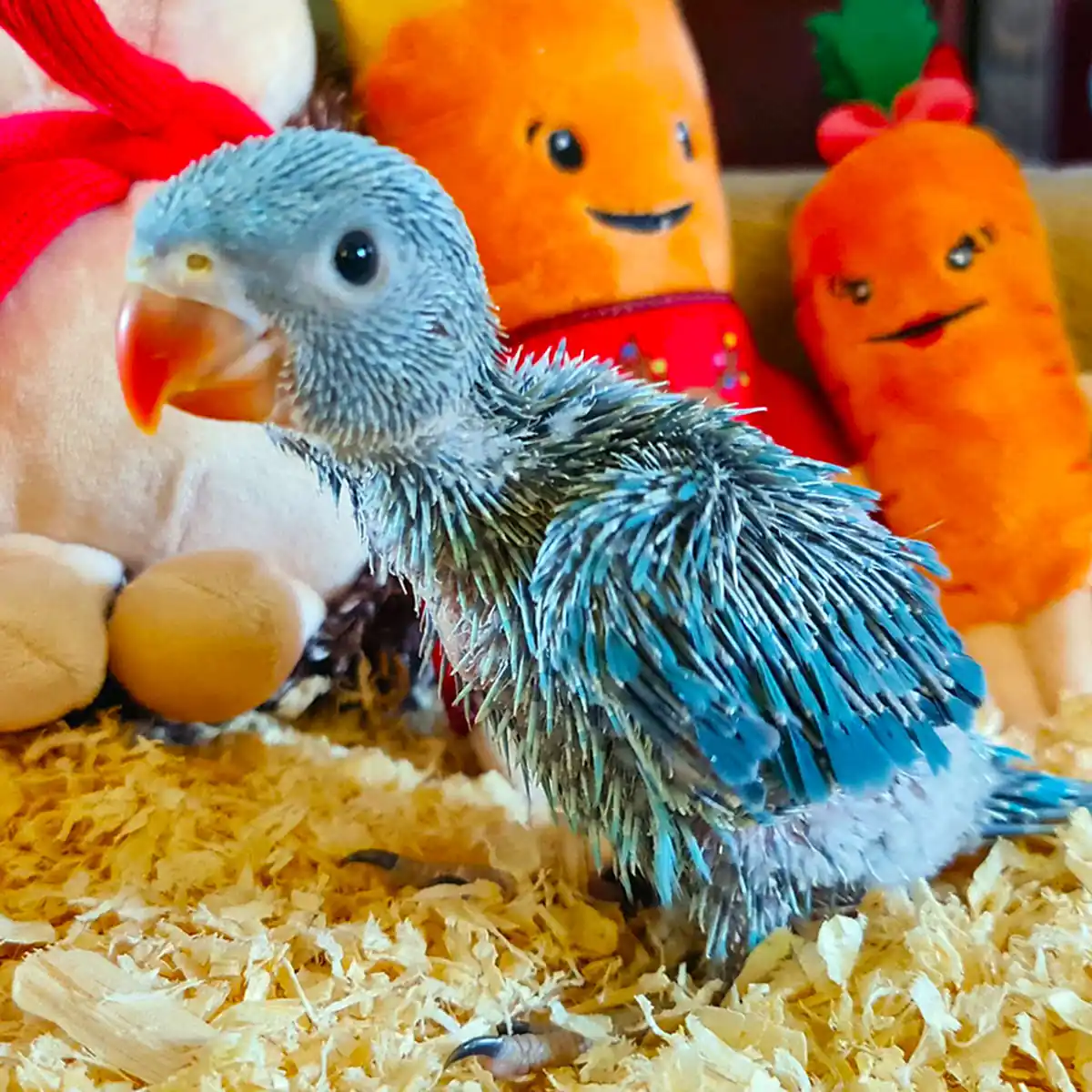
Elara embodies the delicate radiance and thoughtful intelligence seen only in a baby female Indian Ringneck parakeet, combining gentle attentiveness with a calm, curious exploration of her environment. Because she was hand-fed from infancy, she has developed a deep comfort with human presence, responding with steady eye contact, light chirps and small body tilts that reflect her growing trust.
Although still at the beginning of her cognitive formation, she already recognizes tones, familiar footsteps and feeding rhythms, showing an impressive early sensitivity toward social cues—an invaluable trait for families seeking long-term companionship.
This baby female Indian Ringneck parakeet arrives with early foundations that allow her new owners to shape her personality into a confident, loving adult bird.
Feather Development, Color Transition & Visual Expression
Baby-Soft Pastel Coat
Elara’s current feathers are soft to the touch and carry a muted pastel green that will gradually deepen into more vibrant layers as her juvenile plumage transitions.
Growing Wing Coverage
Her wings show excellent symmetry, with each feather aligning neatly—a reliable sign of balanced nutrition and strong early skeletal formation.
Tail Extension Markers
Her tail quills are growing proportionally, reflecting good hydration and responsive muscle development.
Eye Luminescence
Elara’s eyes are notably clear and expressive, revealing a combination of curiosity and emotional steadiness.
Awakening Intelligence, Social Warmth & Early Behavior Formation
Because Elara is still in her prime imprinting period, her behaviors develop rapidly yet gracefully. Moreover, her personality leans toward gentle awareness rather than high-energy reactions, making early training feel fluid and naturally paced.
Soft-Sound Recognition
She recognizes repeated voice patterns, turning her head slightly toward familiar tones.
Meaningful Eye Contact
Elara holds brief but sincere visual attention, a strong early sign of deep bonding potential.
Quiet Comfort Chirps
Her chirps are soft and slow, demonstrating a calm temperament perfect for new owners.
Feather Positioning
She keeps her chest feathers relaxed during human interaction—an indicator of security and low stress.
Early Training, Behavioral Structuring & Human Integration
Because of her gentle disposition, Elara adapts quickly to structured yet soft training routines.
Guided Step-Up Sensitivity
Under slow hand guidance, she lifts her foot carefully, showing trust and balance.
Perch Confidence
She grips infant perches with improving strength, and she transitions smoothly between short perch distances.
Rhythm Response
When exposed to repeated whistle intervals, Elara attempts soft emotional notes in return—a precursor to speech development.
Tactile Familiarization
She gently touches safe objects with her beak, testing textures with curiosity rather than fear.
Daily Rhythm, Comfort Needs & Safe Growth Environment
Because baby ringnecks rely heavily on stable structure, Elara’s daily cycle is designed around predictable, reassuring activities.
Morning Adjustment
She begins the day with soft wing stretches and calm chirps, preparing for her first warm feeding session.
Midday Sensory Strengthening
Elara explores baby-safe enrichment items such as:
Light rattle toys
Soft rope fragments
Early-stage foraging squares
Pastel-colored sensory balls
These stimulate cognitive interest and gentle muscle development.
Evening Decompression
As the lights dim, she slows her movements, settling into calm breathing patterns that reflect emotional safety and physical comfort.
Nutrition Supporting Feather Glow, Neural Growth & Healthy Weaning
Elara follows a structured nutritional routine designed to enhance feather brightness, brain formation and digestive stability.
Hand-Feeding Formula
Premium formula provides:
Calcium balance
Energy for feather production
Immune support
Hydration stability
Gradual Weaning Path
She will slowly transition into:
Finely chopped leafy greens
Soft pellet crumbs
Mildly mashed vegetables
A minimal seed introduction
Hydration Monitoring
She receives hydration support through formula consistency adjustments and careful temperature regulation.
Cognitive Expansion, Memory Formation & Future Intelligence Potential
Like many high-quality female ringnecks, Elara shows early signs of sharp memory development and emotional intelligence.
Object Recognition
She remembers previously introduced toys, approaching them without hesitation.
Voice Familiarity
Elara differentiates between soothing and energetic tones, reacting with appropriate calmness.
Early Learning
She responds to slow rhythmic tapping, tilting her head in synchronized curiosity.
Attention Span Growth
Her focus is increasing steadily, making her ideal for hand-taming families.
Ideal Home Setting for a Baby Female Indian Ringneck Parakeet
Elara thrives best in homes that maintain gentle routines and soft environmental tones.
Suitable for:
Beginners seeking a manageable, calm baby parrot
Families with consistent schedules
Individuals wanting to raise a gentle female companion
Homes with time for bonding sessions
Not ideal for:
Loud, chaotic environments
Homes without temperature control
Owners unable to commit to early training and bonding
Habitat Layout, Early Comfort Tools & Environmental Design
Safe Enclosure
Baby-safe enclosure with soft flooring to prevent foot strain.
Temperature Regulation
Warm, steady airflow—never direct drafts.
Perch Variation
Low-height perches with gentle textures for safe foot development.
Enrichment Rotation
Rotate sensory objects every few days to stimulate curiosity without overwhelming her.
Trust Building, Emotional Reinforcement & Interaction Techniques
Elara responds exceptionally well to:
Soft Voice Patterns
Calm tones help her form secure emotional associations.
Gentle Perch Transfers
Slow, predictable movements build trust.
Reward-Based Encouragement
Tiny millet particles offered occasionally deepen her confidence.
Routine Predictability
Repeated daily structure improves her emotional steadiness.
Veterinary Screening, Documentation & Safety Assurance
Elara undergoes full diagnostics to confirm her strong health foundation.
Health Check Includes:
PBFD test
Polyoma test
Feather symmetry evaluation
Hydration status
Weight progression chart
Documentation Provided:
DNA certificate
Hatch card
Veterinary report
Feeding plan
Socialization guide
Travel Conditioning, Arrival Preparation & Transition Comfort
Because baby ringnecks require gentle transition care, Elara’s travel preparation includes:
Carrier Familiarization
Short daily sessions help her gain confidence inside her padded travel container.
Comfort Kit
She travels with:
A familiar soft cloth
Feeding schedule
Transition guidelines
Environmental comfort notes
Why Elara Represents an Exceptional Baby Female Indian Ringneck Parakeet
Calm Emotional Nature
Elara’s gentleness is exceptional even among baby ringnecks.
High Learning Potential
She responds quickly to voice cues, soft whistles and early mimicry steps.
Visual Beauty
Her pastel feathers and bright eyes already reveal future elegance.
Bonding Readiness
She is deeply imprintable and forms strong emotional connections with her primary caregiver.
Her early strengths make her one of the most promising companion-ready baby females available.
⭐ Buyer Locations Actively Searching for Indian Ringneck Parakeets
Buyers searching for a baby female Indian Ringneck Parakeet often prioritize early bonding, calm temperament development, and a bird young enough to adapt smoothly to household routines. Therefore, interest commonly comes from homes planning hands-on socialization rather than delayed training.
Across North America, buyer activity appears around Palo Alto Residential Neighborhoods, California, where indoor companion birds are often raised with structured interaction. Additionally, searches arise from Chapel Hill Suburban Communities, North Carolina, where families frequently look for young parakeets suitable for long-term companionship. In Canada, interest becomes visible near Waterloo Residential Districts, Ontario, particularly among owners preparing quiet, enrichment-focused environments.
Within the United Kingdom, buyer intent develops in Henley-on-Thames Residential Edges, Oxfordshire, where Indian Ringneck Parakeets are chosen for their intelligence and manageable size. Meanwhile, interest across continental Europe grows in Estoril Residential Zones (Portugal), Arezzo Town Outskirts (Italy), Heidelberg Garden Districts (Germany), Annecy Residential Slopes (France), and Sitges Interior Neighborhoods (Spain). Buyers in these regions often compare age, handling readiness, and adaptability.
Moreover, searches originate from Lund Residential Belt (Sweden), Hilversum Suburban Estates (Netherlands), Novo Mesto Residential Areas (Slovenia), Dinant Garden Districts (Belgium), Pezinok Residential Zones (Slovakia), and Zug Suburban Neighborhoods (Switzerland). Consequently, demand remains steady in regions known for responsible companion-bird ownership.
Beyond Europe, buyers in Wahroonga Residential Areas, New South Wales (Australia) and Nelson Suburban Zones (New Zealand) often search for Indian Ringneck Parakeets suitable for early socialization. Meanwhile, interest in the Middle East appears from Jumeirah Village Residential Communities (UAE), Sabah Al Salem Suburban Districts (Kuwait), and Al Dafna Residential Zones (Qatar), where smaller parrots fit well into indoor living.
In Asia, buyer searches also originate from Meguro Residential Wards (Japan), Upper Serangoon Housing Estates (Singapore), and Sha Tin Residential Districts (Hong Kong). In these markets, female Indian Ringneck Parakeets are valued for gentle disposition, adaptability, and long-term companionship potential.
⭐ Frequently Asked Questions — Indian Ringneck Parakeet (Baby Female Stage)
How does a baby female Indian Ringneck usually behave?
At this stage, behavior appears gentle and observant. Therefore, calm environments help build confidence naturally.
Are female Ringnecks easier to socialize as babies?
Often, yes. However, consistency and patience remain more important than gender alone.
How often should a baby Ringneck be handled?
Short, regular sessions work best. Moreover, frequent calm contact helps prevent fear responses.
Do baby Indian Ringnecks need quiet surroundings?
They benefit from them. Consequently, low-noise environments support smoother adjustment.
Is Elara suitable for family or first-time parakeet homes?
Yes. Her age and species make her well-suited for patient homes willing to invest in early bonding
Internal & Outbound Resources
Internal Link:
https://exoticbirdsfarm.online/blog/baby-female-indian-ringneck-care-guide
Outbound Link:
https://psittaculaworld.org/indian-ringneck-development-stages


Reviews
There are no reviews yet.