
Description
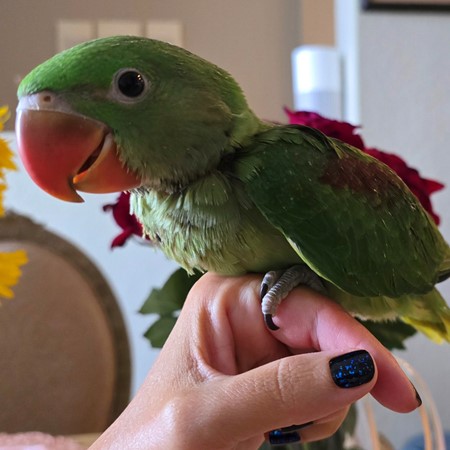
Emerald Feather Beginnings, Gentle Emotional Response & Confident Juvenile Presence
Rhylo represents the graceful charm and stable emotional presence associated with a well-raised baby male Alexandrine parakeet, yet he expresses these qualities with unusual clarity even at his young age. Because he has been nurtured through consistent hand-feeding and daily caregiver interaction, he presents an obedient calmness that makes early bonding exceptionally easy. His feather shafts, soft chirps and curious glances reveal the early formation of a confident, intelligent companion.
His juvenile behavior demonstrates a rare balance of curiosity and steadiness. Although still in formation, he processes new environments with quiet interest rather than unpredictable reactions. This makes the baby male Alexandrine parakeet particularly suitable for families, beginners and enthusiasts seeking a tame, well-adjusted baby parrot with long-term potential.
Feather Development, Wing Structure & Classic Alexandrine Characteristics
Emerald Body Tone
Rhylo’s soft green down is transitioning into deeper emerald hues, a hallmark of good nutrition and natural Alexandrine genetics.
Broad Wing Formation
Alexandrines develop wider wing structure than Ringnecks; Rhylo already shows this early physical trademark.
Tail Feather Alignment
His developing tail feathers grow in symmetrical alignment, indicating strong skeletal support.
Facial Contour & Eye Clarity
His expressive dark eyes reflect alertness, emotional steadiness and strong neural development.
Calm Temperament, Awakening Intelligence & Sensory Engagement
Because Alexandrines grow into highly intelligent parrots, Rhylo’s early-stage behaviors already show remarkable learning capacity.
Soft Vocal Curiosity
He produces gentle chirps, breathy notes and rhythmic peeps that show the beginning of vocal experimentation.
Sensory Testing
He gently touches objects with his beak to test texture, an early sign of coordinated cognitive development.
Steady Eye Contact
Rhylo maintains gentle eye contact during human speech, indicating early social responsiveness.
Positioning Awareness
He adjusts foot placement carefully on perches, demonstrating stable development.
Early Training, Juvenile Skill Growth & Hand-Raising Milestones
Calm Step-Up Responses
Rhylo steps onto the hand with gentle confidence, showing readiness for consistent training.
Perch Movement Coordination
He transitions between perches with improving balance and foot precision.
Rhythm Recognition
When exposed to simple whistle patterns, he tilts his head and returns soft notes in response.
Object Interaction
He explores objects by tapping, touching or softly nudging, strengthening problem-solving skills.
Daily Rhythm, Comfort Patterns & Emotional Structure
Morning Activity
He begins his day with light vocal warm-ups and wing stretches.
Midday Engagement
His favorite early-enrichment items include:
Soft chewable sticks
Light rattle toys
Small foraging trays
Smooth climbing textures
Evening Calm
As the lights dim, he settles, fluffs up slightly and transitions into his quiet state.
Nutrition, Weaning Development & Growth Support
Balanced Hand-Feeding Formula
Ensures feather development, bone strength and proper hydration.
Early Weaning Foods
Rhylo is gradually introduced to:
Soft vegetables
Micro greens
Mild pellets
Limited seeds
Hydration Awareness
Formula consistency is adjusted to maintain digestive stability.
Behaviour, Training & Breeder
As a professional avian facility offering a hand-raised Alexandrine parakeet for sale, we prioritise stable temperament, gentle socialisation and early cognitive shaping. Rhylo has been raised with daily handling, structured routines and controlled exposure, ensuring he matures into a confident, interactive companion. Whether buyers seek guidance on early Alexandrine training, first-time parrot ownership or long-distance bird transport, we ensure every chick is emotionally grounded, well-socialised and ready for smooth adaptation to a new home.
Ideal Home Setting, Environmental Structure & Compatibility
Great For:
First-time parrot owners
Families with children
Individuals seeking an intelligent companion
Hobbyists planning future training
Requires:
Gentle handling
Daily interaction
Stable household rhythm
Not suitable for homes with constant noise or erratic routines.
Enclosure Design, Safety Considerations & Early Comfort Planning
Appropriate Cage Size
A medium juvenile-safe enclosure promoting safety and growth.
Perch Surfaces
Soft wood textures encourage natural foot development.
Enrichment Rotation
Rotate toys every few days to support cognitive learning.
Light Bathing
Shallow water trays reinforce grooming habits.
Veterinary Evaluation, Documentation & Assurances
Rhylo undergoes comprehensive veterinary examination including:
PBFD test
Polyoma screening
Feather-growth assessment
Weight monitoring
Respiratory check
Ownership Documentation Provided:
DNA certificate
Vet report
Feeding guide
Training notes
Hatch card
Travel Preparation, Transport Safety & New Home Transition
Carrier Conditioning
Short familiarisation sessions maintain calmness during export.
Arrival Support Kit
Includes:
Comfortable perch wrap
Feeding instructions
Transition notes
Handling guidelines
Why Rhylo Represents an Exceptional Baby Male Alexandrine Parakeet
Strong Emotional Foundation
Calm, responsive and stable—ideal for any household.
High Learning Potential
Shows early promise in mimicry, pattern recognition and object learning.
Feather Strength & Classic Beauty
His green plumage is vibrant and developing symmetrically.
Future Versatility
Suitable as a family companion, trained pet or aviary prospect.
Rhylo offers exceptional quality in both temperament and developmental promise.
⭐ Buyer Locations Actively Searching for Alexandrine Parakeets
Buyers searching for a baby male Alexandrine Parakeet often look for early bonding potential combined with the promise of a larger, confident companion parakeet. Therefore, interest commonly comes from owners who appreciate the Alexandrine’s stronger build and calm intelligence compared to smaller parakeets.
Across North America, buyer activity appears around Saratoga Residential Neighborhoods, California, where spacious indoor setups support larger parakeet species well. Additionally, searches arise from Asheville Foothill Communities, North Carolina, where bird owners often favor Alexandrines for their composed temperament and long-term companionship. In Canada, interest becomes visible near Guelph–Puslinch Residential Zones, Ontario, particularly among keepers transitioning from Indian Ringnecks to larger parakeets.
Within the United Kingdom, buyer intent develops in Cheltenham Residential Edges, Gloucestershire, where Alexandrine Parakeets are frequently chosen by owners familiar with medium-sized parrots. Meanwhile, interest across continental Europe grows in Cascais Upper Residential Areas (Portugal), Lucca Garden Outskirts (Italy), Freiburg Green Districts (Germany), Annecy Valley Neighborhoods (France), and Sant Pol de Mar Interior Zones (Spain). Buyers in these regions often compare age, early handling progress, and adaptability.
Moreover, searches originate from Västerås Residential Belt (Sweden), Bussum Suburban Estates (Netherlands), Celje Residential Zones (Slovenia), Namur Hillside Districts (Belgium), Pezinok Garden Areas (Slovakia), and Wädenswil Lakeside Neighborhoods (Switzerland). Consequently, demand remains steady in regions known for responsible parakeet ownership.
Beyond Europe, buyers in Gordon Residential Areas, New South Wales (Australia) and Nelson Suburban Zones, New Zealand often search for Alexandrine Parakeets suitable for early socialization and long-term placement. Meanwhile, interest in the Middle East appears from Al Barsha Residential Communities (UAE), Salmiya Suburban Districts (Kuwait), and Al Wakrah Residential Zones (Qatar), where larger parakeets are preferred for their calm presence.
In Asia, buyer searches also originate from Setagaya Residential Wards (Japan), Upper Bukit Timah Housing Estates (Singapore), and Sai Kung Hillside Districts (Hong Kong). In these markets, baby male Alexandrine Parakeets are valued for intelligence, size, and future speech potential.
⭐ Frequently Asked Questions — Alexandrine Parakeet (Baby Male Stage)
How does a baby male Alexandrine Parakeet typically behave?
At this stage, behavior appears curious yet gentle. Therefore, calm handling supports confidence from an early age.
Are Alexandrine Parakeets harder to raise than Ringnecks?
They are larger. However, with consistency, their temperament often proves steadier and more composed.
Does a baby Alexandrine need daily handling?
Yes. Moreover, short, positive interaction sessions help build trust without overstimulation.
Can Alexandrine Parakeets learn to talk?
They can. Consequently, early exposure to calm speech supports later vocal clarity.
Is Rhylo suitable for owners new to Alexandrine Parakeets?
Yes. His baby stage allows patient owners to shape behavior gradually and confidently.
Internal Link:
https://exoticbirdsfarm.online/blog/baby-male-alexandrine-parakeet-care-guide
Alexandrine Parakeet — Wikipedia
https://en.wikipedia.org/wiki/Alexandrine_parakeet
Lafeber Veterinary Bird Guide
https://lafeber.com/vet/birds/

Reviews
There are no reviews yet.