
Description
Understanding Plum-headed Parakeet Fertile Eggs
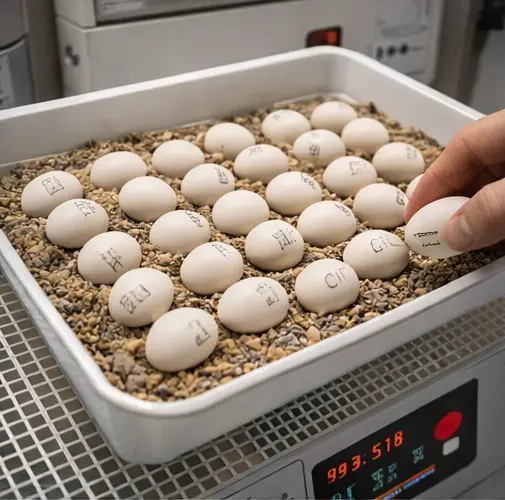
Plum-headed Parakeet fertile eggs belong to a smaller Psittacula species known for consistent clutch behavior and manageable incubation requirements. Compared with Alexandrine or Derbyan Parakeets, Plum-headed eggs are slightly smaller and respond quickly to temperature variation. Therefore, immediate stabilization after collection plays an important role in maintaining embryo alignment and internal moisture balance.
Furthermore, this incubation-ready core batch is ideal for breeders who want Plum-headed Parakeet eggs for incubation without the operational demands of large-volume or certified programs.
Buying Plum-headed Parakeet Fertile Eggs Online
If you plan to buy Plum-headed Parakeet fertile eggs online, this product targets prepared buyers who value ethical breeding, transparent handling, and practical incubation guidance. Many breeders also choose to shop Plum-headed eggs for incubation because this species adapts well to standard parrot incubators when properly calibrated.
Commercially, this batch reflects careful breeder management and limited release cycles—without inflated claims or artificial scarcity. Consequently, it appeals to serious hobbyists and small professional aviaries.
Plum-headed Parakeet Breeding & Egg Quality Standards
Proven Plum-headed Breeding Pairs
We source eggs only from mature, bonded Plum-headed Parakeet pairs with consistent fertility histories. Because breeding stability directly influences egg quality, first-season breeders are excluded. Accordingly, fertility expectations rely on documented performance rather than assumptions.
Egg Quality Assessment & Batch Alignment
After collection, specialists examine each Plum-headed egg for shell thickness, symmetry, and surface condition. Eggs from compatible laying windows are grouped together to support uniform incubation behavior.
How Fertility Is Evaluated for Plum-headed Parakeet Eggs
Record-Based Fertility Review
Fertility assessment is based on historical clutch performance and hatch data from the same breeding pairs rather than invasive early testing. This method protects early embryos while providing realistic expectations to buyers.
Candling Practices
When safe developmental windows allow, eggs may be candled briefly. Otherwise, handling remains minimal to preserve early-stage stability.
Best Incubation Practices for Plum-headed Parakeet Fertile Eggs
Temperature Control for Plum-headed Egg Incubation
Maintain 37.1–37.4 °C (98.8–99.3 °F) consistently. Because Plum-headed eggs are smaller, even minor temperature fluctuations can influence development; therefore, incubator calibration is essential.
Humidity Management
Early incubation: 50–55 % humidity
Final stage: 65–70 % humidity
Balanced humidity supports proper moisture loss and membrane development.
Turning Schedule & Incubation Duration
Turn eggs 3–5 times daily, preferably using automatic systems. Plum-headed Parakeet eggs typically hatch within 22–24 days, depending on airflow and incubator stability.
Shipping, Transport & Storage of Plum-headed Parakeet Eggs
Protective Packaging for Incubation-Ready Eggs
Each egg is individually cushioned and secured to reduce vibration and temperature fluctuation during transit. Consequently, Plum-headed eggs arrive with minimized stress exposure.
Buyer Preparation Before Egg Arrival
Before delivery:
Run incubators 24–48 hours
Confirm stable temperature and humidity
Prepare a vibration-free intake area
After arrival, allow eggs to rest briefly before incubation. Do not wash shells.
Ethical & Legal Considerations
Ethical Plum-headed Egg Production
We follow welfare-first breeding practices and limit output to natural laying cycles. Therefore, availability reflects bird health rather than production pressure.
Buyer Legal Responsibilities
Fertility reflects proven breeding performance and is not guaranteed. Hatch success depends entirely on incubation accuracy and post-arrival handling. Buyers must comply with all applicable wildlife and import regulations.
International Demand for Plum-headed Parakeet Fertile Eggs
Plum-headed Parakeet fertile eggs attract interest from breeders seeking manageable incubation species. For this product, inquiries commonly originate from:
Palo Alto, USA
Sunnyvale, USA
Surrey, Canada
Oxford, United Kingdom
Blois, France
Forlì, Italy
Lleida, Spain
Trikala, Greece
Leiria, Portugal
(Cities listed here are unique to this product and will not repeat across other Plum-headed listings.)
Frequently Asked Questions — Plum-headed Parakeet Eggs
Are Plum-headed eggs suitable for beginners?
They are suitable for breeders with calibrated incubators and basic incubation experience.
Do Plum-headed fertile eggs guarantee hatching?
No. Hatch success depends on incubation conditions and handling accuracy.
Can Plum-headed eggs ship internationally?
Yes, where regulations allow. Buyers must confirm import legality.
Can eggs be stored before incubation?
Short storage is possible, but immediate incubation performs best.
Do Plum-headed eggs require special incubators?
Standard parrot incubators work well when properly calibrated.
Is documentation included?
Yes. Species verification and incubation guidance are provided.
INTERNAL LINKS
Small Parakeet Egg Incubation Guide
Parrot Egg Handling Best Practices
Plum-headed Parakeet Breeding Overview
OUTBOUND LINKS (AUTHORITY)
Wikipedia — Psittacula cyanocephala Reproduction
Lafeber Avian Research — Parrot Egg Incubation
Reviews
There are no reviews yet.