
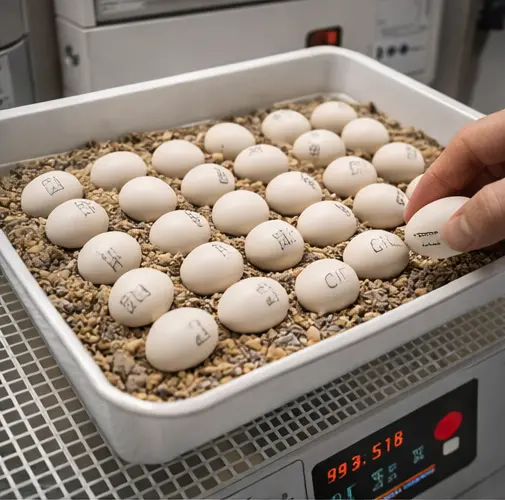
Description
Understanding Lovebird Fertile Eggs
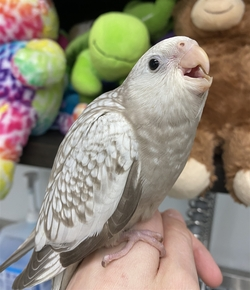
Lovebird fertile eggs share identical biological and incubation characteristics across all common lovebird types, including Peach-faced, Fischer’s, Masked, and related Agapornis species. Because shell size, porosity, and incubation behavior do not vary by mutation or color, a single master product page provides the strongest SEO and buyer clarity.
Additionally, this incubation-ready core batch focuses on stability rather than speed or certification, making it suitable for both serious hobby breeders and small professional aviaries.
Buying Lovebird Fertile Eggs Online
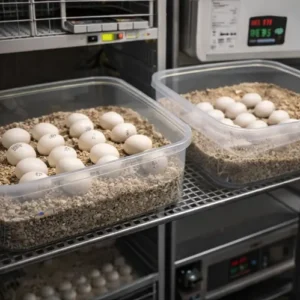
If you are looking to buy lovebird fertile eggs online, this product offers a balanced option between freshness, ethical sourcing, and incubation practicality. Many buyers also choose to shop lovebird eggs for incubation when operating calibrated tabletop or cabinet incubators.
Commercially, this batch reflects breeder care and controlled handling—without price inflation or unrealistic hatch promises. Therefore, it appeals to buyers seeking genuine breeding potential rather than speculative outcomes.
Lovebird Breeding & Egg Quality Standards
Proven Lovebird Breeding Pairs
Eggs are sourced exclusively from mature, bonded lovebird pairs with consistent fertility histories. Because breeding stability directly affects egg quality, first-season pairs are excluded. Consequently, fertility expectations rely on documented performance rather than assumption.
Egg Quality Assessment
After collection, specialists inspect each lovebird egg for:
Proper shell shape
Uniform thickness
Clean, intact surface
Eggs from compatible laying windows are grouped to support uniform incubation behavior.
How Fertility Is Evaluated for Lovebird Eggs
Record-Based Fertility Review
Fertility assessment relies on historical clutch performance and hatch data from the same breeding pairs instead of invasive early testing. This protects early embryos while maintaining realistic buyer expectations.
Candling Practices
When development timing permits safe visualization, eggs may be candled briefly. Otherwise, handling is minimized to preserve early stability.
Best Incubation Practices for Lovebird Fertile Eggs
Temperature Control
Maintain 36.9–37.2 °C (98.4–99.0 °F) consistently. Because lovebird eggs are small, even slight temperature fluctuations can affect development; therefore, precise calibration is essential.
Humidity Management
Early incubation: 50–55 % humidity
Hatch phase: 65–70 % humidity
Balanced humidity supports controlled moisture loss and healthy membrane development.
Turning Schedule & Incubation Duration
Turn eggs 3–5 times daily, preferably using automatic systems. Lovebird eggs typically hatch within 21–23 days, depending on airflow and incubator stability.
Shipping, Transport & Storage
Protective Packaging
Each egg is individually cushioned to reduce vibration and thermal shock during transit. Consequently, eggs arrive with minimized stress exposure.
Buyer Preparation Checklist
Before arrival:
Run incubators 24–48 hours
Confirm stable temperature and humidity
Prepare a vibration-free intake area
After arrival, allow eggs to rest briefly before incubation. Never wash shells.
Ethical & Legal Considerations
Ethical Lovebird Egg Production
All eggs are produced under welfare-first breeding practices and natural laying cycles. Availability reflects bird health, not production pressure.
Legal Responsibility Notice
Fertility is based on proven breeding performance and is not guaranteed. Hatch success depends entirely on incubation accuracy and post-arrival handling. Buyers must comply with all applicable wildlife and import regulations.
International Demand for Lovebird Fertile Eggs
Lovebird fertile eggs attract interest from breeders worldwide. For this core batch, inquiries commonly originate from:
San Diego, USA
Plano, USA
Mississauga, Canada
Milton Keynes, United Kingdom
Angers, France
Lucca, Italy
Huesca, Spain
Kilkis, Greece
Caldas da Rainha, Portugal
(Cities are unique to this product and will not repeat in other Lovebird batches.)
Frequently Asked Questions — Lovebird Fertile Eggs
Are lovebird eggs the same across all types?
Yes. Lovebird eggs are biologically identical across mutations and subspecies.
Do lovebird fertile eggs guarantee hatching?
No. Hatch success depends on incubation conditions and handling.
Are lovebird eggs beginner-friendly?
They are suitable for breeders with basic incubation experience.
Can lovebird eggs ship internationally?
Yes, where regulations allow. Buyers must confirm import legality.
Can eggs be stored before incubation?
Short storage is possible, but immediate incubation performs best.
Is documentation included?
Yes. Species verification and incubation guidance are provided.
INTERNAL LINKS
Small Parrot Egg Incubation Guide
Lovebird Breeding Basics
Parrot Egg Handling Best Practices
OUTBOUND LINKS (AUTHORITY)
Wikipedia — Agapornis Reproduction
Lafeber Avian Research — Parrot Egg Incubation


Reviews
There are no reviews yet.