
How Parrots Express Affection
How parrots express affection is often subtle, deeply emotional, and very different from how humans show love. Parrots do not rely on words or obvious gestures; instead, they communicate affection through behavior, body language, vocal cues, and trust-based actions. Understanding how parrots express affection allows owners to respond appropriately, avoid misunderstandings, and build relationships that are healthy rather than emotionally confusing or harmful.
This guide explains the most common ways parrots show affection, how to tell genuine trust from stress-based attachment, and how to encourage healthy emotional bonds. Learning how parrots express affection is a cornerstone of ethical ownership and a key subject in modern Parrot Care Guides.
Why Understanding How Parrots Express Affection Matters
Parrots are flock animals with advanced emotional intelligence. In the wild, affection plays a critical role in:
- Pair bonding
- Flock cohesion
- Conflict resolution
- Cooperative survival
In captivity, parrots transfer these emotional behaviors to humans. When affection signals are misunderstood, parrots may become over-bonded, anxious, aggressive, or hormonally frustrated. Understanding how parrots express affection helps prevent these issues while strengthening trust and emotional stability.
Affection is not about dominance or ownership—it is about safety, connection, and predictability.
How Parrots Express Affection Through Body Language
Relaxed Posture and Proximity
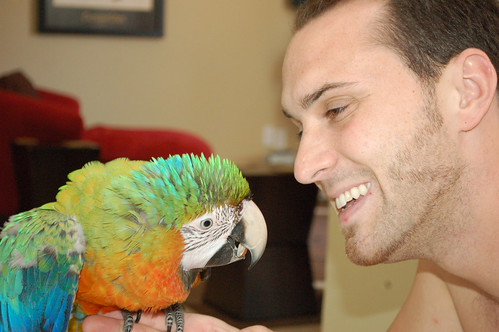
One of the clearest signs of affection is a parrot choosing to remain close to you. A relaxed parrot will perch nearby without signs of tension, fear, or hyper-alertness.
Indicators of affectionate body language include:
- Loose, natural posture
- One foot tucked while resting
- Calm feather positioning
- Willingness to remain near without restraint
This voluntary closeness is one of the most genuine ways parrots express affection.
Gentle Beak Interaction
Parrots often explore and communicate with their beaks. Affectionate beak behavior includes gentle touching, nibbling without pressure, or exploratory taps.
This should never involve pain. Gentle beak interaction reflects trust and comfort, not aggression.
Vocal Signs of Affection in Parrots
Parrots use sound to communicate emotional states.
Soft Chattering and Murmuring
Quiet vocalizations often indicate comfort and contentment. These sounds typically occur when parrots feel safe, relaxed, and emotionally secure.
Contact Calls With Calm Tone
Affectionate parrots may use soft contact calls to check in rather than loud, urgent screams. Responding calmly reinforces emotional reassurance.
Vocal affection is often misunderstood, which is why understanding sound-based communication alongside affection is essential and closely related to principles explained in Parrot Vocalization Guide resources.
Affection Through Trust-Based Behavior
Voluntary Step-Up
When a parrot willingly steps onto your hand without hesitation, it is demonstrating trust. Trust is one of the strongest expressions of affection in parrots.
Forced handling undermines affection. Choice strengthens it.
Allowing Vulnerability
Parrots are prey animals. When a parrot relaxes, preens, or rests in your presence, it is expressing emotional safety.
Affection is often quiet and understated rather than dramatic.
How Parrots Show Affection Through Preening
Preening is a powerful social behavior.
Mutual Preening (Allopreening)
In the wild, parrots preen bonded partners to strengthen social bonds. When a parrot gently preens your hair, beard, or clothing, it may be expressing social bonding.
However, excessive or obsessive preening directed at humans can indicate emotional confusion or hormonal bonding.
Understanding boundaries is critical for keeping affection healthy.
The Difference Between Affection and Over-Bonding
Not all affectionate behavior is healthy. Over-bonding occurs when a parrot becomes emotionally dependent on one person.
Healthy Affection Includes:
- Comfort with short separations
- Willingness to interact with others
- Calm emotional responses
Unhealthy Over-Bonding Includes:
- Screaming when one person leaves
- Aggression toward others
- Sexualized behavior
- Panic or distress during separation
These patterns are discussed in depth in Cockatoo Bonding, but they apply to all parrot species.
How Parrots Express Affection at Different Life Stages
Baby and Juvenile Parrots
Young parrots are naturally affectionate and curious. Early affection should be balanced with independence to prevent future emotional issues.
Encourage:
- Interaction with multiple people
- Independent play
- Short, positive social sessions
Adult Parrots
Adult parrots may express affection more selectively. This does not mean they are less loving—it means they are more discerning.
Trust develops gradually and is often deeper and more stable.
Rehomed or Relocated Parrots
Rehomed parrots may show delayed or cautious affection. Patience is essential.
Predictable routines and calm interaction are especially important for parrots transitioning under International Bird Shipping Policy processes, where stress can suppress emotional expression.
Affection Through Training and Cooperation
Training is one of the healthiest ways parrots express affection.
A parrot that:
- Engages willingly in training
- Responds calmly to cues
- Participates without fear
…is expressing trust and cooperation, which are strong forms of affection.
Reward-based interaction methods outlined in Positive Reinforcement Training for Parrots reinforce emotional security and strengthen bonds without creating dependency.
How Environment Influences Affection
Parrots express affection more freely when they feel safe.
A supportive environment includes:
- Predictable routines
- Adequate sleep
- Mental enrichment
- Calm household energy
Environmental stress suppresses affection and replaces it with defensive behavior. Creating stability supports emotional openness, a principle reinforced in ethical ownership practices and Parrot Care Guides.
Common Human Mistakes That Distort Affection
Many well-meaning owners accidentally confuse affection.
Common mistakes include:
- Encouraging constant physical contact
- Reinforcing clingy behavior
- Responding emotionally to screaming
- Allowing exclusive one-person bonding
- Interpreting fear-based behavior as love
True affection grows from respect and predictability, not constant attention.
Teaching Humans to Respond to Parrot Affection Correctly
The healthiest response to affection is calm acknowledgment, not emotional intensity.
Best practices include:
- Allowing the parrot to initiate contact
- Ending interactions before overstimulation
- Encouraging independence
- Sharing caregiving responsibilities
Balanced responses help affection remain stable and safe.
Affection and Long-Term Parrot Welfare
Parrots that express affection in healthy ways are:
- Emotionally resilient
- Easier to handle
- Less prone to behavioral disorders
- More adaptable to life changes
Ethical breeders and families offering Exotic Birds for Sale increasingly emphasize emotional education to ensure long-term success and reduce rehoming.
External Behavioral Insight
Modern avian behavior research confirms that parrots form complex emotional bonds similar to other highly social animals. Educational sources such as avian behavior research publications highlight trust and emotional security as key indicators of parrot wellbeing.
Understanding how parrots express affection is therefore not optional—it is essential.