
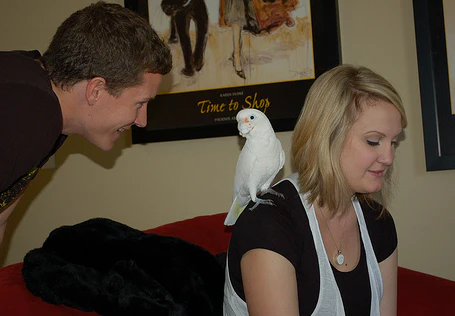

The Importance of Early Parrot Socialization
The importance of early parrot socialization cannot be overstated. The experiences a parrot has during its earliest developmental stages shape how it perceives people, environments, sounds, and change for the rest of its life. Early socialization teaches a parrot how to cope, how to communicate, and how to feel safe in a human world. When done correctly, early socialization produces confident, adaptable parrots. When missed or mishandled, it often leads to fear, aggression, screaming, or lifelong anxiety.
This guide explains the importance of early parrot socialization, how it works, what healthy socialization looks like, and how to avoid common mistakes that can create long-term behavioral challenges.
Why the Importance of Early Parrot Socialization Matters So Much
Parrots are intelligent prey animals. In the wild, early exposure to flock members, sounds, and environments determines survival. Those same instincts apply in captivity.
Understanding the importance of early parrot socialization helps to:
- Reduce fear-based aggression
- Prevent chronic screaming
- Support emotional regulation
- Build adaptability and resilience
- Improve long-term human–parrot relationships
These principles are consistently emphasized in professional Parrot Care Guides, because socialization affects every aspect of behavior.
What Early Parrot Socialization Really Means
Early socialization is not about overwhelming a baby parrot with people or constant handling. Instead, it is a gradual, positive exposure process.
Healthy Early Socialization Includes:
- Calm exposure to different people
- Gentle handling without force
- Introduction to normal household sounds
- Predictable routines
- Respect for body language and boundaries
Early Socialization Does NOT Mean:
- Forcing interaction
- Constant physical contact
- Loud, chaotic exposure
- Ignoring stress signals
Misunderstanding socialization is one of the most common causes of future behavior problems.
The Importance of Early Parrot Socialization for Emotional Development
Emotional Regulation Is Learned, Not Automatic
Young parrots do not instinctively know how to calm themselves. Instead, they learn emotional regulation by observing outcomes.
When early experiences are calm and predictable:
- Stress resolves quickly
- Confidence develops naturally
- Fear responses decrease
When early experiences are chaotic or forced:
- Anxiety becomes the default
- Trust erodes
- Defensive behavior increases
This is a core reason the importance of early parrot socialization extends far beyond infancy.
Early Parrot Socialization and Brain Development
During early life, a parrot’s brain is rapidly forming neural connections. Experiences during this period become the foundation for future behavior.
Positive early exposure teaches the brain:
- New experiences are safe
- Humans are predictable
- Change is manageable
Negative early exposure teaches:
- Uncertainty equals danger
- Escalation is necessary
- Avoidance or aggression works
This neurological imprint explains why early socialization has lifelong effects.
The Importance of Early Parrot Socialization Through Human Interaction
Exposure to Multiple People
Parrots that only interact with one person often develop:
- Over-bonding
- Aggression toward others
- Separation anxiety
Early, calm exposure to multiple people helps parrots:
- Generalize trust
- Remain flexible
- Avoid fixation
This balance is closely connected to Understanding Parrot Social Dynamics.
Calm Handling Builds Trust
Handling should always be:
- Gentle
- Purposeful
- Brief
Handling that respects choice builds trust, while forced handling creates fear.
Early Parrot Socialization and Body Language Awareness
Parrots communicate discomfort long before biting or screaming.
Early socialization must include humans learning parrot signals, such as:
- Leaning away
- Feather tightening
- Freezing
- Avoidance
Respecting these signals teaches parrots that communication works, which aligns closely with Understanding Parrot Body Language.
The Importance of Early Parrot Socialization With Sound and Environment
Normal Household Sounds
Gradual exposure to sounds like:
- Voices
- Appliances
- Doors
- Footsteps
…prevents fear later in life.
Sudden or intense exposure, however, can create sound sensitivity and anxiety.
Environmental Variety
Early exposure to:
- Different rooms
- Safe outdoor sights (through windows)
- New perches and textures
…builds confidence and curiosity rather than fear.
Feeding and Early Socialization
Feeding as a Social Experience
Feeding is one of the earliest trust-building interactions.
Calm, predictable feeding:
- Builds safety associations
- Reduces anxiety
- Strengthens bonding
Improper feeding practices often undermine early socialization, which is why feeding is closely tied to Baby Parrot Feeding Guide principles.
Avoiding Feeding-Driven Dependency
While feeding builds trust, using feeding as the only emotional support can create dependency.
Healthy care balances:
- Nourishment
- Interaction
- Independence
The Importance of Early Parrot Socialization for Future Behavior
Reduced Risk of Behavioral Disorders
Well-socialized parrots are less likely to develop:
- Chronic screaming
- Feather plucking
- Aggression
- Panic during change
These behaviors often trace back to insufficient or poorly managed early socialization.
Improved Adaptability
Parrots socialized early tend to:
- Handle new people calmly
- Adapt to routine changes
- Travel or relocate with less stress
This resilience is especially important for parrots transitioning under International Bird Shipping Policy procedures.
Socialization Timing: When It Matters Most
Baby and Early Juvenile Stages
The most critical window occurs:
- After hatching
- During weaning
- Through early juvenile stages
This is when social impressions form fastest.
Ongoing Socialization Is Still Necessary
While early socialization is foundational, reinforcement continues throughout life.
However, parrots that miss early socialization often struggle more with later training.
Socialization vs Training: Understanding the Difference
Socialization teaches emotional safety.
Training teaches skills.
A parrot can be trained without being socially secure—but behavior often collapses under stress.
This is why socialization must come before structured training methods like those outlined in Positive Reinforcement Training for Parrots.
Common Early Socialization Mistakes
- Overhandling
- Ignoring stress signals
- Introducing too many people at once
- Reinforcing fear-based vocalization
- Allowing exclusive one-person bonding
- Inconsistent routines
These mistakes unintentionally teach insecurity rather than confidence.
The Importance of Early Parrot Socialization in Multi-Bird Homes
In homes with multiple parrots, early socialization:
- Prevents fear-based aggression
- Supports cooperative interaction
- Reduces territorial behavior
Understanding social cues early creates harmony, a concept further explored in Benefits of Keeping Bonded Parrots.
Routine as a Socialization Tool
Predictable routines help parrots understand:
- When interaction happens
- When rest occurs
- When independence is expected
Routine reduces anxiety and supports social learning, aligning closely with Setting a Daily Parrot Routine.
When Early Socialization Is Missed
Parrots that miss early socialization may:
- Fear unfamiliar people
- React aggressively to change
- Develop chronic anxiety
Although improvement is possible later, progress is slower and requires more effort.
Early socialization is always easier than later rehabilitation.
Ethical Importance of Early Parrot Socialization
Ethical breeders and families offering Exotic Birds for Sale increasingly prioritize early socialization education.
Why?
- It reduces rehoming rates
- It improves welfare outcomes
- It creates stable lifelong placements
Early socialization is not a preference—it is a responsibility.
External Behavioral Insight
Avian behavioral research consistently shows that parrots exposed to calm, varied environments early in life demonstrate greater emotional resilience and fewer behavior problems as adults. Educational sources such as avian behavior research publications emphasize that early socialization predicts long-term success more strongly than later training.
Understanding the importance of early parrot socialization is therefore essential for anyone committed to responsible parrot care.