
Understanding Cockatoo Emotions
Understanding cockatoo emotions is essential for anyone living with, breeding, or caring for these exceptionally sensitive parrots. Cockatoos are not emotionally simple birds. They experience joy, fear, frustration, attachment, and stress with an intensity that often surprises even experienced parrot keepers. When their emotions are understood and respected, cockatoos become calm, trusting, and deeply connected companions. When their emotional needs are ignored or misunderstood, serious behavioral and welfare problems often follow.
This guide explains how cockatoos experience emotions, how they express them, what emotional balance looks like, and how caregivers can support healthy emotional development throughout a cockatoo’s life.
Why Understanding Cockatoo Emotions Matters
Cockatoos are among the most emotionally complex parrots in the world. Their brains are wired for deep social connection, long-term memory, and emotional sensitivity.
Understanding cockatoo emotions helps to:
- Prevent screaming and aggression
- Reduce anxiety and stress behaviors
- Avoid over-bonding and emotional dependency
- Build stable, trusting relationships
- Support long-term emotional wellbeing
For this reason, emotional awareness is a central theme in professional Parrot Care Guides.
How Cockatoos Experience Emotions Differently
Emotion Comes Before Logic
Cockatoos feel emotions first and process consequences later. This means emotional reactions often happen faster than conscious control.
As a result:
- Small stressors can feel overwhelming
- Sudden changes trigger strong reactions
- Emotional recovery may take time
This emotional intensity is not misbehavior—it is biology.
Long Emotional Memory
Cockatoos remember emotional experiences for years. A single frightening or stressful event can influence behavior long after it occurs.
This long memory explains why emotional mistakes early in life have lasting consequences, a concept closely linked to Why Early Bonding Shapes Your Parrot for Life.
Core Emotional States in Cockatoos
Calm and Content
A calm cockatoo shows:
- Relaxed posture
- Soft feather position
- Gentle eye expression
- Quiet presence
This emotional state is the goal of good care.
Joy and Excitement
Cockatoos express happiness through:
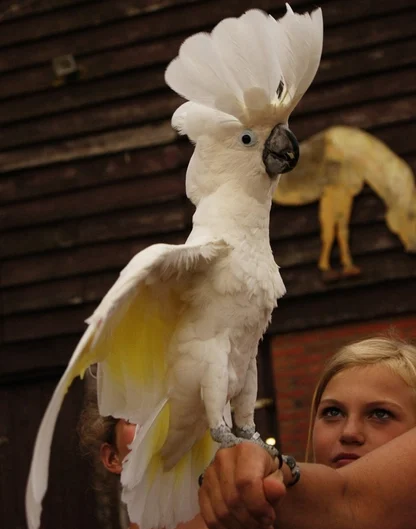
- Crest movement
- Playful vocalizations
- Increased curiosity
- Light physical animation
However, excitement must be balanced, as excessive stimulation can quickly turn into emotional overload.
Fear and Anxiety
Fear is one of the strongest emotions cockatoos experience.
Signs include:
- Freezing
- Leaning away
- Feather tightening
- Avoidance behavior
Ignoring fear signals often leads to defensive aggression.
Understanding these signs aligns closely with Understanding Cockatoo Body Language.
Frustration
Frustration occurs when:
- Needs are unmet
- Boundaries are unclear
- Interaction is forced
If frustration is repeated, it often escalates into screaming or destructive behavior.
Understanding Cockatoo Emotions Through Body Language
Cockatoos communicate emotions primarily through physical signals rather than sound.
Key emotional indicators include:
- Crest position
- Feather tension
- Eye focus
- Movement speed
- Posture changes
Learning to read these signals early prevents emotional escalation and supports trust.
This skill is essential for anyone studying Understanding Parrot Body Language.
Emotional Sensitivity to Environment
Predictability Equals Safety
Cockatoos rely heavily on predictability to feel emotionally safe.
Stable routines:
- Reduce anxiety
- Improve emotional regulation
- Lower attention-seeking behavior
This is why structured care connects strongly to Setting a Daily Parrot Routine.
Sensitivity to Human Emotion
Cockatoos are highly attuned to human emotional states.
They often mirror:
- Stress
- Anger
- Calm
- Anxiety
Emotionally reactive households frequently create emotionally reactive birds.
Bonding and Emotional Attachment in Cockatoos
Deep Attachment Is Natural
Cockatoos form deep emotional bonds, often stronger than those of many other parrots.
Healthy bonding includes:
- Trust without dependence
- Choice-based interaction
- Respect for space
Unhealthy bonding, however, leads to emotional imbalance.
The Risk of Over-Bonding
Over-bonding occurs when a cockatoo relies on one person for all emotional needs.
This can result in:
- Separation anxiety
- Aggression toward others
- Chronic distress
Managing this risk is a core theme in Understanding Cockatoo Affection Signals.
Emotional Development From Baby to Adult
Baby and Juvenile Cockatoos
Young cockatoos experience emotions intensely but lack regulation.
They require:
- Calm, predictable care
- Gentle exposure to change
- Emotional guidance
This developmental phase is explored further in Understanding Young Cockatoo Development.
Adult Cockatoos
Adult cockatoos retain emotional sensitivity but gain better regulation when raised correctly.
Poor early emotional support often results in unstable adult behavior.
Emotional Needs That Must Be Met Daily
Cockatoos require consistent emotional support through:
- Predictable routines
- Mental enrichment
- Calm social interaction
- Respectful boundaries
Neglecting any of these increases emotional stress.
Training as Emotional Support
Training Is Emotional Education
Training teaches cockatoos how to cope, not just how to perform tasks.
Effective training:
- Builds confidence
- Reduces anxiety
- Improves communication
Reward-based approaches described in Positive Reinforcement Training for Parrots are essential for emotional stability.
Avoid Training Under Stress
Training a stressed cockatoo often worsens emotional overload.
Always prioritize emotional state before instruction.
Emotional Triggers Common in Cockatoos
Common emotional stressors include:
- Sudden routine changes
- Loud or chaotic environments
- Forced handling
- Inconsistent responses
- Social isolation
Identifying and reducing triggers is key to emotional balance.
Social Structure and Emotional Health
Multi-Person Interaction
Exposure to multiple calm caregivers helps cockatoos avoid fixation.
Balanced social interaction:
- Reduces dependency
- Builds adaptability
- Supports emotional resilience
These dynamics are further explained in Understanding Parrot Social Dynamics.
Single vs Paired Cockatoos
Some cockatoos cope better emotionally with a bonded companion.
The emotional benefits of companionship are discussed in Benefits of Keeping Bonded Parrots.
Emotional Consequences of Misunderstanding Cockatoos
When cockatoo emotions are misunderstood, common outcomes include:
- Chronic screaming
- Feather plucking
- Aggression
- Depression-like withdrawal
These behaviors are emotional distress signals, not discipline problems.
Supporting Emotional Recovery
Cockatoos can recover emotionally when:
- Stressors are removed
- Routines are stabilized
- Trust is rebuilt gradually
- Boundaries are respected
Recovery requires patience and emotional consistency.
Ethical Responsibility in Understanding Cockatoo Emotions
Ethical breeders and families offering Exotic Birds for Sale increasingly emphasize emotional education before placement.
Why?
- Cockatoos suffer deeply when misunderstood
- Emotional neglect leads to rehoming
- Proper education saves birds from lifelong distress
Understanding cockatoo emotions is an ethical obligation, not an optional skill.
External Emotional Insight
Avian behavioral research consistently identifies cockatoos as one of the most emotionally sensitive parrot groups. Educational sources such as avian behavior research publications confirm that emotional stability—not training alone—is the strongest predictor of long-term success in cockatoos.
Understanding cockatoo emotions is therefore foundational to responsible ownership.