
Young Adult Cockatoo Care
Young adult cockatoo care is one of the most critical—and often misunderstood—stages in a cockatoo’s life. At this phase, cockatoos are no longer juveniles, yet they are not fully mature adults. They are developing identity, independence, emotional boundaries, and long-term behavioral patterns. How they are supported now determines whether they become emotionally stable, confident companions or struggle with chronic stress, aggression, or attachment issues later in life.
This guide explains how to provide proper young adult cockatoo care, including emotional needs, routine structure, training, social boundaries, hormonal changes, and common mistakes to avoid.
Why Young Adult Cockatoo Care Is So Important
The young adult stage is where many long-term problems begin—not because the cockatoo is “difficult,” but because its needs have changed.
Understanding young adult cockatoo care helps to:
- Prevent aggression and emotional volatility
- Reduce screaming and frustration
- Avoid over-bonding and jealousy
- Support healthy independence
- Stabilize long-term behavior
These principles are consistently emphasized in advanced Parrot Care Guides, especially for emotionally complex species like cockatoos.
What Defines a Young Adult Cockatoo?
A young adult cockatoo typically:
- Has completed juvenile development
- Shows increased confidence and curiosity
- Begins asserting boundaries
- Experiences early hormonal influences
Although timelines vary by species, this stage often feels like a “testing” period for caregivers.
Understanding developmental transitions is closely related to Raising Juvenile Exotic Parrots.
Emotional Development in Young Adult Cockatoos
Strong Emotions, Growing Independence
Young adult cockatoos feel emotions intensely while learning independence.
Common emotional traits include:
- Reduced tolerance for constant handling
- Strong reactions to inconsistency
- Heightened awareness of boundaries
This is a healthy developmental step—not rejection.
Why Emotional Respect Matters Now
If emotional signals are ignored during this stage, cockatoos may:
- Escalate communication
- Become defensive
- Withdraw emotionally
Respect builds trust; pressure damages it.
These dynamics align closely with Understanding Cockatoo Emotions.
Routine and Structure in Young Adult Cockatoo Care
Predictability Reduces Emotional Load
Young adult cockatoos rely heavily on routine to manage emotional changes.
A consistent daily rhythm:
- Lowers anxiety
- Improves emotional regulation
- Reduces attention-seeking behavior
This structure is detailed further in Setting a Daily Parrot Routine.
Avoid Sudden Routine Changes
Abrupt changes during this stage often trigger stress behaviors.
If change is necessary:
- Introduce it gradually
- Maintain familiar anchors
- Reduce stimulation elsewhere
Physical Interaction and Boundaries
Less Touch, More Respect
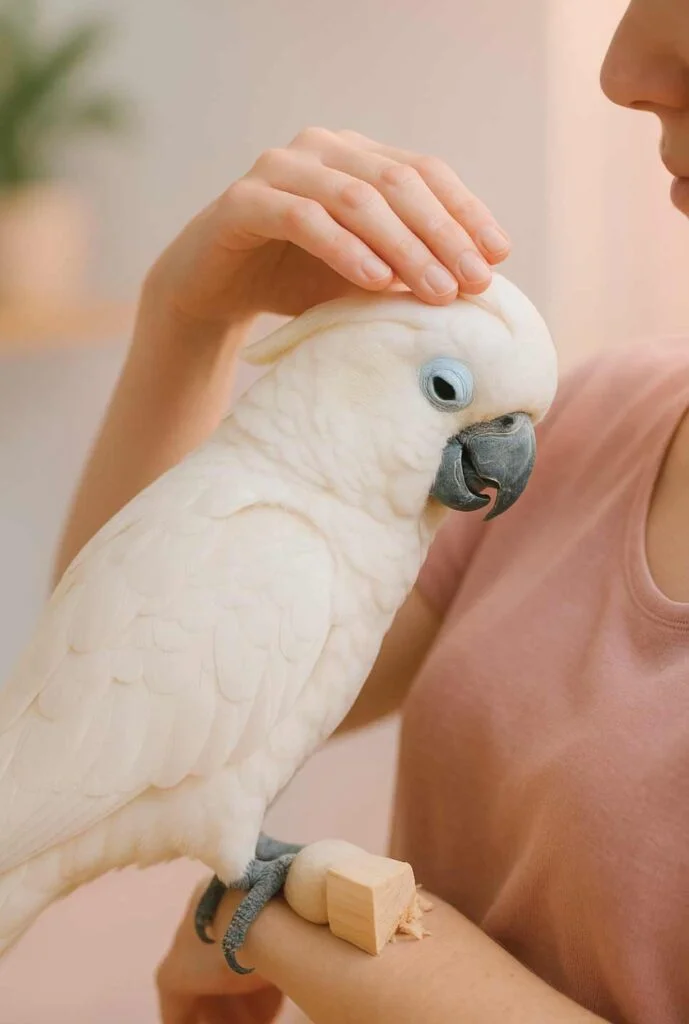
Young adult cockatoos often need less physical contact than juveniles.
Healthy interaction includes:
- Voluntary step-ups
- Short, calm contact
- Respect for withdrawal
Forcing touch at this stage commonly leads to biting or avoidance.
Reading Early Warning Signals
Young adult cockatoos communicate discomfort early through:
- Feather tightening
- Crest stiffness
- Leaning away
- Freezing
These signals must be respected, as emphasized in Understanding Parrot Body Language and the Crest Communication Guide.
Training Young Adult Cockatoos
Training Supports Emotional Regulation
Training during the young adult stage is essential—not for obedience, but for communication.
Effective training:
- Builds confidence
- Clarifies expectations
- Reduces frustration
Reward-based methods outlined in Positive Reinforcement Training for Parrots are ideal.
Adjust Training Style
Compared to juveniles, young adults require:
- Clear boundaries
- Shorter sessions
- Lower arousal levels
Training through excitement often backfires at this stage.
Social Needs in Young Adult Cockatoo Care
Balanced Social Interaction
Young adult cockatoos benefit from:
- Calm interaction with multiple people
- Predictable social windows
- Respect for independent time
Exclusive bonding during this stage often leads to jealousy or aggression.
This balance connects directly to Understanding Parrot Social Dynamics.
Human Role Shifts
At this stage, humans should act as:
- Calm companions
- Predictable leaders
- Emotional regulators
Not constant sources of stimulation.
Hormonal Changes in Young Adult Cockatoos
What to Expect
Early hormonal influence may cause:
- Increased territoriality
- Reduced tolerance for handling
- Heightened vocalization
These changes are normal but require careful management.
How to Support Stability
During hormonal periods:
- Reduce physical contact
- Eliminate nest-like spaces
- Maintain strict routine
This prevents escalation and confusion.
Environmental Setup for Young Adult Cockatoos
Space Supports Independence
Young adult cockatoos need:
- Larger enclosures or aviaries
- Multiple perches
- Independent play areas
Crowded or restrictive environments increase frustration.
Enrichment Without Overstimulation
Offer enrichment that:
- Encourages problem-solving
- Allows solo engagement
- Avoids excessive excitement
Overstimulating toys often increase emotional volatility.
Managing Vocalization Changes
Young adult cockatoos often experiment with voice and volume.
To manage this:
- Do not react emotionally
- Reward calm behavior
- Maintain predictable routines
Vocal behavior management is discussed further in Understanding Parrot Vocal Behavior.
Preventing Over-Bonding During the Young Adult Stage
Why Over-Bonding Is Risky Now
This stage is when over-bonding often becomes permanent.
Signs include:
- Fixation on one person
- Aggression toward others
- Distress during separation
Preventing this requires intentional independence.
Encouraging Healthy Independence
Healthy care includes:
- Independent play
- Alone time without distress
- Non-exclusive interaction
This approach mirrors principles in Managing Bonded Parrots.
Common Mistakes in Young Adult Cockatoo Care
- Treating them like juveniles
- Ignoring boundary signals
- Overhandling
- Emotional reactions to defiance
- Inconsistent routines
Most adult cockatoo behavior problems originate here.
Signs of Healthy Young Adult Cockatoo Development
Well-supported young adult cockatoos typically show:
- Calm confidence
- Clear communication
- Reduced reactivity
- Balanced attachment
- Emotional resilience
These are indicators of successful care.
Long-Term Benefits of Proper Young Adult Cockatoo Care
Cockatoos supported correctly at this stage are more likely to:
- Transition smoothly into adulthood
- Maintain stable emotional bonds
- Avoid chronic behavioral issues
- Adapt to environmental change
This is why ethical families and programs offering Exotic Birds for Sale emphasize education around young adult development.
External Development Insight
Avian behavioral research consistently shows that the young adult phase is when emotional boundaries and independence are finalized. Educational sources such as avian behavior research publications highlight that respecting autonomy and reducing overstimulation during this stage leads to better long-term outcomes.
Understanding young adult cockatoo care is therefore essential—not optional—for ethical ownership.