
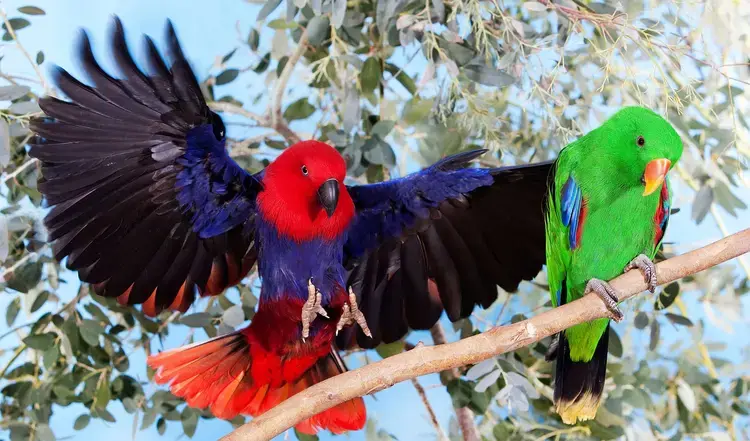

Male vs Female Eclectus Parrots
Choosing between a male and female Eclectus parrot is not simply a matter of color preference. When people ask about male vs female Eclectus parrots, they are often surprised to learn that this species shows the most extreme physical and behavioral differences of any commonly kept parrot. In fact, males and females look so different that they were once believed to be separate species.
This guide offers a clear, experience-based comparison of male and female Eclectus parrots, focusing on appearance, temperament, bonding style, hormonal behavior, diet sensitivity, and suitability for different households. The goal is not to declare one “better,” but to help future owners make a responsible, informed decision that matches their lifestyle.
Understanding Sexual Dimorphism in Eclectus Parrots
Why Eclectus Parrots Are Unique
Eclectus parrots are famous for extreme sexual dimorphism, meaning males and females differ dramatically in color, behavior, and even social roles. This difference is rooted in their natural breeding system, where females often control nesting sites and males forage over wide areas.
Understanding sexual dimorphism in Eclectus parrots is essential before comparing personalities or care needs.
Physical Differences: Male vs Female Eclectus Parrots
Male Eclectus Parrot Appearance
Male Eclectus parrots are predominantly bright green, with flashes of red and blue under the wings. Their beak is typically orange or yellow with a lighter tip.
Key male traits:
- Green plumage for camouflage while foraging
- Orange-to-yellow beak
- Slightly sleeker body profile
Males are often mistaken for Amazons or other green parrots by inexperienced owners.
Female Eclectus Parrot Appearance
Female Eclectus parrots display bold red, purple, and blue plumage, with a solid black beak. Their coloration is striking and unmistakable.
Key female traits:
- Red body with deep blue or purple chest
- Black beak
- More compact, powerful stance
Understanding physical differences between male and female Eclectus parrots is straightforward—color alone is definitive.
Temperament Differences Between Male and Female Eclectus Parrots
Male Eclectus Parrot Personality
Male Eclectus parrots are generally described as:
- Calm and easygoing
- Social but not demanding
- More tolerant of change
- Often gentler in interaction
They tend to adapt more easily to new environments and may bond with multiple family members more readily.
This makes male Eclectus parrot temperament appealing to owners seeking a relaxed companion.
Female Eclectus Parrot Personality
Female Eclectus parrots are often:
- More assertive and confident
- Highly aware of territory
- Strongly bonded to chosen people
- Less tolerant of inconsistency
Females are not aggressive by default, but they are decisive and clear about boundaries.
Understanding female Eclectus parrot behavior traits helps prevent misinterpretation of confidence as attitude.
Bonding Styles and Social Preferences
How Males Bond
Male Eclectus parrots usually bond through:
- Quiet companionship
- Visual presence
- Gentle interaction
They often enjoy being near people without needing constant physical contact.
How Females Bond
Female Eclectus parrots bond deeply but selectively. Once trust is established, loyalty is strong, but they may be less socially flexible.
This difference matters when choosing between male vs female Eclectus parrots as pets for families or multi-person households.
Hormonal Behavior: Important Differences
Hormonal Tendencies in Males
Male Eclectus parrots typically experience milder hormonal shifts. Seasonal changes may bring increased vocalization or restlessness, but serious behavioral swings are less common.
Hormonal Tendencies in Females
Females are more influenced by hormonal cycles due to their role in nesting behavior. Hormonal periods may include:
- Territorial behavior
- Nest-seeking tendencies
- Increased defensiveness
Proper environmental management is essential when managing female Eclectus parrot hormones.
Diet Sensitivity: Similar Needs, Different Responses
Shared Dietary Requirements
Both male and female Eclectus parrots require:
- Fresh vegetable-based diets
- Minimal synthetic vitamins
- Limited pellets
- Whole, natural foods
Diet mistakes affect both sexes, but responses can differ.
Differences in Dietary Reaction
Females may show stronger behavioral reactions to dietary imbalance, while males may show more physical symptoms such as lethargy.
This highlights the importance of Eclectus parrot diet management by sex, even though the base diet remains the same.
Talking Ability and Vocal Behavior
Do Males or Females Talk Better?
Both sexes are capable talkers. Talking ability depends more on:
- Emotional security
- Calm environment
- Consistent interaction
Males may talk slightly more frequently, while females often use speech more selectively and contextually.
There is no guaranteed “better talker” between the sexes.
Suitability for Different Homes
Male Eclectus Parrots Are Often Better For:
- First-time Eclectus owners
- Families with multiple caregivers
- Homes with moderate routine changes
- Owners seeking a calm companion
Female Eclectus Parrots Are Often Better For:
- Experienced parrot owners
- Quiet, stable households
- Owners comfortable with boundaries
- Homes with predictable routines
Understanding choosing a male or female Eclectus parrot is about lifestyle alignment, not aesthetics.
Common Myths About Male vs Female Eclectus Parrots
“Females Are Aggressive”
False. Females are assertive, not aggressive. Clear communication prevents most issues.
“Males Are Always Easier”
Not always. While males are often more adaptable, poor diet or overstimulation can cause issues in either sex.
“Color Determines Personality”
Completely false. Color indicates sex—not temperament quality.
Ethical Ownership Considerations
Regardless of sex, Eclectus parrots require:
- Ethical captive breeding
- Long-term commitment (30–50 years)
- Diet preparation and routine
- Emotional awareness
Understanding these responsibilities supports ethical Eclectus parrot ownership across both sexes.
Final Comparison Summary
Key Differences at a Glance
- Appearance: completely different
- Temperament: male = adaptable, female = assertive
- Hormones: stronger influence in females
- Bonding: males flexible, females selective
Neither sex is better—only different.
Final Thoughts
When comparing male vs female Eclectus parrots, the most important factor is not color or reputation, but compatibility with your home, expectations, and lifestyle. Males often suit broader environments, while females thrive in structured, stable settings.
Both can become extraordinary companions when their unique traits are understood and respected. Choosing wisely from the start prevents frustration and builds a relationship based on trust rather than adjustment.