
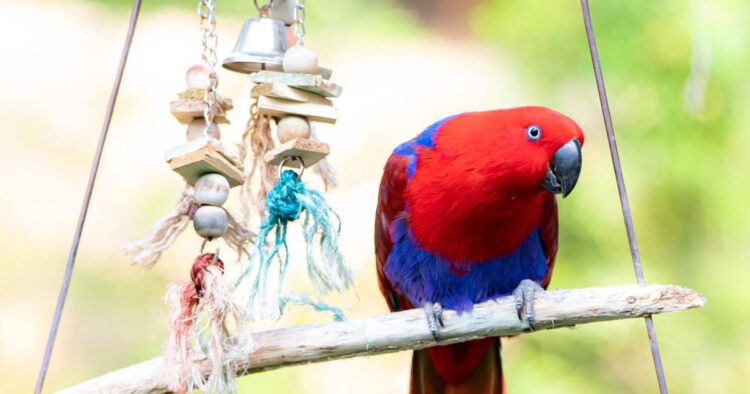

Teaching Eclectus Parrots to Play Independently
Teaching Eclectus parrots to play independently is one of the most valuable skills an owner can support—yet it’s often misunderstood. Independent play is not about ignoring your bird or replacing interaction. It’s about building confidence, reducing stress, preventing over-dependence, and giving an emotionally sensitive species the tools to self-regulate when humans are busy.
Eclectus parrots are thoughtful, observant birds. They don’t automatically “throw themselves” into toys the way some parrots do. When independent play is rushed or overstimulating, they may withdraw or avoid toys entirely. When introduced correctly, however, independent play becomes a calming outlet that supports long-term mental health, reduces behavioral issues, and strengthens the human–bird relationship.
This guide explains why independent play matters for Eclectus parrots, how to introduce it ethically, what toys work best, how to avoid common mistakes, and how to tell when independent play is actually working.
Why Independent Play Is Important for Eclectus Parrots
Independence Supports Emotional Stability
Eclectus parrots are deeply social, but they are also prone to stress when they feel emotionally over-attached or overstimulated. Independent play helps them:
- Self-soothe
- Build confidence
- Avoid frustration when humans are unavailable
- Maintain emotional balance
Understanding why independent play matters for Eclectus parrots reframes it as a welfare tool, not a convenience for owners.
Preventing Over-Dependence
When all enrichment comes directly from humans, Eclectus parrots may:
- Become anxious when left alone
- Demand constant attention
- Develop frustration behaviors
Independent play teaches that safety and stimulation don’t disappear when humans step away.
Why Eclectus Parrots Approach Play Differently
Thoughtful, Not Impulsive
Eclectus parrots usually:
- Observe toys before touching them
- Engage slowly
- Prefer predictable, calm interaction
This explains why Eclectus parrots don’t play like other parrots and why patience is essential during introduction.
Overstimulation Shuts Play Down
Bright colors, noisy toys, or too many options at once can overwhelm sensitive Eclectus parrots, causing them to avoid play rather than enjoy it.
What Independent Play Looks Like (Realistically)
Healthy Independent Play Behaviors
Independent play may include:
- Quiet foraging
- Gentle shredding
- Manipulating objects slowly
- Exploring textures
It does not need to be loud, chaotic, or constant to be successful.
Understanding what independent play looks like for Eclectus parrots helps owners recognize progress instead of assuming failure.
Step One: Create a Calm Play Environment
Location Matters
Choose a play area that is:
- Familiar
- Calm
- Free from constant foot traffic
- Visually simple
Independent play does not thrive in busy or noisy rooms.
This supports setting up a safe play space for Eclectus parrots.
Keep the Setup Predictable
Avoid changing toys daily. Familiarity builds confidence. Rotate slowly rather than frequently.
Step Two: Choose the Right Toys
Best Toy Types for Independent Play
Eclectus parrots often prefer:
- Foraging toys
- Shreddable paper or cardboard
- Soft wood blocks
- Natural textures
These toys encourage focus without overstimulation.
This aligns with choosing toys for independent Eclectus parrot play.
Toys to Use Cautiously
Avoid or limit:
- Loud bells
- Flashing or plastic-heavy toys
- Toys with excessive mirrors
- Overly complex puzzle toys at first
Simplicity supports confidence.
Step Three: Introduce Toys Without Pressure
Let Observation Come First
Place a new toy nearby—not directly in the bird’s face or primary perch.
Allow the parrot to:
- Watch the toy
- Move away if unsure
- Approach at their own pace
This is the foundation of introducing toys to shy or sensitive Eclectus parrots.
Model Calm Interaction (Briefly)
You can gently touch or move the toy yourself without excitement. This shows safety without pressure.
Avoid:
- Shaking toys
- Encouraging dramatic reactions
- Trying to “make” the bird play
Step Four: Pair Play With Positive Emotion
Use Gentle Reinforcement
When your parrot:
- Looks at a toy
- Touches it briefly
- Explores it calmly
Respond with:
- Soft praise
- Calm acknowledgment
- Space (not crowding)
This reinforces building positive associations with independent play.
Avoid Over-Rewarding
Large treats or excited reactions can make play feel like a test rather than a choice.
Step Five: Gradually Increase Independence Time
Start Small
Begin with:
- A few minutes of solo play
- You remaining nearby but uninvolved
Gradually increase distance and duration as confidence grows.
This supports teaching Eclectus parrots to enjoy alone time safely.
End on a Positive Note
If the bird disengages calmly, that’s success. Do not wait for boredom or frustration.
Common Independent Play Mistakes
Offering Too Many Toys at Once
Too many options overwhelm sensitive birds.
Changing Toys Too Frequently
Constant novelty increases uncertainty rather than curiosity.
Forcing Interaction With Toys
Pushing toys toward the bird or insisting on engagement damages trust.
Avoiding these errors supports successful independent play training for Eclectus parrots.
Independent Play vs Isolation
Play Should Never Replace Interaction
Independent play complements—not replaces—social time.
Healthy balance includes:
- Daily human interaction
- Daily independent activity
- Predictable routines
This distinction is central to ethical independence training for Eclectus parrots.
Independent Play During Hormonal or Stressful Periods
Adjust Expectations
During stress or hormonal phases:
- Engagement may decrease
- Preference for quiet play may increase
Maintain access to toys without pressure. Regression during these times is normal.
Signs Independent Play Is Working
Look for:
- Voluntary toy interaction
- Calm focus
- Reduced attention-seeking behaviors
- Increased confidence when alone
Progress is often subtle but meaningful.
How Long Does Independent Play Training Take?
There is no fixed timeline:
- Some parrots engage within weeks
- Others take months
- Rescue birds may take longer
Consistency matters more than speed.
Understanding how long it takes Eclectus parrots to learn independent play prevents frustration.
Long-Term Benefits of Independent Play
Well-established independent play often leads to:
- Reduced stress
- Better emotional regulation
- Healthier bonding (less clinginess)
- Increased overall confidence
These benefits compound over time.
Ethical Perspective on Independent Play
Independence Builds Security, Not Distance
Ethical care supports a parrot’s ability to feel safe with or without constant human attention.
Understanding ethical enrichment for Eclectus parrots ensures play supports welfare, not convenience.
Final Thoughts
Teaching Eclectus parrots to play independently is not about entertainment—it’s about emotional resilience. These parrots thrive when they are given the freedom to explore, focus, and self-regulate without pressure.
When owners create calm environments, choose appropriate toys, respect communication, and allow choice, independent play becomes a powerful source of confidence and balance. The result is a calmer bird, a healthier bond, and enrichment that truly meets the needs of this sensitive, intelligent species.