
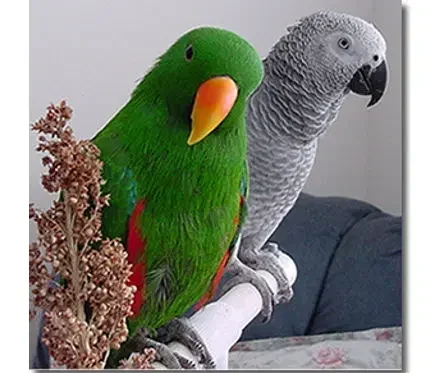

Comparing Eclectus Parrots to African Greys & Macaws
Choosing between an Eclectus parrot, an African Grey, or a Macaw is one of the most consequential decisions a parrot owner can make. On the surface, all three are intelligent, long-lived, and emotionally complex. However, the way they express intelligence, form bonds, handle stress, and fit into human households differs dramatically. (Comparing Eclectus parrots to African Greys & Macaws)
This guide focuses on comparing Eclectus parrots to African Greys & Macaws in a practical, experience-based way. Rather than ranking one species as “better,” it explains how each species evolved, how that shapes daily life in captivity, and which type of owner each parrot truly suits. Many rehoming situations happen not because the parrot is difficult, but because the species was mismatched to the household.
Why Species Comparison Matters More Than Popularity
Intelligence Is Not One-Size-Fits-All
All three species are highly intelligent, but intelligence manifests differently:
- Eclectus parrots show emotional and environmental intelligence
- African Greys show analytical and vocal intelligence
- Macaws show social and physical intelligence
Understanding how parrot intelligence differs by species prevents unrealistic expectations.
Lifestyle Fit Matters More Than Reputation
A parrot that thrives in one home may struggle deeply in another. Noise tolerance, routine, space, and emotional bandwidth all play a role in long-term success.
Core Temperament Differences
Eclectus Parrot Temperament
Eclectus parrots are generally:
- Calm and observant
- Emotionally sensitive
- Environmentally aware
- Less chaotic or impulsive
They prefer predictable routines and low-drama environments.
Understanding Eclectus parrot temperament compared to other parrots helps explain why they are often misunderstood.
African Grey Temperament
African Greys are typically:
- Highly alert
- Mentally intense
- Sensitive to stress
- Deeply bonded to routine
They process information constantly and can become anxious if overstimulated or under-challenged.
Macaw Temperament
Macaws are often:
- Bold and expressive
- Highly social
- Physically confident
- Emotionally intense
They thrive on interaction and presence, not quiet observation.
Noise Levels and Vocal Style
Eclectus Parrots: Moderate and Contextual
Eclectus parrots:
- Vocalize with purpose
- Rarely scream constantly
- Communicate through tone and timing
They suit homes where calm communication is valued.
This makes Eclectus parrots ideal for quieter households.
African Greys: Less Loud, More Sharp
African Greys:
- Are not constant screamers
- Can produce sudden loud alarms
- Use vocalizations to express anxiety
Their noise is less frequent, but often stress-driven.
Macaws: Loud and Proud
Macaws:
- Are naturally loud
- Use vocalization socially
- Cannot be trained to be “quiet birds”
Noise tolerance is non-negotiable with Macaws.
Talking Ability and Communication Style
Eclectus Parrots and Speech
Eclectus parrots often:
- Speak clearly
- Use words contextually
- Prefer calm communication
However, not all individuals talk, and silence is normal.
Understanding what talking really looks like in Eclectus parrots prevents disappointment.
African Greys and Speech
African Greys are widely regarded as the most advanced talkers:
- Large vocabularies
- Clear pronunciation
- Strong contextual use
However, pressure to perform can increase anxiety.
Macaws and Speech
Macaws can talk, but:
- Speech is less consistent
- Voices are louder and rougher
- Talking is secondary to social interaction
Macaws communicate more through body language and presence.
Emotional Sensitivity and Stress Response
Eclectus Parrots: Environmentally Sensitive
Eclectus parrots react strongly to:
- Diet imbalance
- Environmental change
- Hormonal triggers
Stress often appears as withdrawal or subtle health changes.
Understanding why Eclectus parrots are more sensitive than other parrots is critical for owners.
African Greys: Anxiety-Prone Thinkers
African Greys:
- Internalize stress
- Are prone to phobias
- React strongly to routine disruption
They require mental stability and consistency.
Macaws: Externalized Emotion
Macaws express stress outwardly:
- Vocal escalation
- Destructive chewing
- Demanding behavior
They need space and interaction to regulate emotions.
Diet Complexity and Feeding Reality
Eclectus Parrots: Strict and Unforgiving
Eclectus parrots require:
- Fresh vegetable-based diets
- Minimal fortified pellets
- Careful vitamin control
Diet mistakes show quickly.
This is why Eclectus parrot diet requirements are stricter than most species.
African Greys: Balanced but Calcium-Sensitive
African Greys need:
- Balanced pellets and fresh foods
- Careful calcium management
They tolerate commercial diets better than Eclectus parrots.
Macaws: Higher Fat, Higher Energy
Macaws:
- Require higher fat intake
- Burn more calories
- Need extensive foraging and chewing
Diet volume and cost are higher.
Space and Housing Needs
Eclectus Parrots
- Large cage required
- Calm placement
- Visual security important
They value quality of space, not chaos.
African Greys
- Spacious cage
- Stable placement
- Minimal frequent changes
They dislike constant rearrangement.
Macaws
- Very large cages or aviaries
- Significant out-of-cage time
- Strong, durable equipment
Space is a major limiting factor.
Bonding Style and Human Interaction
Eclectus Parrots: Respectful Bonds
Eclectus parrots:
- Bond quietly
- Dislike forced affection
- Value trust over touch
Understanding how Eclectus parrots bond with humans is essential.
African Greys: Deep but Fragile Bonds
African Greys:
- Bond intensely
- May become one-person birds
- Are sensitive to emotional shifts
Bonding is powerful but delicate.
Macaws: Social and Physical Bonds
Macaws:
- Seek constant interaction
- Enjoy physical closeness
- Thrive in active households
They often bond with multiple people.
Hormonal and Behavioral Challenges
Eclectus Parrots
- Strong sex-based differences
- Females particularly hormonal
- Environment and light control essential
Understanding male vs female differences in Eclectus parrots is critical.
African Greys
- Hormones less dramatic
- Stress-induced behaviors more common
Macaws
- Hormones expressed loudly
- Seasonal intensity
- Requires experienced handling
Cost of Ownership Comparison
Eclectus Parrots
- Moderate purchase price
- Higher food prep cost
- Ongoing dietary management
African Greys
- Moderate to high purchase price
- Mental enrichment costs
- Veterinary care for stress-related issues
Macaws
- High purchase price
- Very high housing and toy costs
- Higher damage risk
Understanding the real cost of owning different parrot species prevents regret.
Which Parrot Fits Which Owner?
Eclectus Parrots Are Best For:
- Calm households
- Owners who enjoy routine
- People willing to manage diet carefully
- Those who value subtle companionship
African Greys Are Best For:
- Mentally engaged owners
- Stable, quiet homes
- People who enjoy training and interaction
Macaws Are Best For:
- Experienced owners
- High-energy households
- People with space, time, and noise tolerance
Common Mistakes When Choosing Between These Species
- Choosing based on talking ability alone
- Underestimating noise tolerance
- Ignoring diet complexity
- Assuming all parrots need the same care
Avoiding these supports long-term success with large parrots.
Final Thoughts
Comparing Eclectus parrots to African Greys & Macaws reveals one critical truth: these parrots are not interchangeable. Each species evolved for a different ecological role, and those differences still shape life in captivity today.
Eclectus parrots reward patience, routine, and dietary precision. African Greys reward mental engagement and emotional stability. Macaws reward presence, interaction, and energy. None are “better.” The best parrot is the one whose natural traits align with your real life—not the one you admire most online.
When species choice is thoughtful and informed, parrots thrive. When it is impulsive, everyone struggles.