
Best Diet for Timneh African Grey
Providing the best diet for Timneh African Grey is one of the most important responsibilities an owner or breeder will ever take on. Nutrition does far more than maintain body weight—it directly shapes emotional stability, feather condition, immune resilience, behavior, and even lifespan. Many long-term problems seen in African Greys are not genetic or behavioral at their core, but nutritional in origin.
This guide explains what the best diet for a Timneh African Grey truly looks like, how nutritional needs change over time, and how to avoid common feeding mistakes that quietly undermine health. The focus is ethical, evidence-based, and practical—designed for serious owners who want lasting results, not short-term convenience.
Understanding Nutrition in Timneh African Greys
Diet Is a Behavioral Foundation
Timneh African Greys are metabolically sensitive parrots. What they eat influences:
- Energy levels
- Mood regulation
- Stress tolerance
- Feather integrity
- Cognitive engagement
Therefore, the best diet for Timneh African Grey is not simply about food categories, but about balance, consistency, and digestibility.
Unlike some parrots that tolerate nutritional inconsistency, Timnehs often show subtle but progressive decline when diet is poorly managed.
Core Principles of the Best Diet for Timneh African Grey
Balance Over Extremes
One of the most common mistakes is dietary extremism—either seed-heavy diets or overly restrictive feeding plans. The optimal diet sits firmly in the middle.
A proper diet must:
- Provide complete baseline nutrition
- Allow natural foraging behavior
- Avoid excessive fats and sugars
- Remain consistent day to day
Sudden dietary shifts often cause stress responses rather than improvement.
The Ideal Daily Diet Composition
High-Quality Pellets as the Foundation
For most Timneh African Greys, formulated pellets should make up the largest portion of the daily diet. Pellets provide:
- Balanced vitamins and minerals
- Controlled fat levels
- Consistent nutrient intake
Pellets reduce the risk of selective eating, which is common in intelligent parrots.
However, pellets should never be the only food source.
Fresh Vegetables: Essential, Not Optional
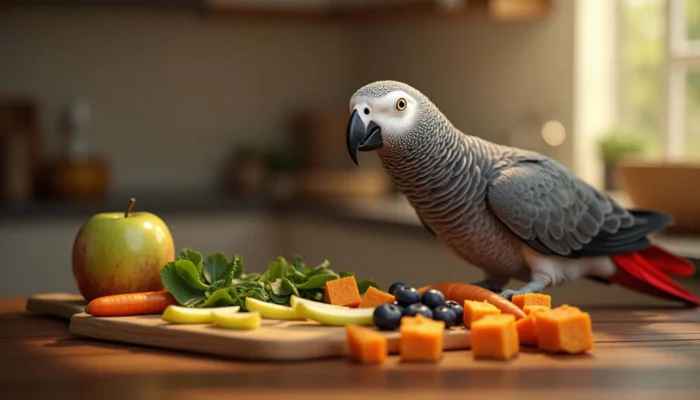
Vegetables are critical to achieving the best diet for Timneh African Grey. They support digestion, immune function, and mental engagement.
Highly suitable vegetables include:
- Dark leafy greens
- Broccoli
- Carrots
- Bell peppers
- Squash
Vegetables should be offered daily and rotated regularly. Variety supports both nutrition and curiosity.
Fruits: Controlled and Purposeful
Fruits should be viewed as supplements, not staples. While nutritious, they are naturally high in sugars.
Appropriate fruit use:
- Small portions
- Occasional inclusion
- Offered earlier in the day
Overfeeding fruit often contributes to behavioral imbalance and unwanted weight gain.
Seeds and Nuts: Strategic Use Only
Why Seeds Should Be Limited
Seeds are often the most eagerly consumed food, but they are also calorie-dense and nutritionally incomplete.
In the best diet for Timneh African Grey, seeds should:
- Be limited in quantity
- Used primarily for training or enrichment
- Never dominate the diet
Seed-heavy diets are strongly associated with nutritional deficiencies over time.
Nuts as Enrichment and Reward
Nuts are valuable but powerful foods. When used correctly, they:
- Support training motivation
- Encourage foraging behavior
- Provide healthy fats in moderation
Because of their richness, nuts should remain occasional rewards rather than daily staples.
Feeding Schedule and Routine
Consistency Builds Emotional Stability
Timneh African Greys thrive on predictable routines. Feeding should occur at roughly the same times each day.
A consistent schedule:
- Reduces anxiety
- Supports digestion
- Reinforces trust
Erratic feeding times often lead to stress behaviors, even when food quality is high.
Encouraging Natural Foraging
Food should not always be presented in a single bowl. Instead:
- Scatter small portions
- Use simple foraging toys
- Rotate presentation styles
This supports mental stimulation and prevents boredom-related behaviors.
Diet Adjustments Across Life Stages
Juvenile and Young Adults
Younger Timnehs require:
- Reliable nutritional balance
- Sufficient energy for growth
- Early exposure to varied foods
Introducing vegetables early increases acceptance later in life.
Mature Adults
Adult Timneh African Greys benefit from:
- Stable portions
- Controlled fat intake
- Continued variety without excess
This stage is about maintaining balance rather than experimentation.
Senior Timneh African Greys
As Timnehs age, the best diet for Timneh African Grey may require:
- Easier-to-digest foods
- Close monitoring of appetite
- Slight texture adjustments
Changes should always be gradual and carefully observed.
Common Dietary Mistakes and How to Avoid Them
Mistake 1: All-Seed Diets
This remains one of the most damaging long-term feeding practices.
Correction: Transition gradually toward pellets and vegetables while reducing seeds slowly.
Mistake 2: Overfeeding “Healthy” Foods
Even nutritious foods can cause imbalance if overused.
Correction: Control portions and rotate offerings.
Mistake 3: Frequent Diet Changes
Constantly changing foods often causes stress rather than improvement.
Correction: Maintain consistency and introduce changes slowly.
Avoiding these mistakes is essential for long-term health.
Hydration and Water Quality
Clean, fresh water is often overlooked. Timneh African Greys are sensitive to:
- Stale water
- Dirty bowls
- Inconsistent access
Water should be changed daily, and bowls cleaned thoroughly.
Hydration supports digestion, feather condition, and overall vitality.
Long-Term Outcomes of Proper Nutrition
When Diet Is Managed Correctly
Timneh African Greys on a balanced diet often show:
- Stable energy levels
- Healthy feather condition
- Improved emotional regulation
- Reduced behavioral issues
Nutrition supports nearly every other aspect of care.
When Diet Is Poorly Managed
Improper diets commonly lead to:
- Feather problems
- Reduced immunity
- Behavioral instability
- Shortened quality of life
These outcomes are often gradual and underestimated.
Final Perspective: Diet Is Daily Care, Not a One-Time Choice
The best diet for Timneh African Grey is not a brand, trend, or fixed recipe. It is a consistent commitment to balance, observation, and adjustment over time. Owners who view nutrition as part of daily relationship-building—not a checklist—tend to raise healthier, calmer, and longer-living parrots.
Food shapes the bird’s body, but consistency shapes its life.