
Timneh African Grey Body Language
Understanding Timneh African Grey body language and behavior signs is one of the most important skills an owner can develop. Timneh African Greys are subtle communicators. They rarely escalate without warning, yet many conflicts, bites, and long-term trust issues occur because early signals are missed or misinterpreted.
This guide explains how Timneh African Greys communicate through posture, feathers, eyes, movement, and behavior patterns—and how owners should respond ethically and effectively. Rather than focusing on dramatic moments, it teaches you to recognize the quiet signals that matter most.
The goal is clarity, not control.
Why Body Language Matters More Than Training
Behavior Is Communication, Not Disobedience
Timneh African Greys do not behave “badly” without reason. Every action—whether calm, withdrawn, or defensive—communicates an internal state. Therefore, learning Timneh African Grey body language and behavior signs allows owners to respond before stress turns into conflict.
When body language is respected:
- Trust deepens
- Anxiety decreases
- Training becomes cooperative rather than corrective
When body language is ignored, parrots often escalate because subtle communication failed.
The Communication Style of Timneh African Greys
Subtle, Measured, and Context-Driven
Compared to more reactive parrots, Timneh African Greys tend to:
- Signal discomfort quietly
- Observe before acting
- Withdraw before confronting
This temperament makes them excellent companions for attentive owners, but it also means warnings are easy to miss.
Understanding these signs requires observation over reaction.
Feather Position and What It Means
Relaxed Feathers: Calm and Comfortable
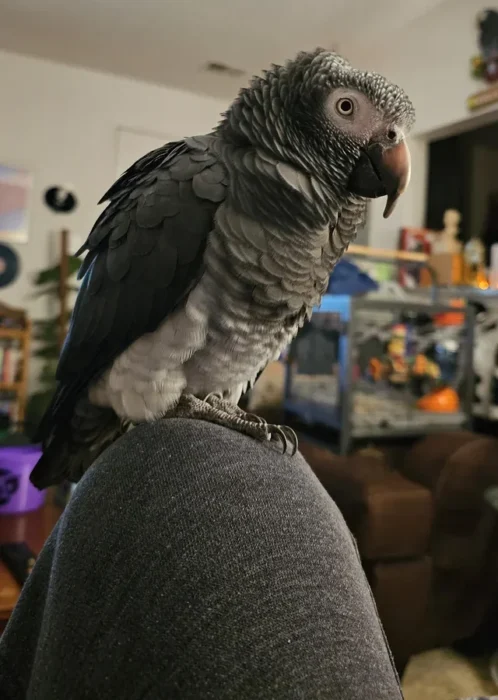
When a Timneh African Grey sits with feathers slightly fluffed but smooth, body balanced, and weight evenly distributed, the bird is comfortable. This is a healthy baseline state.
Owners should:
- Maintain the current environment
- Avoid sudden changes
- Use this time for calm interaction
Tight, Sleek Feathers: Alert or Uncertain
Sleek feathers pressed close to the body often indicate alertness. This may occur when:
- A new person enters
- An unfamiliar object appears
- The bird is evaluating a situation
This is not aggression. However, interaction should slow down.
Rapid Fluffing and Defluffing: Emotional Adjustment
Brief feather movements often signal emotional processing. Timnehs use this to self-regulate. Give them space rather than stimulation during this moment.
Eye Behavior and Visual Signals
Eye Pinning: Heightened Emotion
Eye pinning—rapid pupil dilation and contraction—is a key component of Timneh African Grey body language and behavior signs.
Eye pinning can indicate:
- Excitement
- Focused interest
- Overstimulation
Context matters. Eye pinning paired with relaxed posture may signal engagement. Paired with stiff posture, it often signals stress.
Head Orientation and Gaze
Timnehs frequently turn their head slightly to observe from one eye. This indicates assessment rather than fear. Avoid sudden movement during this phase.
Posture and Stance
Upright, Balanced Posture: Confidence
A Timneh standing tall with relaxed feet and evenly distributed weight feels secure. This is an ideal time for training or interaction.
Leaning Away or Lowered Body: Discomfort
When a Timneh leans away, lowers its body, or shifts weight backward, it is signaling discomfort.
Correct response:
- Pause interaction
- Reduce proximity
- Allow the bird to reset
Ignoring this sign often leads to avoidance or defensive behavior later.
Beak and Head Movements
Beak Grinding: Contentment
Soft beak grinding usually occurs during rest or pre-sleep periods. It indicates relaxation and emotional safety.
This is a positive sign and should not be interrupted.
Rapid Head Movements or Freezing
Quick head movements or sudden stillness often signal uncertainty. The bird is processing environmental input.
At this moment:
- Avoid touching
- Speak softly
- Give time
Patience prevents escalation.
Vocal Behavior as Emotional Context
Quiet Does Not Mean Unhappy
Timneh African Greys often communicate comfort through silence. Reduced vocalization paired with relaxed posture usually indicates contentment.
Misinterpreting silence often leads owners to overstimulate the bird unnecessarily.
Sudden Silence After Activity
A sudden drop in vocalization following interaction may signal overstimulation. Allow downtime rather than re-engagement.
Understanding vocal context is critical to reading Timneh African Grey body language and behavior signs accurately.
Movement Patterns and Locomotion
Slow, Purposeful Movement
Calm walking, controlled climbing, and deliberate steps indicate emotional balance.
Pacing or Repetitive Movement
Repeated pacing or back-and-forth motion often reflects:
- Environmental stress
- Anticipation without resolution
- Routine disruption
This behavior should prompt environmental review rather than correction.
Wing Behavior and Signals
Gentle Wing Stretching
Slow, controlled wing stretches are normal and healthy. They indicate comfort and body awareness.
Wing Flicking or Partial Lifts
Quick wing flicks may signal irritation or sensory overload. Reduce stimulation immediately.
Common Behavior Patterns and What They Mean
Avoidance Behaviors
Turning away, stepping back, or refusing interaction are early stress signals. Respecting them builds trust.
Freezing
A frozen posture often precedes stronger reactions. This is one of the most important warning signs to recognize.
Ignoring freeze responses is a common cause of bites.
Human Responses That Build Trust
Responding Correctly to Signals
Correct responses include:
- Slowing down
- Creating distance
- Reducing noise
- Maintaining calm tone
Incorrect responses include:
- Forcing contact
- Raising voice
- Ignoring posture
These reactions directly shape long-term behavior.
This approach aligns with humane parrot behavior guidance, which prioritizes communication over control.
How Environment Influences Body Language
Routine and Predictability
Timneh African Greys communicate more clearly when routines are stable. Inconsistent schedules often produce mixed or confusing signals.
Overstimulation vs Understimulation
Both extremes distort behavior signals. Balanced environments allow body language to remain honest and readable.
Supporting this balance reflects ethical parrot ownership principles.
Long-Term Outcomes of Reading Body Language Correctly
When Signals Are Respected
Owners who understand Timneh African Grey body language and behavior signs often experience:
- Fewer bites
- Stronger trust
- Calm, predictable companionship
When Signals Are Ignored
Ignoring communication often leads to:
- Escalated defensive behavior
- Emotional withdrawal
- Long-term relationship damage
These outcomes are preventable with observation and patience.
Final Perspective: Listening Without Words
Timneh African Greys communicate constantly—even in silence. Their body language is not subtle because it is weak, but because it is refined. Owners who learn to listen visually often discover that their parrot was “talking” all along.
Mastering Timneh African Grey body language and behavior signs is not about control. It is about respect, timing, and shared understanding.