

Are Congo African Greys Good Family Pets?
The question are Congo African Greys good family pets deserves a thoughtful, honest answer—because the reality is more nuanced than a simple yes or no. Congo African Greys are intelligent, emotionally complex parrots that can thrive in family environments under the right conditions. However, they are not universally suited to every household, and misunderstandings about their needs often lead to stress for both bird and family.
This article explores how Congo African Greys interact with families, what type of family environment suits them best, common challenges, and how responsible preparation determines success. The focus is long-term harmony, not idealized expectations.
Understanding the Emotional Nature of Congo African Greys
Highly Aware, Deeply Sensitive Birds
Congo African Greys are not casual companions. They are emotionally perceptive parrots that:
- Read tone of voice closely
- Notice routine changes quickly
- React to household energy and tension
Because of this, their suitability as family pets depends heavily on how predictable, calm, and structured the family environment is.
This emotional sensitivity is a defining feature of Congo African Grey temperament and shapes every aspect of family interaction.
What “Family Pet” Means for a Congo African Grey
Not a Passive Household Animal
When people ask are Congo African Greys good family pets, they often imagine a bird that:
- Enjoys constant handling
- Accepts unpredictable interaction
- Easily adapts to noise and movement
Congo African Greys are different. They prefer:
- Predictable interaction
- Respectful boundaries
- Calm, intentional engagement
They can integrate into family life—but on their terms, not as background pets.
Congo African Greys in Homes With Adults
Where They Often Thrive
Congo African Greys do particularly well in families where:
- Adults maintain routines
- Emotional tone is generally calm
- Interaction is respectful and consistent
In these environments, Congos often:
- Form strong emotional bonds
- Participate socially from a safe distance
- Communicate clearly and confidently
They enjoy being part of family life without being overwhelmed by it.
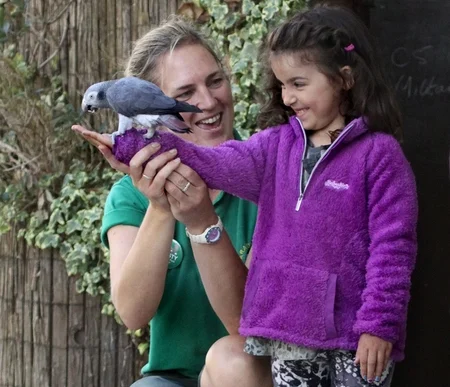
Congo African Greys and Children
This Is Where Careful Consideration Is Required
Congo African Greys can live in homes with children, but success depends on:
- The age of the children
- The family’s ability to supervise interactions
- The bird’s individual personality
Young children tend to move unpredictably, speak loudly, and seek physical contact—all of which can stress a Congo African Grey.
This does not mean Congos and children are incompatible, but it does mean clear boundaries and education are essential.
Older Children and Teenagers
Families with older, calmer children often see better outcomes. Teenagers who can:
- Follow instructions
- Respect space
- Read basic body language
are more likely to build positive relationships with a Congo African Grey.
Teaching children that the bird is a thinking being—not a toy—is critical.
Bonding Dynamics in Family Settings
One-Person Bonding Is Common
Congo African Greys often bond most strongly with one individual, even in a family environment. This is normal and not a failure.
Problems arise when:
- Only one person interacts with the bird
- Other family members are excluded
- Overbonding is encouraged
Balanced interaction reduces jealousy and emotional dependence.
This directly connects to why Congo African Greys develop separation anxiety in some households.
Noise, Activity, and Household Energy
How Much Stimulation Is Too Much?
Congo African Greys tolerate moderate household noise, but they struggle with:
- Constant shouting
- Sudden loud sounds
- Chaotic, unpredictable activity
Homes that are consistently busy may unintentionally overwhelm the bird, leading to withdrawal or stress-related behaviors.
A family does not need to be silent—but it does need to be emotionally regulated.
Training and Family Involvement
Consistency Across Family Members
Congo African Greys respond best when:
- All family members use similar cues
- Boundaries are consistent
- Handling rules are respected
Mixed signals confuse highly intelligent birds and often lead to frustration.
Family meetings to agree on interaction rules can dramatically improve outcomes.
Time Commitment and Lifestyle Reality
Congo African Greys Are Not Low-Maintenance
Families considering a Congo African Grey must realistically assess:
- Daily interaction time
- Ability to maintain routines
- Long-term lifestyle stability
These birds live for decades. Family dynamics will change, and planning for that change is part of responsible ownership.
This is why understanding Congo African Grey lifespan is essential before committing.
Common Family-Related Challenges
Overstimulation
Too many people interacting at once often overwhelms the bird.
Inconsistent Rules
Allowing behaviors one day and discouraging them the next creates confusion.
Treating the Bird as Entertainment
Congo African Greys are companions, not performers.
Each of these challenges is preventable with education and structure.
Signs a Family Environment Is Working Well
A well-adjusted Congo African Grey in a family home often shows:
- Relaxed posture around multiple people
- Willingness to observe family activity calmly
- Consistent eating and sleep habits
- Stable vocal behavior
These signs indicate emotional security.
When Congo African Greys May Not Be a Good Fit
Congo African Greys may struggle in families where:
- Schedules change constantly
- Noise levels are consistently high
- Supervision is limited
- Expectations are unrealistic
Recognizing a mismatch early is kinder than forcing adaptation.
Long-Term Family Success Factors
What Makes It Work
Families who succeed with Congo African Greys usually:
- Educate all members
- Maintain predictable routines
- Respect the bird’s autonomy
- Adjust expectations over time
In these homes, Congo African Greys often become deeply valued family members.
Final Answer: Are Congo African Greys Good Family Pets?
So, are Congo African Greys good family pets?
Yes—for the right families.
They are well-suited to families that:
- Value emotional awareness
- Can provide structure and calm
- Are willing to learn and adapt
They are less suited to:
- Highly chaotic households
- Families seeking a low-effort pet
- Environments with little supervision
When expectations align with reality, Congo African Greys can thrive as respected, emotionally connected family companions.