
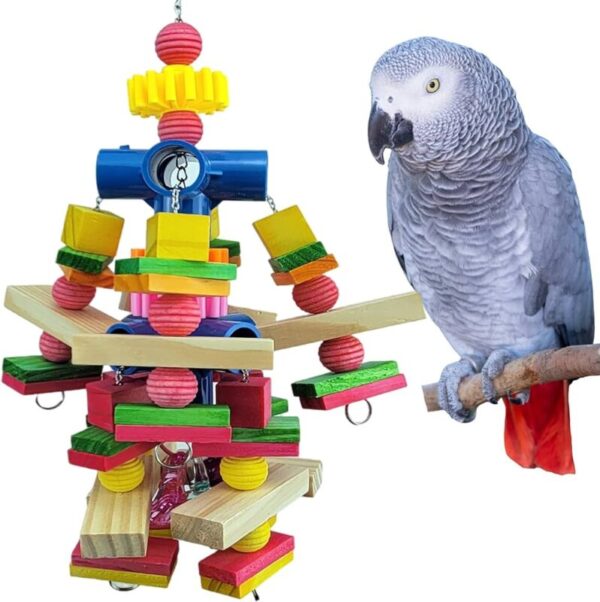

Best Toys for Congo African Greys
Selecting the best toys for Congo African Greys is more than a shopping task; it’s part of emotional care. These parrots are exceptionally intelligent, highly perceptive, and easily under-stimulated when toys are chosen without purpose. The right toys support cognitive engagement, reduce stress behaviors, and help channel energy in healthy, satisfying ways. Conversely, poorly chosen or excessive toys can contribute to agitation, avoidance, or even anxiety.
This guide provides expert, experience-based guidance on choosing toys that respect the unique intelligence and emotional needs of Congo African Greys.
Why Toy Selection Matters for Congo African Greys
Intelligence Drives Need
Congo African Greys don’t play for entertainment alone—they play to think. Toys are mental and emotional tools that:
- Encourage problem-solving
- Reduce boredom
- Support natural foraging behaviors
- Provide predictable engagement
Without thoughtful enrichment, many common health problems in Congo African Greys and behavioral issues like screaming or withdrawal can emerge.
Principles for Choosing the Best Toys
1. Cognitive Challenge Without Overstimulation
The best toys are not always the flashiest or noisiest. Instead, ideal enrichment:
- Offers a clear purpose
- Is solvable but not trivial
- Encourages engagement rather than frustration
Congo African Greys enjoy toys that make them think, not just react.
2. Rotation Over Accumulation
Too many toys at once clutter space and reduce focus. Rotate a curated set weekly to maintain novelty and engagement.
3. Safety First
Only use toys made from bird-safe materials:
- Natural, untreated wood
- Hard plastics free of toxic dyes
- Safe rope without metal fibers
- Untreated leather
Avoid toys with:
- Loose small parts
- Sharp edges
- Unsafe metals (lead, zinc)
- Long hanging strings
Safety is the foundation of thoughtful enrichment.
1. Foraging Toys: Purposeful Problem-Solving
Foraging toys promote natural behavior: searching for food. These are among the most valuable of the best toys for Congo African Greys.
Examples include:
- Puzzle boxes with hidden treats
- Foraging trays with forage material
- Toys that release bits of their formulated diet when manipulated
Foraging toys provide both mental engagement and the satisfaction of accomplishment.
2. Puzzle Toys With Moving Parts
These toys invite a sequence of actions to solve and are especially rewarding for Congo African Greys that think two or three steps ahead. Look for toys with:
- Sliding doors
- Rotating parts
- Interlocking pieces
These stimulate logical reasoning and sustained focus.
3. Chewable Natural Toys
Natural materials support healthy beak exercise and satisfy physical chewing instincts. Good options include:
- Hardwood blocks
- Palm fiber bundles
- Cork pieces
- Vine balls
Chewing is not destructive when it is purposeful—it’s natural enrichment.
4. Textured Balls and Tactile Toys
Toys that vary in texture and grip help with:
- Foot dexterity
- Sensory stimulation
- Play diversity
Woven balls, textured wood, or layered materials create tactile variety that keeps interest alive.
5. Interaction and Training-Based Toys
These toys are especially useful during bonding or calm training sessions:
- Target sticks
- Cooperative puzzle feeders
- Treat-releasing shapes
- Clicker game attachments
Interactive toys help connect enrichment with emotional trust and routine.
Toys to Use Outside the Cage
Congo African Greys also benefit from enrichment outside their primary cage:
- Play gyms with adjustable perches
- Floor puzzles with hidden foraging
- Climbing structures with varied textures
These toys support body movement and exploration in a larger space.
Toys to Avoid With Congo African Greys
1. Excessive Bells and Noise-Making Toys
Congo African Greys are thoughtful and often sensitive to noise overload. Constant loud toys can lead to stress rather than enrichment.
2. Fragile Plastic Toys
Pieces that break easily become hazards. Durable materials are essential.
3. Toys With Unanchored Strings
Long, dangling strings can pose entanglement risks.
Safety and engagement—not novelty—should determine toy choice.
Designing a Weekly Toy Rotation
A balanced rotation might look like this:
- Monday–Tuesday: Foraging puzzle
- Wednesday: Chewable wood blocks
- Thursday–Friday: Puzzle toy with moving parts
- Weekend: Interaction toy during training sessions
Rotate again the following week. This pattern supports predictability and novelty without clutter.
Introducing New Toys Gradually
Introduce new toys by:
- Placing them near familiar perches first
- Pairing them with calm speech or favorite treats
- Allowing the bird to observe without pressure
Rushing introductions often reduces interest.
This strategy aligns with how Congo African Greys communicate—observation before engagement.
Monitoring Toy Engagement
Watch for:
- Active exploration
- Manipulation of parts
- Repeated interaction
- Body language that indicates interest (alert posture, focused gaze)
Lack of engagement may mean the toy is either too easy or too complex.
Enrichment Beyond Toys
Toys are only one part of enrichment. The best engagement also includes:
- Predictable routine
- Calm interaction
- Foraging during daily feeding
- Training in short sessions
Toys should fit into a holistic care plan—not replace meaningful connection.
Long-Term Benefits of Proper Enrichment
When owners select the best toys for Congo African Greys and implement rotation:
- Stress behaviors decrease
- Mental engagement increases
- Screen time and repetitive noise demands drop
- Cooperative interaction becomes more frequent
- Quality of life improves noticeably
Thoughtful enrichment supports emotional stability and behavior long term.
Final Perspective: Toys Support the Mind, Not Just Play
For Congo African Greys, toys are cognitive tools, not accessories. They help the bird solve problems, stay engaged, and express natural curiosity in ways that prevent boredom, stress, and frustration.
Choosing the best toys means valuing intention over impulse and purpose over popularity.
The right toy, introduced thoughtfully, becomes a pathway to well-being.