
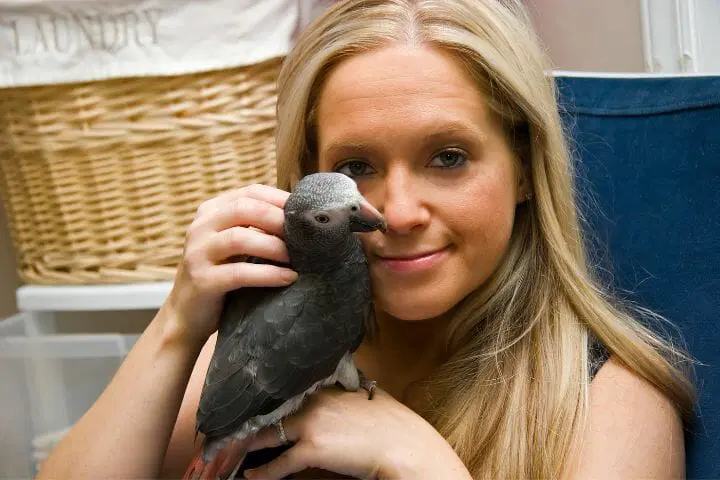

Socializing a Congo African Grey With People
Successfully socializing a Congo African Grey with people is one of the most important—and most misunderstood—parts of ownership. Congo African Greys are not naturally “social butterflies.” They are cautious, observant, and emotionally selective birds that build trust slowly. When socialization is rushed, forced, or inconsistent, the bird often becomes anxious, withdrawn, or defensive. When it is done correctly, however, Congo African Greys can become confident, communicative companions who feel safe around multiple people.
This guide explains how to socialize a Congo African Grey ethically and effectively, why socialization must respect the bird’s psychology, and how proper human social exposure prevents many long-term behavior problems. The focus is patience, structure, and emotional safety—not shortcuts.
What Socialization Really Means for Congo African Greys
Socialization Is About Emotional Safety, Not Handling
When people hear “socializing,” they often think of:
- Touching
- Holding
- Passing the bird around
For Congo African Greys, socialization actually means:
- Feeling safe in the presence of people
- Understanding human behavior patterns
- Learning that multiple humans are predictable and non-threatening
Physical contact may come later—or not at all. Trust always comes first.
Understanding socializing a Congo African Grey with people begins with redefining success.
Why Congo African Greys Are Naturally Cautious
Intelligence Creates Selectivity
Congo African Greys are highly intelligent and emotionally aware. Rather than reacting impulsively, they:
- Observe new people carefully
- Watch body language and tone
- Remember past interactions
This cautious nature is protective, not problematic. However, it means socialization must proceed slowly and respectfully.
This trait is deeply connected to Congo African Grey intelligence explained and emotional processing.
When Socialization Should Begin
Early Exposure Matters—but Never at the Expense of Security
Ideally, socialization starts when:
- The bird feels physically safe
- The environment is predictable
- Handling is calm and minimal
Rushing exposure before trust forms often backfires. A Congo African Grey that feels overwhelmed may withdraw permanently from social engagement.
Timing matters more than speed.
The Foundation: One Trusted Relationship First
Why Primary Bonding Comes Before Group Socialization
A Congo African Grey needs at least one consistent, calm human to serve as an emotional anchor. This person provides:
- Predictability
- Routine
- Safe interpretation of new experiences
Once that trust is established, the bird is far more open to gradual exposure to others.
Skipping this step often leads to fear-based responses.
Step-by-Step: Socializing a Congo African Grey With People
Step 1: Neutral Presence Without Pressure
New people should begin by:
- Sitting quietly in the room
- Avoiding direct staring
- Speaking softly or not at all
The goal is simple exposure without expectation. The bird should be allowed to observe and assess.
Observation is how Congo African Greys learn.
Step 2: Predictable Movement and Behavior
People interacting with the bird should:
- Move slowly
- Avoid sudden gestures
- Use consistent body language
Erratic movement increases stress and delays socialization.
Step 3: Allow the Bird to Control Distance
A Congo African Grey should always be allowed to:
- Move closer voluntarily
- Stay on its perch
- Retreat without consequence
Forced proximity damages trust. Choice builds confidence.
Step 4: Associate People With Positive, Calm Outcomes
Once the bird is comfortable observing others, gentle association can begin:
- A person places food in the bowl
- A person talks calmly from a distance
- A person assists with routine tasks
Positive association does not require touch.
Step 5: Gradual Expansion of Social Circle
Introduce new people one at a time—not in groups. Each person should:
- Follow the same calm approach
- Respect the bird’s signals
- Avoid trying to “speed things up”
Consistency across people accelerates comfort.
Understanding Body Language During Socialization
Read Signals Constantly
Congo African Greys communicate comfort or discomfort through posture and movement. Watch for:
- Relaxed feathers vs tight posture
- Leaning toward or away
- Freezing or pacing
Learning Congo African Grey body language and behavior signs prevents socialization from becoming overwhelming.
Common Socialization Mistakes
Mistake 1: Passing the Bird Between People
Why it fails: Removes control and increases fear.
Mistake 2: Letting Visitors Handle the Bird
Why it fails: Trust does not transfer automatically.
Mistake 3: Forcing “Friendly” Interaction
Why it fails: Congo African Greys do not respond well to pressure.
Most socialization failures come from human impatience—not bird temperament.
Socialization in Family Environments
Special Considerations
In families, success depends on:
- Clear rules for interaction
- Supervision with children
- Respect for the bird’s boundaries
This directly supports outcomes discussed in are Congo African Greys good family pets considerations.
Socialization and Overbonding
Why Balance Is Critical
If only one person interacts with the bird:
- Overbonding may develop
- Anxiety may increase when that person leaves
- Other people may be perceived as threats
Balanced social exposure reduces risks associated with why Congo African Greys develop separation anxiety.
How Long Does Socialization Take?
Realistic Expectations
Socialization is not linear. Progress depends on:
- The bird’s history
- Previous experiences
- Consistency of exposure
Some birds show comfort within weeks; others take months. There is no failure—only pacing.
Signs Socialization Is Working
Positive indicators include:
- Calm observation of people
- Willingness to eat in their presence
- Soft vocalizations rather than alarm calls
- Relaxed posture
These signs matter more than physical contact.
When Socialization Should Pause
Pause socialization if the bird shows:
- Persistent freezing
- Escalating vocal distress
- Avoidance or withdrawal
Restoring routine and predictability often resets progress.
Long-Term Benefits of Proper Socialization
When socializing a Congo African Grey with people is done correctly, owners often see:
- Reduced fear responses
- Easier handling for care
- Better emotional resilience
- Lower risk of aggression
- More confident communication
Socialized birds are not “friendlier”—they are more secure.
Final Perspective: Socialization Is a Dialogue, Not a Test
Socializing a Congo African Grey is not about making the bird like everyone. It is about teaching the bird that people are predictable, respectful, and safe. Trust grows when the bird feels heard and never rushed.
Socialization succeeds when the bird chooses connection.
Patience builds confidence.
Confidence builds trust.