
Best Diet for Parrots
Choosing the best diet for parrots is one of the most important decisions an owner will ever make. Diet directly affects feather quality, immune strength, behavior, hormonal balance, lifespan, and overall vitality. Unfortunately, misinformation is common—especially the outdated belief that seeds alone are sufficient.
Parrots are intelligent, long-lived animals with complex nutritional needs. While specific requirements vary by species, the foundation of a healthy parrot diet is consistent: fresh, varied, balanced, and thoughtfully prepared. This guide explains what parrots should eat daily, what to avoid, how to structure meals, and how to prevent common diet-related health problems.
Why Diet Matters More Than Most Owners Realize
Nutrition Impacts Behavior and Health
Poor nutrition can contribute to:
- Feather damage
- Aggression or irritability
- Hormonal imbalance
- Obesity
- Liver disease
- Vitamin deficiencies
Many so-called “behavior problems” begin with diet imbalance.
Understanding why nutrition is critical for parrot health helps prevent chronic illness before it begins.
The Core Components of the Best Diet for Parrots
A balanced diet for most companion parrots includes:
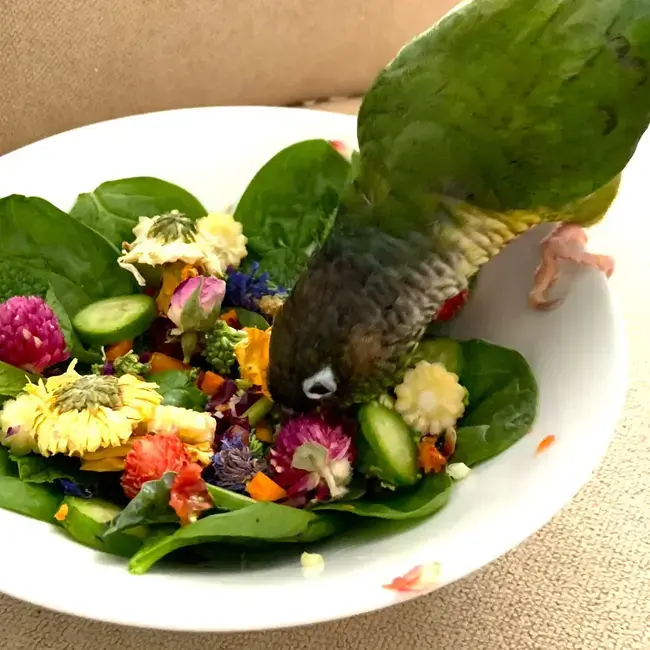
- Fresh vegetables (primary component)
- High-quality formulated pellets (species-appropriate)
- Limited fruit
- Healthy seeds or nuts in moderation
- Fresh water daily
The exact ratios depend on species size and metabolism.
Fresh Vegetables: The Foundation of Parrot Nutrition
Why Vegetables Should Be the Largest Portion
Fresh vegetables provide:
- Natural vitamins
- Fiber
- Hydration
- Antioxidants
They also mimic the high-moisture plant foods many parrots eat in the wild.
Understanding why fresh vegetables are essential in a parrot diet reframes feeding priorities.
Best Vegetables for Parrots
Excellent daily options include:
- Dark leafy greens (kale, Swiss chard, collard greens)
- Bell peppers
- Carrots
- Broccoli
- Squash
- Zucchini
- Green beans
Offer a variety and rotate choices to prevent boredom.
Pellets: A Supportive, Not Exclusive, Food
Why Pellets Are Helpful
High-quality pellets:
- Provide balanced nutrition
- Reduce selective eating
- Help prevent deficiencies
However, pellets should complement fresh foods—not replace them entirely.
Understanding how pellets fit into a balanced parrot diet prevents over-reliance.
Avoid Over-Fortification
Some species, such as Eclectus parrots, are sensitive to excessive synthetic vitamins. Always choose species-appropriate formulations.
Fruit: Healthy but Limited
Why Fruit Should Be Moderated
Fruit contains:
- Natural sugars
- Vitamins
- Moisture
However, excessive fruit intake may contribute to:
- Weight gain
- Digestive imbalance
Fruit should be treated as a small portion, not a primary food.
Understanding how much fruit parrots should eat supports balanced nutrition.
Seeds and Nuts: Treats, Not Staples
The Problem With Seed-Only Diets
Seed-heavy diets often lead to:
- Obesity
- Fatty liver disease
- Nutritional deficiencies
Seeds are high in fat and low in many essential nutrients.
Healthy Use of Seeds and Nuts
Seeds and nuts work best as:
- Training rewards
- Occasional enrichment
- Limited dietary supplements
Understanding why seed-only diets harm parrots helps prevent long-term illness.
Species Differences in Parrot Diet
Small Parrots (Budgies, Lovebirds)
Require:
- Balanced pellets
- Fresh vegetables
- Limited seeds
Small size does not reduce nutritional complexity.
Medium Parrots (Cockatiels, Conures)
Need:
- Vegetable-forward diet
- Moderate pellet intake
- Limited fruit
Large Parrots (African Greys, Amazons, Eclectus)
Require:
- High vegetable variety
- Careful fat control
- Species-specific adjustments
For example:
- African Greys require adequate calcium balance
- Eclectus parrots often need lower synthetic vitamin intake
Understanding species-specific dietary needs for parrots prevents generalization mistakes.
Water: The Overlooked Essential
Fresh Water Daily
Water should be:
- Clean
- Replaced at least once daily
- Provided in stainless steel bowls
Dirty water contributes to bacterial growth and illness.
Feeding Schedule and Routine
Consistency Builds Stability
Parrots thrive with:
- Morning fresh food
- Evening pellet access
- Predictable feeding times
Routine supports emotional security.
Understanding proper feeding schedules for parrots helps prevent anxiety and overeating.
Foraging: Making Diet Interactive
Why Foraging Supports Mental Health
In the wild, parrots work to find food. In captivity, food bowls eliminate that challenge.
Adding simple foraging:
- Encourages activity
- Reduces boredom
- Supports natural instincts
Understanding how to incorporate foraging into a parrot’s diet improves both nutrition and behavior.
Common Diet Mistakes New Owners Make
Feeding Only Seeds
The most widespread and harmful mistake.
Offering Too Much Fruit
Sugar overload can affect health over time.
Sudden Diet Changes
Rapid diet changes may cause:
- Digestive upset
- Food refusal
Transition gradually.
Ignoring Body Condition
Healthy parrots:
- Maintain steady weight
- Have smooth feathers
- Show consistent energy
Regular weighing is recommended.
Avoiding these mistakes supports long-term nutritional success for parrots.
Foods to Avoid Completely
Never feed parrots:
- Avocado
- Chocolate
- Caffeine
- Alcohol
- Onions (large amounts)
- Salty processed foods
These can be toxic or dangerous.
Supplements: Use With Caution
Most parrots eating a balanced diet do not require routine vitamin supplementation. Over-supplementation can cause more harm than good.
Always consult an avian veterinarian before adding supplements.
Signs of a Healthy Diet
Indicators include:
- Bright, smooth feathers
- Clear eyes
- Stable weight
- Normal droppings
- Consistent energy
If these decline, diet should be evaluated first.
When to Consult an Avian Veterinarian
Seek professional advice if you notice:
- Sudden weight loss
- Chronic diarrhea
- Feather dullness
- Lethargy
- Changes in appetite
Dietary imbalance is often reversible when caught early.
The Ethical Responsibility of Feeding Well
Providing the best diet for parrots is not optional—it is fundamental care. Poor diet choices shorten lifespan and increase suffering. Balanced nutrition reflects responsible ownership and long-term commitment.
Feeding well is one of the most direct ways to support your parrot’s health, emotional balance, and longevity.
Final Thoughts
The best diet for parrots is fresh, varied, balanced, and species-appropriate. Vegetables form the foundation, pellets provide support, fruit remains limited, and seeds are used sparingly. Clean water, routine feeding times, and interactive foraging complete the picture.
When nutrition is correct, many common health and behavioral issues never develop. A thoughtful diet does not just improve lifespan—it improves quality of life every single day.
Parrot nutrition is not about trends or convenience. It is about consistency, balance, and respect for a species that depends entirely on you.