
Description
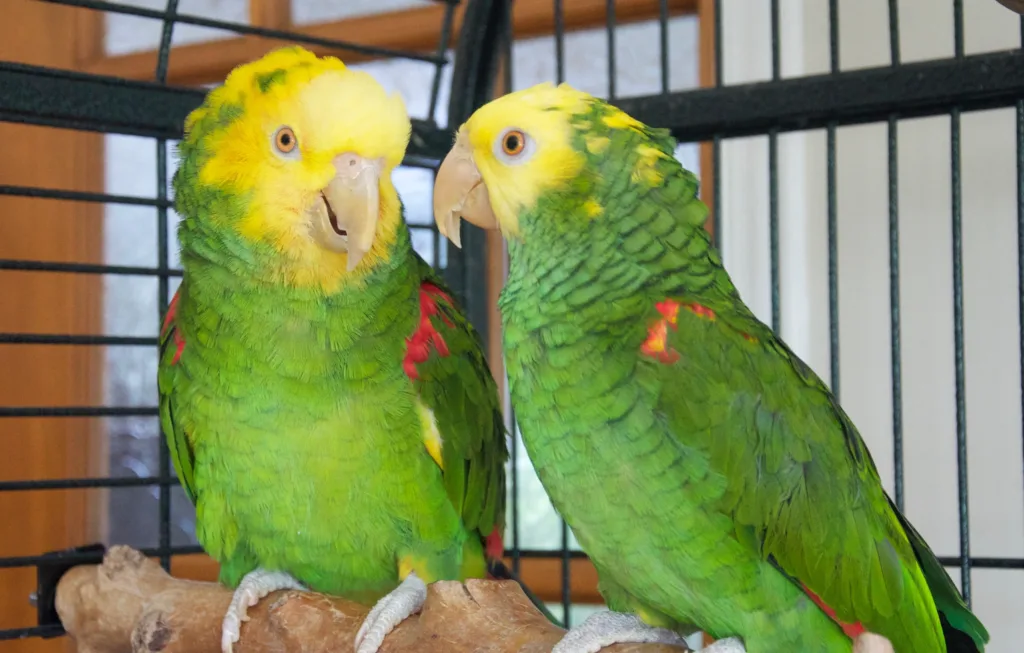
A Bonded Double Yellow-Headed Amazon Pair With Unified Movement and Shared Vocal Curiosity
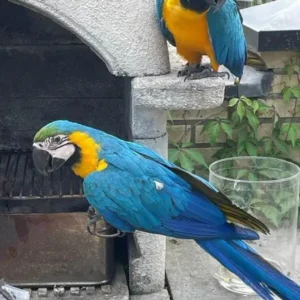
Mavion and Liora form a bonded double yellow-headed amazon pair known for their unified energy and soft vocal play. Their golden crowns glow brightly, and their feathers show excellent care and nutrition. They interact with one another through gentle chirps, light wing gestures, and synchronized posture shifts that indicate strong emotional alignment.
During training, both parrots follow cues with smooth transitions. Mavion often takes the first step forward, while Liora balances him with calm observation. Together, they create a harmonious environment filled with shared interest and gentle communication. Their vocal play grows each week, and they respond well to tone repetition and melodic patterns.
A helpful internal link for owners who want to encourage paired bonding appears in this guide:
https://exoticbirdsfarm.online/blog/amazon-pair-training-guide/
titled “Training Amazon Pairs Through Shared Vocal Sessions and Coordinated Interaction.”
Personality Traits — Coordinated Behavior, Warm Social Energy & Calm Mutual Trust
This duo expresses strong relational awareness. They observe one another before acting, and they adjust their reactions to maintain balance. Mavion shows lively curiosity and reacts quickly to verbal cues. Liora brings calm steadiness and helps create a peaceful atmosphere during daily routines. Their harmony strengthens through shared activities such as foraging, vocal play, and perch exploration.
Both birds display warm social energy toward people. They offer soft whistles, controlled greetings, and gentle beak taps when they feel relaxed. Their coordinated behavior allows homes to enjoy smooth interaction without conflict or tension. As a bonded pair, they enhance each other’s confidence and emotional stability.
Daily Routine, Enrichment & Interaction Structure for a Bonded Amazon Duo
Mavion and Liora flourish under predictable routines that blend stimulation with calm bonding.
Ideal Daily Routine
• Morning call-and-response greeting
• Paired step-up practice
• Foraging board with shared sections
• Midday rest on connected perches
• Afternoon vocal imitation session
• Evening quiet bonding time
This routine supports their natural rhythm and prepares them for long-term emotional balance.
Training Progress — Coordinated Step-Up, Shared Vocal Patterns & Stable Enrichment Behavior
Their training shows steady, confident progress.
Current Skills
• Reliable paired step-up
• Call-and-response vocal play
• Target-stick interest from both birds
• Calm perch transitions
• Cooperative crate entry
• Synchronized greeting tones
• Early mimicry of rising pitch sequences
Their teamwork creates strong learning momentum that benefits future training.
https://en.wikipedia.org/wiki/Yellow-headed_amazon
Diet & Enrichment Supporting Paired Bonding, Color Brightness & Vocal Growth
Balanced Diet
• Premium Amazon pellets
• Mixed leafy greens
• Carrot curls, pumpkin, and squash
• Mango, fig, and grape slices
• Almond chips and micro walnut pieces
• Fresh sprouts for both birds
Preferred Enrichment
• Dual climbing ropes
• Pair foraging trays
• Wooden puzzle blocks
• Rhythm imitation toys
• Soft chew spirals
• Natural-branch perch system
• Tonal response toys
These enrichment tools encourage unity, communication, and feather vibrancy.
Veterinary & Health Profile — Bright Plumage, Strong Lungs & Excellent Pair Stability
This duo has been evaluated for pair compatibility and physical health. Both parrots show clear breathing, bright coloration, stable weight, and strong coordination. Their health records confirm excellent long-term potential as companion parrots.
Included With Purchase
• DNA certificates for both parrots
• PBFD and Polyoma test results
• Hatch documents
• Veterinary health profiles
• Pair bond behavior sheet
• Feeding and enrichment guide
• Export documents
⭐ Buyer Locations Actively Searching for Double Yellow-Headed Amazon Parrot Pairs
Buyers searching for a bonded Double Yellow-Headed Amazon parrot pair often prioritize emotional balance, established compatibility, and long-term household harmony. For this reason, pairs like Mavion and Liora attract experienced keepers who prefer socially complete placements.
In North America, interest emerges from Los Alamos, New Mexico, where private aviary owners often seek mature Amazon pairs with stable interaction patterns. At the same time, searches also appear in Cambridge, Maryland, where buyers frequently prepare enrichment-based environments for paired parrots. In Canada, similar intent comes from Niagara-on-the-Lake West, Ontario, particularly among keepers planning long-term shared housing.
Across the United Kingdom, buyer activity is visible in Tetbury, Gloucestershire, a location known for owners who favor paired parrots for companionship and display. Meanwhile, demand across continental Europe develops in Barcelos (Portugal), Montepulciano Hills (Italy), Quedlinburg Upper Quarter (Germany), Grasse Hinterland (France), and Santillana del Mar (Spain). Buyers in these regions often compare pair compatibility, age alignment, and daily interaction balance.
Additional searches originate from Szentendre Riverside (Hungary), Korčula Old Town (Croatia), Naarden Fortress (Netherlands), Kinsarvik Fjordside (Norway), Znojmo Historic Zone (Czech Republic), and Arlesheim (Switzerland). Together, these locations indicate strong interest in ethically raised Amazon pairs.
Beyond Europe, buyers in Mount Wilson, New South Wales (Australia) and Lake Hayes Estate, Otago (New Zealand) often search for bonded Amazon parrots suited for stable, long-term placement. Meanwhile, in the Middle East, interest appears from Al Barari Woodland Sector (UAE), Al Abdali North Fields (Kuwait), and Al Daayen Residential Zone (Qatar), where documentation and welfare assurance remain central.
In Asia, buyer searches also originate from Karuizawa West Ridge (Japan), Upper Serangoon (Singapore), and Tai Tam Plateau (Hong Kong). In these regions, paired parrots are often preferred for social continuity.
⭐ Frequently Asked Questions — Double Yellow-Headed Amazon Parrot Pairs
How does living as a pair affect daily behavior?
Living as a pair provides constant social interaction. As a result, many parrots display calmer routines and reduced attention-seeking behavior.
Do paired Amazons still bond with humans?
Yes, although interaction becomes shared. Therefore, engagement often feels cooperative rather than exclusive.
Does a bonded pair require more space?
Slightly more space helps. In addition, multiple perches and feeding stations support harmony.
Are daily routines easier with a pair?
Often, yes. Because the birds entertain each other, owners can maintain balanced schedules more easily.
What type of household suits a bonded Amazon pair?
Homes with predictable rhythms work best. At the same time, consistent enrichment helps maintain long-term stability.
Worldwide Delivery & Transition Support
This bonded pair travels in a dual-compartment crate built to stabilize movement and reduce noise while maintaining airflow and comfort. Their arrival package includes feeding instructions, pair interaction tips, and continued support for long-term adjustment.
Reviews
There are no reviews yet.