
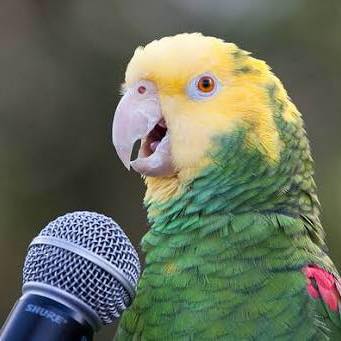

Amazon Parrot Singing Development
Amazon parrot singing development is a natural extension of the Amazon parrot’s intelligence, emotional expression, and vocal control. While many people focus on talking ability, Amazons are also gifted singers—capable of learning melodies, rhythms, whistles, and expressive sound patterns that go far beyond simple mimicry. Importantly, singing does not emerge through force or repetition alone. Instead, it develops through emotional security, listening, routine, and confident experimentation.
This guide explains how Amazon parrot singing development works, when it begins, what influences it, how to encourage musical expression ethically, and how to avoid mistakes that suppress or distort vocal growth.
Why Amazon Parrot Singing Development Is Unique
Amazon parrots are among the most vocally expressive parrots in the world. Unlike some species that focus primarily on speech, Amazons naturally explore:
- Pitch variation
- Rhythm
- Repeated melodic patterns
- Emotional tone
Therefore, Amazon parrot singing development is not accidental—it is a biologically supported behavior.
Understanding this development helps to:
- Encourage healthy vocal creativity
- Reduce screaming through structured expression
- Improve emotional communication
- Support long-term vocal confidence
These principles are emphasized throughout professional Parrot Care Guides.
Singing vs Talking: Understanding the Difference
Singing Is Emotional Expression
Talking focuses on words and context. Singing, however, is about emotion, rhythm, and repetition.
Amazon parrots sing to:
- Express excitement
- Seek social connection
- Regulate emotion
- Imitate pleasant sounds
Because of this, singing often develops before clear speech.
Talking and Singing Develop Together
Although different, singing and talking support each other.
Amazons that sing confidently often:
- Develop clearer speech later
- Show better vocal control
- Communicate emotions more clearly
This overlap is explained further in Amazon Parrot Speech Development.
When Amazon Parrot Singing Development Begins
Listening Is the First Stage
Before any singing occurs, Amazons spend weeks or months listening.
Early pre-singing signs include:
- Head tilting toward sound
- Focused attention during music
- Quiet vocal experimentation
- Soft whistles
This silent phase is essential and should never be rushed.
Typical Development Timeline
Although individual variation is normal:
- Juveniles often begin with whistles
- Young adults experiment with rhythm
- Adults refine melody and repetition
Age matters less than emotional security and exposure.
Emotional Safety and Singing Development
Confidence Unlocks Creativity
Amazon parrots sing most freely when they feel emotionally safe.
They explore sound more when:
- No pressure is applied
- Humans react calmly
- Vocal attempts are not judged
This emotional foundation mirrors principles in Understanding Amazon Parrot Bonding.
Stress Suppresses Singing
If an Amazon feels anxious or overstimulated:
- Vocal creativity decreases
- Singing becomes rigid or absent
- Screaming may replace melody
Therefore, calm environments are essential.
How Amazons Learn to Sing
Repetition With Meaning
Amazon parrots learn melodies they hear repeatedly and enjoy emotionally.
They are most likely to copy:
- Songs heard daily
- Sounds paired with calm interaction
- Melodies associated with positive routines
Random or chaotic exposure rarely produces singing.
Rhythm Matters More Than Words
Many Amazons copy rhythm first, then pitch.
For example:
- Repeated whistles
- Simple musical phrases
- Short melodic loops
Complex songs should be introduced gradually.
Best Sounds for Amazon Parrot Singing Development
Start Simple
Begin with:
- Whistled tunes
- Short melodies
- Repetitive musical phrases
Avoid loud, fast, or chaotic music early on.
Human Participation Helps
Amazons often sing more when:
- Humans whistle or hum calmly
- Interaction feels social, not performative
- Responses are warm but not exaggerated
This cooperative learning reflects Parrot Human Bonding Science.
Daily Routine and Singing Development
Routine Encourages Practice
A predictable schedule gives Amazons confidence to experiment vocally.
Routine supports:
- Emotional regulation
- Consistent practice times
- Reduced anxiety
This structure is reinforced in Setting a Daily Parrot Routine.
Best Times for Singing
Singing is most likely:
- In the morning
- During calm social time
- After rest
- During predictable interaction windows
Avoid encouraging singing during overstimulation.
Body Language Signals During Singing
Before singing, Amazons often show:
- Upright posture
- Focused eyes
- Slight head movement
- Relaxed feathers
Interrupting at this stage may stop the attempt.
Reading these cues aligns with Understanding Parrot Body Language.
Training vs Encouraging Singing
Singing Cannot Be Forced
Unlike step-up or recall, singing cannot be trained through commands.
Instead:
- It emerges naturally
- It depends on emotional readiness
- It grows through positive association
Reward-based principles in Positive Reinforcement Training for Parrots support confidence—but should never be used to demand singing.
Avoid Overreaction
Clapping, laughing loudly, or rushing toward the bird often:
- Startles the parrot
- Interrupts singing
- Creates performance pressure
Calm acknowledgment works best.
Singing, Noise, and Screaming: Key Differences
Singing Is Structured Sound
Singing has:
- Repetition
- Rhythm
- Controlled volume
Screaming, in contrast, is unstructured and emotional.
Encouraging Singing Reduces Screaming
When Amazons are given safe outlets for vocal expression:
- Frustration decreases
- Communication improves
- Excessive screaming often reduces
This balance supports long-term vocal health.
Hormones and Singing Behavior
Seasonal Changes Affect Singing
During hormonal periods:
- Singing may increase or decrease
- Vocal tone may change
- Rhythm may become more intense
These shifts are normal and temporary.
Supporting Stability
During these times:
- Maintain routine
- Reduce stimulation
- Avoid reacting emotionally
Consistency protects vocal confidence.
Common Mistakes That Limit Singing Development
- Forcing performance
- Playing loud music constantly
- Reacting emotionally to silence
- Overstimulating the environment
- Comparing parrots to others
Each Amazon develops at its own pace.
Long-Term Outcomes of Healthy Singing Development
Amazons supported properly are more likely to:
- Sing confidently and creatively
- Combine melody with speech
- Use sound for emotional communication
- Avoid chronic screaming
This is why ethical programs offering Exotic Birds for Sale increasingly educate buyers about vocal enrichment—not just talking.
External Behavioral Insight
Avian acoustic research consistently shows that parrots explore sound through emotional association and rhythmic repetition rather than instruction alone. Educational sources such as avian behavior research publications confirm that calm environments and predictable exposure lead to richer vocal repertoires.
Understanding Amazon parrot singing development transforms sound from noise into communication.