
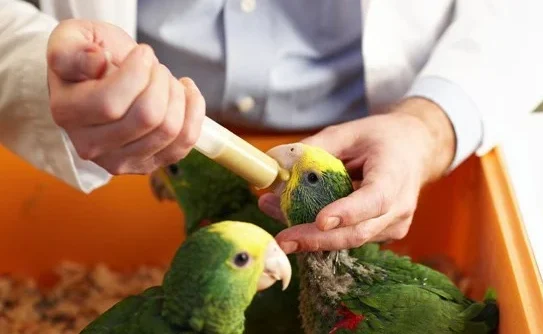

Baby Parrot Feeding Guide
A baby parrot feeding guide is essential for anyone raising, breeding, or caring for young parrots. Feeding baby parrots correctly is not just about nutrition—it directly affects growth, immunity, emotional security, and long-term behavior. Mistakes during the feeding stage can lead to serious health issues, developmental delays, or lifelong problems. When feeding is done properly, however, baby parrots grow into confident, healthy, and well-adjusted adults.
This guide explains baby parrot feeding step by step, including feeding methods, schedules, formula preparation, common mistakes, and how feeding influences trust and behavior. Understanding the baby parrot feeding process is a core responsibility in ethical Parrot Care Guides and responsible aviculture.
Why a Baby Parrot Feeding Guide Is So Important
Baby parrots are completely dependent on caregivers during early life stages. Their digestive systems, immune responses, and emotional development are still forming. Because of this, feeding errors can have immediate and long-term consequences.
A proper baby parrot feeding guide helps to:
- Support healthy growth and weight gain
- Prevent aspiration, infection, and crop issues
- Build early trust and emotional security
- Reduce stress and feeding-related trauma
- Lay the foundation for future behavior and bonding
Feeding is not just nutrition—it is communication, safety, and reassurance.
Understanding Baby Parrot Development Stages
Before feeding begins, it is important to understand how feeding needs change with age.
Hatchlings (0–2 Weeks)
Newly hatched parrots are extremely fragile. At this stage:
- Body temperature regulation is poor
- Digestion is very sensitive
- Feeding frequency is high
Feeding must be precise, warm, and consistent.
Nestlings (2–5 Weeks)
As baby parrots grow:
- Feeding volume increases
- Intervals between feeds slowly extend
- Muscles and coordination improve
This stage is critical for steady growth and proper nutrition.
Fledglings (5–10+ Weeks, Species Dependent)
Fledglings begin exploring solid foods while still relying on hand-feeding.
A baby parrot feeding guide must balance:
- Continued formula feeding
- Introduction of solid foods
- Emotional reassurance during transition
This stage shapes future eating habits and confidence.
Hand-Feeding vs Parent-Feeding Baby Parrots
Parent-Fed Baby Parrots
Parent-feeding is the most natural method. It allows:
- Species-appropriate feeding rhythms
- Natural immunity transfer
- Reduced human error
However, not all situations allow parent-feeding, especially in breeding or rescue scenarios.
Hand-Feeding Baby Parrots
Hand-feeding requires knowledge, patience, and strict hygiene.
When done correctly, hand-feeding:
- Supports healthy development
- Allows close monitoring of intake
- Builds early human trust
When done incorrectly, it can cause serious harm. This is why a reliable baby parrot feeding guide is essential.
Baby Parrot Feeding Formula Basics
Choosing the Right Formula
Always use a high-quality, species-appropriate commercial hand-feeding formula. Never substitute with homemade mixtures.
A proper formula provides:
- Balanced protein
- Essential fats
- Vitamins and minerals
- Easy digestibility
Improvised foods are dangerous and often fatal.
Preparing Formula Safely
Formula preparation must follow strict guidelines:
- Use clean, sterilized utensils
- Mix fresh formula for each feeding
- Maintain correct temperature (usually 39–41°C / 102–106°F)
Formula that is too hot can burn the crop. Formula that is too cold can cause digestion failure.
Feeding Tools and Techniques
Syringe Feeding
Syringes allow controlled delivery and are commonly used in baby parrot feeding.
Key points:
- Feed slowly
- Allow the chick to swallow naturally
- Never force the syringe
Spoon Feeding
Some breeders use bent spoons. This method mimics parental feeding but requires experience.
Regardless of method, the baby must always control the feeding pace.
Baby Parrot Feeding Schedule by Age
Although schedules vary by species, a general baby parrot feeding guide includes:
- Hatchlings: every 2–3 hours (including night feeds)
- Nestlings: every 4–6 hours
- Older chicks: 3–4 feeds per day
- Fledglings: gradually reduced as solid foods increase
Overfeeding is as dangerous as underfeeding. Always monitor crop emptying between feeds.
Understanding the Crop and Digestive Health
The crop is a temporary food storage pouch. Healthy feeding requires:
- Full but not overstretched crop
- Complete emptying between feeds
- No sour smell or hard texture
A crop that fails to empty may indicate infection, incorrect temperature, or feeding volume issues.
Hygiene and Safety in Baby Parrot Feeding
Poor hygiene is one of the most common causes of illness.
Essential hygiene rules:
- Wash hands thoroughly before feeding
- Sterilize syringes after each use
- Discard leftover formula
- Keep feeding area clean
Bacteria grow rapidly in warm formula, making cleanliness non-negotiable.
Weaning: The Most Sensitive Feeding Stage
Weaning is when baby parrots transition from formula to solid foods.
Why Weaning Must Never Be Rushed
Forcing weaning can cause:
- Weight loss
- Anxiety
- Feeding disorders
- Long-term behavioral issues
A proper baby parrot feeding guide emphasizes abundance, not restriction.
Introducing Solid Foods
Offer a variety of:
- Soft vegetables
- Cooked grains
- Sprouted seeds
- Age-appropriate pellets
Let the baby explore food at its own pace while continuing formula feeds.
Emotional Impact of Feeding on Baby Parrots
Feeding is a primary source of comfort.
Positive feeding experiences:
- Build early trust
- Reduce fear responses
- Support emotional regulation
This emotional foundation connects closely with later bonding topics discussed in How to Build Trust With Parrots and Understanding Parrot Social Dynamics.
Common Baby Parrot Feeding Mistakes
- Feeding formula too hot or too cold
- Forcing food into the beak
- Skipping feeds to “encourage weaning”
- Using unapproved food substitutes
- Poor hygiene practices
Most feeding-related emergencies result from preventable errors.
Baby Parrot Feeding and Long-Term Behavior
Improper feeding can lead to:
- Chronic anxiety
- Food aggression
- Poor social confidence
- Weaning trauma
By contrast, parrots raised with a correct baby parrot feeding guide often become:
- Emotionally stable
- Confident eaters
- Better bonded
- Easier to train
Feeding Baby Parrots in Breeding and Sales Settings
Ethical breeders prioritize feeding quality over speed. Buyers should always ask:
- How was the baby fed?
- Was weaning allowed naturally?
- What foods is the baby eating now?
Responsible practices are especially important for those offering Exotic Birds for Sale, where early feeding impacts lifelong welfare.
When to Seek Professional Help
Seek veterinary or professional help if:
- The baby stops gaining weight
- The crop does not empty
- Breathing becomes labored during feeding
- Regurgitation occurs frequently
Early intervention saves lives.
External Feeding & Welfare Insight
Avian veterinary research consistently shows that improper hand-feeding is one of the leading causes of early parrot mortality. Educational resources such as avian behavior research publications emphasize strict feeding protocols, hygiene, and gradual weaning as essential welfare standards.
A baby parrot feeding guide is therefore a responsibility, not a preference.