
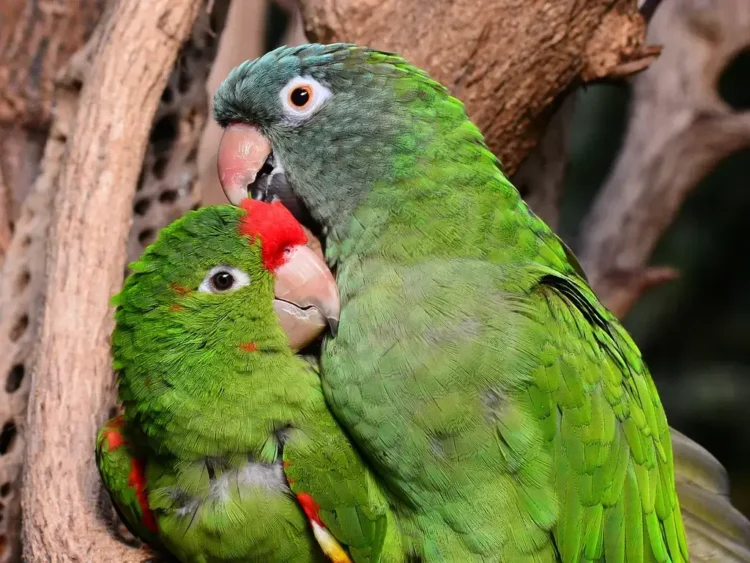

Benefits of Keeping Bonded Parrots
Benefits of keeping bonded parrots extend far beyond companionship and aesthetics. Bonded parrots—pairs that have formed a strong social or mating bond—often experience greater emotional stability, improved behavior, and enhanced overall wellbeing compared to solitary birds. Because parrots are naturally flock-oriented animals, living with a compatible partner closely mirrors their natural social structure.
This guide explains the key benefits of keeping bonded parrots, how bonded pairs differ from single parrots, and why pairing can be a healthy, ethical choice for many homes, breeders, and aviaries.
Why Bonded Parrots Reflect Natural Parrot Behavior
In the wild, parrots rarely live alone. Most species form long-term pair bonds within complex social flocks. These bonds provide:
- Emotional security
- Mutual grooming and reassurance
- Cooperative communication
- Shared vigilance and safety
Keeping bonded parrots in captivity respects this biological reality. When parrots are allowed to maintain a healthy bond, many stress-related behaviors naturally decrease.
This natural alignment is one reason bonded living is frequently recommended in advanced Parrot Care Guides.
Emotional Benefits of Keeping Bonded Parrots
Reduced Loneliness and Anxiety
One of the strongest benefits of keeping bonded parrots is emotional reassurance. Bonded parrots are rarely alone, even when humans are absent.
As a result:
- Separation anxiety is reduced
- Panic-driven screaming decreases
- Emotional dependency on humans is minimized
This emotional stability is especially valuable in homes where owners work or travel regularly.
Improved Emotional Regulation
Bonded parrots help regulate each other’s emotions. When one bird becomes startled or uncertain, the presence of a trusted partner often prevents escalation.
Because of this, bonded parrots typically show:
- Faster recovery from stress
- Fewer fear-based reactions
- More predictable behavior patterns
Behavioral Benefits of Keeping Bonded Parrots
Less Attention-Seeking Behavior
Single parrots often rely entirely on humans for stimulation and reassurance. Bonded parrots, however, meet many of these needs through their partner.
Consequently, bonded parrots tend to:
- Scream less for attention
- Show fewer clingy behaviors
- Engage more in independent play
This behavioral balance aligns closely with principles discussed in Parrot Vocalization Guide education.
Natural Social Interaction and Play
Bonded parrots engage in behaviors humans cannot fully replicate, such as:
- Mutual preening (allopreening)
- Shared vocal exchanges
- Coordinated movement and play
These interactions provide constant mental stimulation and emotional fulfillment.
Bonded Parrots and Mental Enrichment
Mental enrichment is not limited to toys or training. Social interaction itself is a powerful form of enrichment.
One of the overlooked benefits of keeping bonded parrots is continuous cognitive engagement. Paired parrots:
- Observe and learn from each other
- Solve social problems together
- Stay mentally active throughout the day
This reduces boredom-driven behaviors such as feather plucking or repetitive movements.
Benefits of Keeping Bonded Parrots for Long-Term Welfare
Increased Emotional Resilience
Bonded parrots often cope better with change. Whether facing new environments, routine adjustments, or temporary stressors, bonded pairs provide mutual reassurance.
This resilience is particularly valuable for parrots undergoing relocation or transition under International Bird Shipping Policy procedures.
Lower Risk of Behavioral Disorders
Many chronic behavioral issues stem from isolation. Keeping bonded parrots significantly lowers the risk of:
- Chronic screaming
- Self-destructive behaviors
- Aggression toward humans
- Depression-like withdrawal
While bonding is not a cure-all, it addresses one of the most common root causes of behavioral problems: social deprivation.
Bonded Parrots vs Single Parrots: Key Differences
Emotional Focus
- Bonded parrots: Emotionally anchored to each other
- Single parrots: Emotionally anchored primarily to humans
While single parrots can thrive with proper care, bonded parrots distribute emotional needs more naturally.
Human Interaction Expectations
Bonded parrots still enjoy human interaction, but they are less likely to demand constant attention.
This makes bonded parrots suitable for owners who:
- Value natural bird behavior
- Prefer balanced interaction
- Want reduced emotional pressure
These dynamics are closely related to topics explored in Cockatoo Bonding, although the principles apply to all parrot species.
Breeding and Non-Breeding Bonded Pairs
Non-Breeding Bonded Pairs
Not all bonded parrots breed. Many form strong social bonds without reproductive behavior.
Benefits include:
- Stable companionship
- No breeding management required
- Lower hormonal intensity
Breeding Bonded Pairs
Breeding pairs require additional responsibility but benefit greatly from strong bonds.
Well-bonded breeding parrots:
- Communicate more effectively
- Experience less mating stress
- Raise offspring more cooperatively
Ethical aviaries often prioritize bond strength over forced pairing.
Housing Considerations for Bonded Parrots
Space Requirements
Bonded parrots need more space than single birds. Adequate room prevents territorial disputes and supports harmony.
Key considerations include:
- Larger cages or aviary space
- Multiple perches and feeding stations
- Opportunities for shared and separate activity
Compatibility Matters
Not all parrots bond successfully. Forced pairing can cause stress rather than comfort.
Successful bonded pairs typically:
- Share compatible temperament
- Show mutual tolerance and interest
- Develop trust gradually
Observation and patience are essential during the bonding process.
Bonded Parrots and Training
Bonded parrots can still be trained effectively. In fact, training often becomes easier when emotional needs are met socially.
Using methods outlined in Positive Reinforcement Training for Parrots, caretakers can:
- Train birds individually within a bonded pair
- Reinforce cooperation without competition
- Maintain human–bird communication
Training strengthens trust without disrupting the pair bond.
Addressing Common Concerns About Bonded Parrots
“Bonded parrots won’t like humans”
This is a misconception. Bonded parrots often enjoy human interaction—they simply do not depend on it exclusively.
Healthy bonding creates emotional balance, not avoidance.
“Bonded parrots are harder to manage”
In reality, many owners find bonded parrots easier to manage due to reduced anxiety and attention-seeking behavior.
When Keeping Bonded Parrots May Not Be Ideal
Although the benefits of keeping bonded parrots are significant, bonded living may not suit every situation.
Challenges can include:
- Limited space
- Incompatibility between birds
- Managing breeding behavior
- Higher initial costs
Careful evaluation ensures bonded living is beneficial rather than stressful.
Benefits of Keeping Bonded Parrots in Family Homes
Bonded parrots often adapt well to family environments because:
- Emotional needs are shared
- Stress levels remain lower
- Behavior is more predictable
This makes bonded pairs appealing for families exploring Parrots for Sale Worldwide who want emotionally stable companions.
Long-Term Ethical Advantages of Keeping Bonded Parrots
From an ethical perspective, bonded living respects parrot psychology and social biology.
Long-term benefits include:
- Improved welfare outcomes
- Reduced surrender rates
- Greater emotional fulfillment for birds
- Healthier human–parrot relationships
For ethical sellers and aviaries offering Exotic Birds for Sale, educating buyers about bonded parrots supports responsible ownership.
External Behavioral Insight
Avian behavioral research consistently shows that social housing improves welfare outcomes for flock-based species. Educational sources such as avian behavior research publications highlight pair bonding as a critical factor in reducing chronic stress and improving emotional health in parrots.