

Can Eclectus Parrots Eat Human Food?
A very common and very important question among Eclectus owners is: can Eclectus parrots eat human food? The honest answer is yes—but only in a very limited, carefully selected way. Unlike many other parrot species, Eclectus parrots are far more sensitive to diet composition, processing, additives, and vitamin levels. As a result, many foods humans eat daily can quietly harm them, even when offered with good intentions.
This guide explains exactly which human foods Eclectus parrots can eat safely, which foods are risky or inappropriate, and which must never be offered. It also explains why Eclectus parrots react differently, so you can make confident, ethical feeding decisions without relying on guesswork.
Why Human Food Is a Special Case for Eclectus Parrots
Eclectus Parrots Are Not Like Other Parrots
Eclectus parrots have a longer digestive tract and absorb nutrients more efficiently than most parrots. This biological trait makes them excellent candidates for fresh, natural foods—but poor candidates for processed, enriched, or heavily seasoned items.
Because of this:
- Small amounts of additives can have large effects
- Synthetic vitamins accumulate easily
- Salt, sugar, and fat cause faster imbalance
Understanding why human food affects Eclectus parrots differently helps prevent long-term health problems that often appear gradually.
“Human-Grade” Does Not Mean “Bird-Safe”
Even foods marketed as organic, healthy, or natural for humans may still be unsuitable due to:
- Salt content
- Oils and fats
- Seasonings
- Cooking methods
Safety depends on preparation, not just ingredients.
Human Foods Eclectus Parrots Can Eat (Safely)
Plain Vegetables (Best and Safest Option)
Many vegetables humans eat are excellent for Eclectus parrots when offered plain and unseasoned.
Safe options include:
- Broccoli
- Bell peppers
- Carrots
- Zucchini
- Green beans
- Leafy greens (kale, chard, dandelion greens)
These foods form the backbone of safe human foods for Eclectus parrots and can be shared easily when prepared correctly.
Some Fruits (In Moderation)
Fruits are safe but must be limited due to sugar content.
Safe fruits include:
- Papaya
- Mango
- Berries
- Apple (seeds removed)
Offer fruit sparingly and preferably earlier in the day.
This supports controlled fruit intake for Eclectus parrots.
Cooked Whole Grains (Plain Only)
Certain grains eaten by humans can be shared if cooked without salt, oil, or seasoning.
Safe choices include:
- Brown rice
- Quinoa
- Barley
- Plain oats
These grains should be a small part of the diet, not a daily staple.
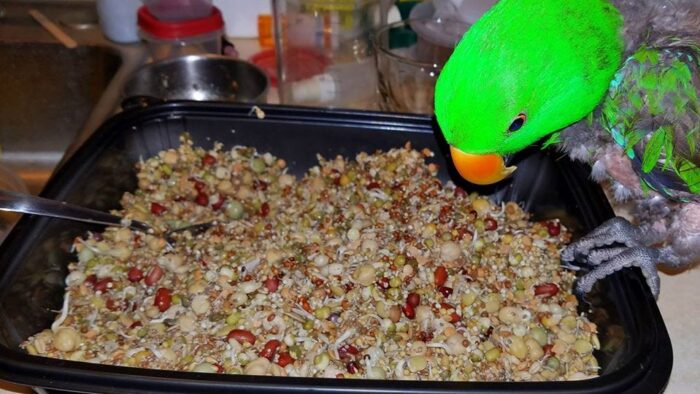
Legumes (Cooked or Sprouted)
Human foods such as lentils and chickpeas are excellent for Eclectus parrots when:
- Fully cooked, or
- Properly sprouted
Safe legumes include:
- Lentils
- Chickpeas
- Black beans
- Mung beans
This supports plant-based protein for Eclectus parrots without excess fat.
Human Foods That Are Risky for Eclectus Parrots
These foods are not immediately toxic but should generally be avoided or offered only in rare, tiny amounts.
Bread, Pasta, and Baked Goods
Even whole-grain bread contains:
- Salt
- Yeast
- Preservatives
These foods offer little nutritional value and can disrupt digestion.
Dairy Products
Birds cannot digest lactose properly. Dairy may cause:
- Diarrhea
- Digestive discomfort
Dairy provides no benefit and should be avoided.
Oily or Fried Foods
Fats stress the liver and increase hormonal behavior. Even small amounts can cause imbalance over time.
Avoid:
- Fried vegetables
- Foods cooked in oil
- Buttered grains
Human Foods That Are Toxic to Eclectus Parrots (Never Feed)
Some human foods are dangerous even in tiny amounts.
Never offer:
- Avocado
- Chocolate
- Caffeine (coffee, tea, soda)
- Alcohol
- Onion or garlic (raw or cooked)
- Rhubarb
Understanding toxic human foods for Eclectus parrots is essential for household safety.
Seasonings, Salt, and Additives: The Hidden Danger
Salt Is One of the Biggest Risks
Salt causes dehydration and kidney stress in parrots. Many human foods contain salt even when they don’t taste salty.
Avoid all foods that are:
- Seasoned
- Packaged
- Processed
This explains why salted foods are dangerous for Eclectus parrots.
Herbs and Spices
Some fresh herbs (like cilantro or basil) are safe in tiny amounts. However, spice blends, powders, and dried seasonings should be avoided entirely.
Can Eclectus Parrots Share Meals With Humans?
Sharing Is About Ingredients, Not Plates
An Eclectus parrot can eat ingredients from your meal only if they were prepared separately and safely.
Safe sharing looks like:
- Setting aside plain vegetables before seasoning
- Cooking grains without salt or oil
- Offering food in a clean, separate bowl
Never feed directly from your plate.
This supports safe meal sharing with Eclectus parrots without risking contamination.
How Often Can Eclectus Parrots Eat Human Food?
Human food should never replace a proper Eclectus diet.
Best practice:
- Human food = occasional additions
- Fresh parrot-appropriate foods = daily staples
Human food should make up a small percentage of the overall diet.
Understanding how often Eclectus parrots can eat human food helps prevent gradual nutritional imbalance.
Common Human-Food Feeding Mistakes
Assuming “Healthy for Me” = Healthy for My Parrot
This is the most common error.
Offering Food Too Often
Even safe foods can cause imbalance if overused.
Not Reading Labels
Hidden salt, sugar, and additives are common.
Ethical Guidelines for Feeding Human Food
Simplicity Protects Health
Ethical feeding means:
- Choosing whole, plain foods
- Avoiding convenience-based feeding
- Respecting species-specific biology
Understanding ethical human food feeding for Eclectus parrots supports long-term well-being.
Final Answer: Can Eclectus Parrots Eat Human Food?
Yes—Eclectus parrots can eat certain human foods, but only when those foods are:
- Plain
- Fresh
- Unseasoned
- Free of additives
Most human foods are unsuitable, and many are dangerous. When in doubt, do not share. Eclectus parrots thrive best on diets built specifically for their biology, with human foods used only as carefully selected additions.
Feeding safely is not restrictive—it is protective. When owners understand the limits, Eclectus parrots enjoy better health, calmer behavior, and longer lives.