
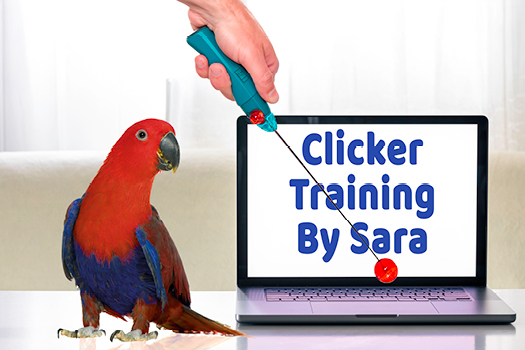

Clicker Training for Eclectus Parrots
Clicker training is one of the most effective—and misunderstood—tools for working with this species. Clicker training for Eclectus parrots succeeds when it is calm, precise, and respectful of choice. Done correctly, it builds confidence, reduces stress, and strengthens communication without pressure. Done poorly, it can overstimulate, confuse, or shut a sensitive bird down.
Eclectus parrots are not slow learners. They are careful learners. They watch, evaluate, and decide whether participation feels safe. This guide explains why clicker training suits Eclectus parrots so well, how to introduce it without stress, which rewards to use, and how to apply it to everyday behaviors—while avoiding the common mistakes that derail progress.
Why Clicker Training Works So Well for Eclectus Parrots
Precision Without Pressure
Clicker training uses a neutral sound to mark the exact moment a desired behavior occurs. That clarity matters for Eclectus parrots, who respond best to predictable, low-emotion feedback.
Benefits include:
- Clear communication without raised voices
- Reduced handling pressure
- Faster learning with less repetition
- Increased confidence through choice
Understanding why clicker training suits Eclectus parrots helps owners move away from force-based handling and toward cooperation.
Calm Minds Learn Better
Eclectus parrots are sensitive to overstimulation. Clicker training works because it:
- Keeps sessions short
- Minimizes physical contact
- Rewards thinking, not compliance
When the environment is calm, learning accelerates.
What You Need Before You Start
The Right Clicker (or Marker)
A standard clicker works well. However, some Eclectus parrots prefer a softer marker sound (a tongue click or quiet “yes”).
Choose a marker that:
- Is consistent
- Is neutral (not excited)
- Does not startle the bird
Rewards That Don’t Overstimulate
High-value rewards should be small and healthy.
Good options include:
- Tiny pieces of almond or walnut
- A single sunflower kernel
- A favorite vegetable sliver
Avoid sugary fruit or large portions that disrupt focus. Reward choice is central to choosing safe training rewards for Eclectus parrots.
Step 1: Charging the Clicker (Foundation Phase)
Teach the Click = Reward Connection
Before asking for any behavior, the bird must learn that the click predicts a reward.
How to do it:
- Click once
- Immediately offer a treat
- Pause for a few seconds
- Repeat 10–15 times
Do not ask for behavior yet. The goal is association, not action.
Signs it worked:
- The bird looks for the treat after the click
- Body posture remains relaxed
This step lays the groundwork for introducing clicker training to Eclectus parrots without confusion.
Step 2: Start With Target Training
Why Target Training Comes First
Target training teaches the parrot to touch a neutral object (like a chopstick) with its beak. It builds understanding of the game and encourages movement without handling.
How to begin:
- Hold the target a few inches away
- When the bird looks at or leans toward it, click and reward
- Gradually wait for a gentle beak touch
Target training supports foundation behaviors in clicker training for Eclectus parrots and makes future skills easier.
Keep Sessions Extremely Short
Ideal session length:
- 30–90 seconds
- 1–3 successful repetitions
- End before the bird disengages
Stopping early builds eagerness for the next session.
Using Clicker Training for Everyday Skills
Step-Up (Without Force)
Clicker training is excellent for voluntary step-ups:
- Mark weight shifts toward your hand or perch
- Click one foot lifting
- Click the full step-up
This approach reinforces clicker-based step-up training for Eclectus parrots while preserving choice.
Recall (Coming When Called)
Start with short distances:
- Click orientation toward you
- Click one step closer
- Gradually increase distance
Never chase or corner the bird.
Calm Handling and Desensitization
Use the click to mark:
- Calm posture near hands
- Relaxed acceptance of brief contact
- Choosing to stay present
This reduces fear and builds trust over time.
Reading Body Language During Training
Green Lights (Continue)
- Loose feathers
- Curious eye expression
- Gentle leaning forward
- Voluntary movement
Yellow Lights (Slow Down)
- Tight feathers
- Stillness without engagement
- Head turning away
Red Lights (Stop)
- Hissing
- Lunging
- Frozen posture
Respecting signals is essential to reading Eclectus parrot body language during clicker sessions and preventing setbacks.
Common Clicker Training Mistakes (and How to Avoid Them)
Clicking Too Late
The click must mark the exact behavior. Late clicks confuse learning.
Overtraining
More is not better. Eclectus parrots disengage quickly when overwhelmed.
Using the Clicker to “Lure”
The click marks success; it should not be used to pressure movement.
Avoiding these pitfalls prevents common clicker training mistakes with Eclectus parrots.
Training During Hormonal or Stressful Periods
Adjust, Don’t Push
During hormonal phases or stress:
- Lower expectations
- Shorten sessions
- Focus on calm behaviors
Clicker training should reduce stress, not test tolerance.
This supports ethical clicker training during hormonal phases.
How Often Should You Clicker Train?
Best practice:
- 1–2 mini sessions per day
- Or 3–4 sessions per week
Consistency matters more than frequency.
Measuring Progress (What Success Looks Like)
Progress is not flashy. Look for:
- Increased confidence
- Faster understanding
- Willing participation
- Clear communication
These signs indicate long-term benefits of clicker training for Eclectus parrots beyond tricks.
Ethical Perspective on Clicker Training
Training Is a Conversation
Ethical training:
- Preserves choice
- Respects communication
- Builds autonomy
When an Eclectus parrot opts in, learning becomes joyful.
Understanding ethical positive reinforcement for Eclectus parrots keeps welfare at the center.
Final Thoughts
Clicker training for Eclectus parrots works best when it is quiet, respectful, and brief. These parrots thrive on clarity without pressure and learning without force. When owners slow down, observe closely, and reward thoughtfully, clicker training becomes a powerful bridge between human intention and parrot understanding.
The result is not just better behavior—it’s a calmer bird, a stronger bond, and communication built on trust.