
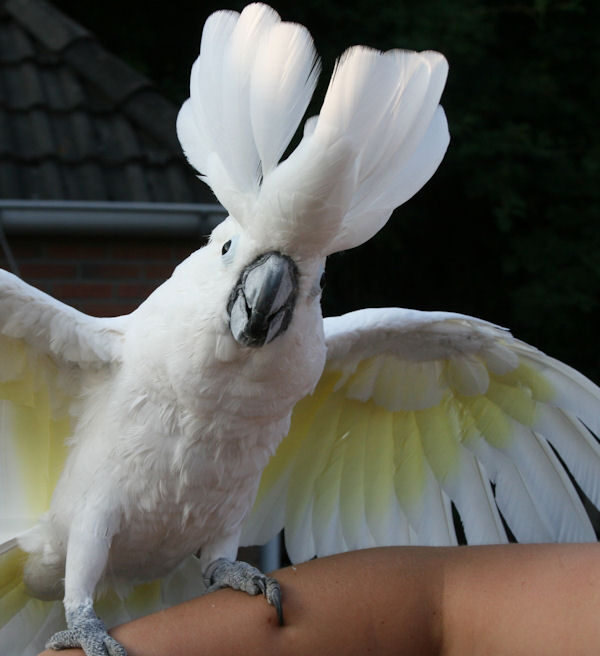

Crest Communication Guide
Crest communication guide content is essential for anyone living with crested parrots such as cockatoos, cockatiels, and some other expressive species. A parrot’s crest is not decorative—it is a powerful emotional signaling tool. Crest position, movement, and stiffness communicate mood, intent, arousal level, and boundaries long before a parrot vocalizes or bites. Learning to read crest signals correctly allows caregivers to prevent stress, avoid aggression, and build deep trust through respectful interaction.
This guide explains crest communication in detail, including what different crest positions mean, how crest signals change with context, how to respond correctly, and how crest reading fits into overall parrot behavior understanding.
Why a Crest Communication Guide Matters
Crested parrots rely heavily on visual signals. Among these, the crest is one of the clearest early-warning systems they have.
Understanding crest communication helps to:
- Prevent bites and defensive reactions
- Reduce fear-based behavior
- Improve training success
- Support emotional regulation
- Build long-term trust
These principles are a core part of ethical Parrot Care Guides, especially for emotionally sensitive species.
What Is Crest Communication in Parrots?
Crest communication refers to the way parrots use their head feathers to signal internal emotional states.
The crest communicates:
- Alertness
- Curiosity
- Excitement
- Stress
- Fear
- Defensive readiness
Unlike vocalizations, crest signals are often subtle and easy to miss—yet they usually appear before problem behavior.
Species That Rely Heavily on Crest Communication
Crest communication is most pronounced in:
- Cockatoos
- Cockatiels
- Corellas
- Palm Cockatoos
These species evolved crests as high-visibility signals within social groups.
Because of this, crest reading is critical when studying Understanding Cockatoo Emotions.
The Neutral Crest: Baseline Communication
Relaxed or Neutral Crest Position
A neutral crest usually appears:
- Partially lowered
- Soft and flexible
- Not rigid or flared
This position indicates:
- Emotional calm
- Comfort with surroundings
- Openness to low-pressure interaction
This is the safest state for gentle engagement.
Raised Crest: What It Really Means
Partially Raised Crest
A partially raised crest often signals:
- Curiosity
- Mild excitement
- Alert attention
Context matters. If posture and movement remain relaxed, this is usually neutral-to-positive.
Fully Raised Crest
A fully raised crest is high emotional arousal, not necessarily happiness.
It may indicate:
- Intense excitement
- Overstimulation
- Defensive readiness
- Stress or uncertainty
At this stage, interaction should slow or stop to prevent escalation.
Rigid vs Soft Crest: A Critical Distinction
Soft, Mobile Crest
A soft crest that moves fluidly suggests:
- Emotional flexibility
- Curiosity without fear
- Manageable arousal
This crest is safe when paired with relaxed posture.
Rigid, Stiff Crest
A stiff crest held upright without movement signals:
- Tension
- Stress
- Boundary setting
This is a clear warning sign. Continuing interaction often leads to lunging or biting.
Flattened Crest: The Most Misunderstood Signal
What a Flattened Crest Means
A flattened crest pressed tightly against the head often indicates:
- Fear
- Submission
- Emotional shutdown
This is not calmness. It is suppression.
Interaction should stop immediately to allow the bird to regain emotional safety.
Crest Communication and Body Language Together
Crest signals should never be read in isolation.
Always observe:
- Posture
- Feather tension
- Eye behavior
- Movement speed
For example:
- Raised crest + relaxed posture = curiosity
- Raised crest + stiff body = warning
- Flattened crest + freezing = fear
This integrated approach is essential in Understanding Parrot Body Language.
Crest Communication During Handling
When to Continue Handling
Handling is acceptable when the crest is:
- Neutral
- Soft
- Paired with relaxed posture
The parrot should show voluntary participation.
When to Stop Immediately
Stop handling if you see:
- Crest stiffening
- Sudden full crest raise
- Crest flattening with tension
Respecting these signals teaches parrots that communication works.
Crest Signals During Training
Crest Awareness Improves Training
Training success depends on emotional state.
During training:
- Neutral or soft raised crest = proceed
- Rigid raised crest = pause
- Flattened crest = stop session
Reward-based methods in Positive Reinforcement Training for Parrots rely on reading these cues correctly.
Avoid Training Through Arousal
Training through high arousal creates compliance, not trust.
Crest signals help trainers stop before stress overrides learning.
Crest Communication and Vocalization
Crest changes often occur before vocalization.
- Raised crest before screaming = overstimulation
- Flattened crest with silence = fear
- Neutral crest with soft sounds = comfort
Sound should always be interpreted alongside crest signals, as explained in Understanding Parrot Vocal Behavior.
Crest Communication in Social and Pair Dynamics
Between Bonded Parrots
Bonded parrots monitor each other’s crests constantly.
Crest signals help them:
- Regulate distance
- Prevent conflict
- Coordinate movement
This silent communication is a key part of Parrot Pair Social Dynamics.
Human–Parrot Interaction
Parrots also use crest signals with humans.
Humans who respond appropriately:
- Are trusted more
- Experience fewer bites
- Build stronger bonds
Ignoring crest signals teaches parrots to escalate communication.
Environmental Triggers That Affect Crest Position
Common triggers include:
- Loud noises
- Sudden movement
- New people
- Changes in routine
Reducing these triggers supports emotional stability and aligns with Setting a Daily Parrot Routine.
Common Human Mistakes When Reading Crest Communication
- Assuming raised crest means happiness
- Ignoring stiffness
- Continuing interaction after flattening
- Forcing handling during arousal
- Reacting emotionally to warning signals
Most bites occur after crest warnings are ignored.
Teaching Children and Visitors Crest Awareness
Anyone interacting with crested parrots should learn:
- What crest positions mean
- When to stop interaction
- How to move calmly
Education protects both parrots and people.
Long-Term Benefits of Understanding Crest Communication
Caregivers who understand crest communication experience:
- Safer handling
- Reduced aggression
- Better emotional balance
- Stronger trust bonds
This knowledge is increasingly emphasized by ethical breeders offering Exotic Birds for Sale.
External Behavioral Insight
Avian behavior studies consistently show that visual signals—especially crest position—are primary indicators of emotional arousal in cockatoos. Educational sources such as avian behavior research publications confirm that crest stiffness is one of the most reliable predictors of defensive escalation.
Understanding crest communication is therefore essential for responsible parrot care.