
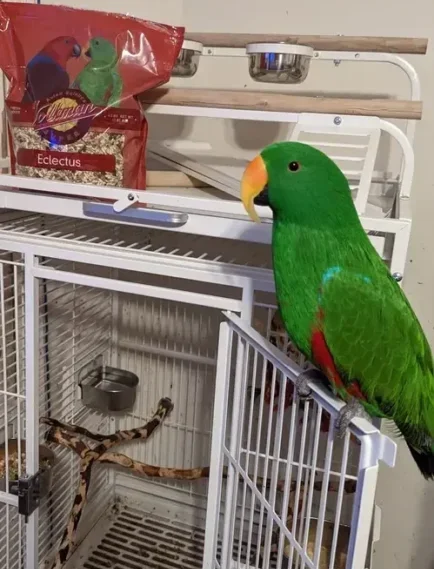

Eclectus Parrot Cage Setup
A proper cage setup is not just a housing requirement—it is the foundation of physical health, emotional balance, and long-term stability for this species. An Eclectus parrot cage setup must support calm observation, natural movement, and predictable routines. When the cage is poorly designed, even well-fed Eclectus parrots may develop stress behaviors that owners often misinterpret as temperament issues.
This guide explains how to set up an Eclectus parrot cage correctly, from size and bar spacing to perch choice, toy placement, hygiene, and room positioning. The focus is not on decoration or trends, but on ethical, species-appropriate design that supports decades of healthy living.
Why Cage Setup Matters for Eclectus Parrots
More Than a Place to Sleep
For Eclectus parrots, the cage is not a temporary enclosure. It is a primary living environment where they eat, rest, observe, and regulate emotions. Because this species is highly sensitive to overstimulation, the cage must provide security and order rather than constant visual noise.
A well-designed setup:
- Reduces stress and hormonal triggers
- Encourages natural movement and posture
- Supports mental stability
- Prevents many common behavior problems
Understanding Eclectus parrot housing requirements helps owners prevent issues before they appear.
Choosing the Right Cage Size
Minimum vs Ideal Cage Dimensions
Eclectus parrots are medium–large parrots with long wings and tails. While minimum cage sizes exist, ideal sizing always produces better outcomes.
Recommended guidelines:
- Minimum: 36" x 28" x 48" (L × W × H)
- Ideal: Larger walk-in or flight-style cages when space allows
Width matters more than height. Eclectus parrots benefit from horizontal movement and wing stretching.
This is central to best cage size for Eclectus parrots, especially for birds spending part of the day inside.
Bar Spacing and Safety
Bar spacing should be between ¾" and 1". Wider spacing increases injury risk, while narrow spacing restricts visibility and comfort.
Avoid cages with:
- Vertical-only bars
- Rust-prone coatings
- Sharp weld points
Cage Placement Inside the Home
Location Influences Behavior
Where the cage is placed affects emotional health as much as what is inside it. Eclectus parrots thrive when they feel included without being overwhelmed.
Best placement practices:
- One solid wall behind the cage for security
- Eye-level positioning
- Natural light without direct sun
- Away from kitchens and constant foot traffic
This supports ideal cage placement for Eclectus parrots and reduces vigilance-related stress.
Avoiding Common Placement Mistakes
Do not place the cage:
- On the floor
- In hallways
- Near televisions or speakers
- In rooms with unpredictable noise
Calm visibility is better than constant stimulation.
Perches: The Foundation of Physical Health
Choosing the Right Perch Types
Perches should promote foot health, balance, and natural movement. Uniform dowel perches should never be the primary option.
Recommended perch variety:
- Natural hardwood branches (manzanita, java wood)
- Rope perches (used sparingly)
- Flat perches for resting
Different diameters encourage proper muscle use.
This is a key element of Eclectus parrot perch setup.
Perch Placement Strategy
Arrange perches so that:
- Droppings do not fall into food bowls
- Wing clearance is available
- One high resting perch exists
- Movement between perches requires climbing or short flights
Avoid overcrowding the cage interior.
Food and Water Bowl Placement
Accessibility Without Contamination
Food and water bowls should be:
- Easily accessible
- Positioned away from perches above
- Secured to prevent tipping
Because Eclectus parrots consume large amounts of fresh food, bowls must be easy to remove and clean.
This supports Eclectus parrot feeding station setup and daily hygiene.
Number of Bowls
A typical setup includes:
- One fresh food bowl
- One dry food bowl
- One water bowl
Some owners also add a separate bowl for foraging items.
Toys and Enrichment: Less Is More
Understanding Eclectus Sensitivity
Eclectus parrots enjoy enrichment, but they dislike clutter. Too many toys can cause visual stress and withdrawal.
Ideal enrichment includes:
- Natural chew toys
- Foraging trays
- Soft wood or paper-based items
Rotate toys gradually rather than all at once.
This supports Eclectus parrot enrichment inside the cage without overstimulation.
Safe Toy Placement
Toys should:
- Hang away from food bowls
- Not block movement paths
- Allow visual breathing space
Avoid mirrors and nesting-style toys, which may increase hormonal behavior.
Lighting, Sleep, and Daily Rhythm
Supporting Natural Light Cycles
Eclectus parrots rely on stable light schedules to regulate hormones and mood.
Best practices include:
- 10–12 hours of sleep
- Consistent lights-off timing
- Optional cage cover for sleep
Irregular light cycles often cause behavioral instability.
This aligns with Eclectus parrot sleep and lighting needs.
Hygiene and Cleaning Routine
Daily and Weekly Cleaning
Because of fresh food diets, cleanliness is critical.
Daily tasks:
- Wash food and water bowls
- Remove leftover fresh foods
Weekly tasks:
- Clean grate and tray
- Wipe perches and bars
Monthly deep cleaning helps prevent bacterial buildup.
Proper hygiene supports Eclectus parrot cage cleanliness standards.
Cage Setup for Different Life Stages
Juvenile Eclectus Parrots
Young birds benefit from:
- Lower perch heights
- Easy access to food
- Fewer toys
Gradually adjust the setup as confidence grows.
Adult Eclectus Parrots
Adults prefer stability. Once an effective setup is established, avoid frequent changes.
Senior Eclectus Parrots
Older birds may need:
- Softer perches
- Lower climbing distances
- Easier food access
Adjustments help maintain comfort and mobility, reinforcing senior Eclectus parrot cage setup needs.
Common Cage Setup Mistakes to Avoid
Overcrowding the Cage
More items do not equal better care. Overcrowding often leads to stress rather than enrichment.
Using Small “Starter” Cages
Eclectus parrots outgrow small cages quickly. Starting too small often leads to costly replacements and early stress.
Ignoring Observation Needs
Cages placed too low or too isolated increase anxiety. Visibility matters.
Ethical Considerations in Cage Design
Designing for the Bird, Not the Room
Ethical care prioritizes function over aesthetics. A cage should meet the bird’s needs first, even if it dominates a room visually.
Understanding ethical Eclectus parrot housing practices ensures long-term success.
Final Thoughts
A thoughtful Eclectus parrot cage setup supports calm behavior, physical health, and emotional security for decades. This species does not thrive in cluttered, noisy, or undersized environments. Instead, Eclectus parrots flourish in spacious, orderly cages designed with intention and restraint.
When the cage is right, many behavior and health issues never appear. Proper setup is not an accessory to care—it is the foundation of it.