
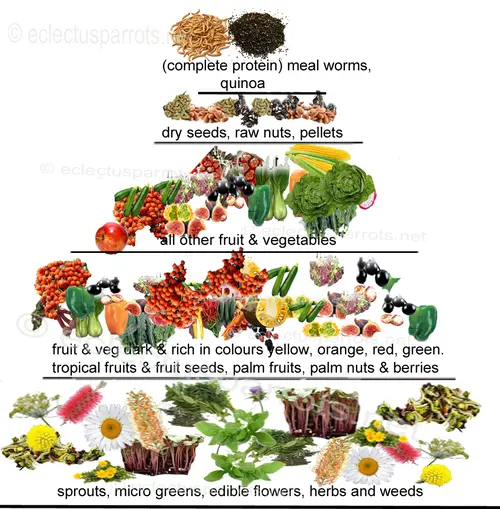

Eclectus Parrot Diet Explained
An appropriate diet is the single most important factor in the health, behavior, and lifespan of this species. This Eclectus parrot diet explained guide exists because Eclectus parrots are not fed like other parrots—and treating them the same is one of the most common and damaging mistakes owners make.
Eclectus parrots have unique digestive biology that demands a fresh, carefully balanced diet. When their nutritional needs are misunderstood, problems such as feather issues, behavioral instability, hormonal imbalance, and neurological symptoms often appear. Fortunately, when the diet is corrected, many of these issues resolve naturally.
This article explains what Eclectus parrots should eat, why their diet is different, how to structure daily meals, and how ethical feeding supports long-term physical and emotional well-being.
Why the Eclectus Parrot Diet Is Different
Unique Digestive Biology
Eclectus parrots have a longer digestive tract than most companion parrots. Because of this, they absorb nutrients more efficiently. While this trait is beneficial in the wild, it makes them highly sensitive to over-supplementation in captivity.
As a result, Eclectus parrots often react poorly to:
- Vitamin-fortified pellets
- Artificial colors and preservatives
- Excessive supplements
Understanding why Eclectus parrots need a special diet is essential before choosing foods.
Diet Directly Influences Behavior
Nutrition affects more than physical health. In Eclectus parrots, diet strongly influences mood, energy levels, and stress tolerance. Many behavior issues attributed to “temperament” are actually nutritional imbalances.
Core Principles of a Healthy Eclectus Parrot Diet
Fresh Foods Come First
Fresh, whole foods should form the foundation of the Eclectus parrot diet. Unlike parrots that tolerate pellet-heavy feeding, Eclectus parrots thrive on natural variety.
A healthy diet prioritizes:
- Fresh vegetables
- Sprouts and legumes
- Limited fruit
- Whole grains in moderation
This approach supports Eclectus parrot nutritional balance without overwhelming their system.
Simplicity Over Excess
More food types do not always mean better nutrition. Eclectus parrots prefer consistency and simplicity. Gradual changes work better than constant novelty.
Vegetables: The Foundation of the Diet
Best Vegetables for Eclectus Parrots
Vegetables should make up the largest portion of daily intake. Focus on nutrient-dense, low-sugar options.
Excellent choices include:
- Leafy greens (kale, chard, dandelion greens)
- Bell peppers
- Squash and pumpkin
- Broccoli and green beans
Vegetables can be offered raw or lightly steamed, depending on preference.
This forms the core of best vegetables for Eclectus parrots.
Variety Without Overload
Rotate vegetables every few days rather than offering everything at once. This helps prevent selective eating and digestive stress.
Fruits: Important but Limited
Why Fruit Must Be Controlled
Fruit is valuable but should never dominate the diet. Excess fruit leads to sugar overload, which can contribute to hyperactivity and hormonal issues.
Safe fruit options include:
- Papaya
- Mango
- Berries
- Apple (seed removed)
Offer fruit in small portions, preferably earlier in the day.
This balance supports fruit intake for Eclectus parrots without negative side effects.
Sprouts, Legumes, and Grains
Sprouts: A Nutritional Powerhouse
Sprouted seeds and legumes are highly digestible and rich in enzymes. They are especially beneficial for Eclectus parrots.
Popular options include:
- Lentil sprouts
- Mung bean sprouts
- Chickpea sprouts
Sprouts support digestion and nutrient absorption, making them ideal for Eclectus parrot fresh food diets.
Grains and Legumes
Cooked grains such as brown rice, quinoa, and barley can be offered in moderation. Avoid salt, oil, or seasoning.
Legumes should always be fully cooked unless sprouted.
Seeds, Nuts, and Pellets: Use With Caution
Seeds and Nuts
Seeds and nuts are calorie-dense and should be treated as enrichment rather than staples.
Use them:
- As training rewards
- In foraging activities
- In small quantities
Excessive seed intake often leads to obesity and imbalance.
Pellets and Vitamin Fortification
Many standard pellets are too fortified for Eclectus parrots. Some individuals tolerate limited pellet use, while others show clear adverse reactions.
Signs of pellet intolerance include:
- Toe-tapping
- Wing flipping
- Irritability
Understanding pellets and supplements for Eclectus parrots requires careful observation and moderation.
Daily Feeding Schedule
Structuring the Day
Eclectus parrots do best with a predictable feeding routine.
A common structure includes:
- Morning: Fresh vegetables, sprouts, grains
- Midday: Light fresh foods or foraging
- Evening: Simple vegetables, minimal fruit
Remove fresh foods after a few hours to maintain hygiene.
This supports Eclectus parrot feeding schedule best practices.
Foods to Avoid Completely
Some foods are unsafe or unsuitable for Eclectus parrots.
Never offer:
- Avocado
- Chocolate
- Caffeine
- Alcohol
- Salty or sugary human foods
Avoid artificial dyes, processed snacks, and vitamin supplements unless prescribed by an avian veterinarian.
Understanding unsafe foods for Eclectus parrots is critical for ethical care.
Diet and Hormonal Balance
How Nutrition Influences Hormones
High-fat and high-sugar diets often increase hormonal behavior. Controlling these elements helps maintain emotional stability.
Balanced feeding supports:
- Reduced aggression
- Stable mood
- Predictable behavior
This is essential for managing hormonal behavior through diet.
Common Diet Mistakes
Over-Supplementation
More vitamins do not mean better health. For Eclectus parrots, excess vitamins can be harmful.
Too Much Fruit
Fruit-heavy diets often cause behavioral and metabolic issues.
Sudden Diet Changes
Introduce new foods gradually. Abrupt changes can cause refusal to eat or digestive upset.
Ethical Feeding and Long-Term Responsibility
Feeding for Decades, Not Months
Eclectus parrots can live 30–50 years. Feeding practices must be sustainable, informed, and adaptable.
Ethical feeding includes:
- Ongoing education
- Observation and adjustment
- Avoidance of trends
Understanding ethical Eclectus parrot feeding practices ensures long-term success.
Final Thoughts
A proper diet is the cornerstone of Eclectus parrot care. This Eclectus parrot diet explained guide emphasizes fresh foods, balance, and respect for the species’ unique biology. When fed correctly, Eclectus parrots show improved behavior, stronger immunity, better feather condition, and emotional stability.
Nutrition is not complicated—but it must be specific. When owners commit to informed feeding, Eclectus parrots thrive.