
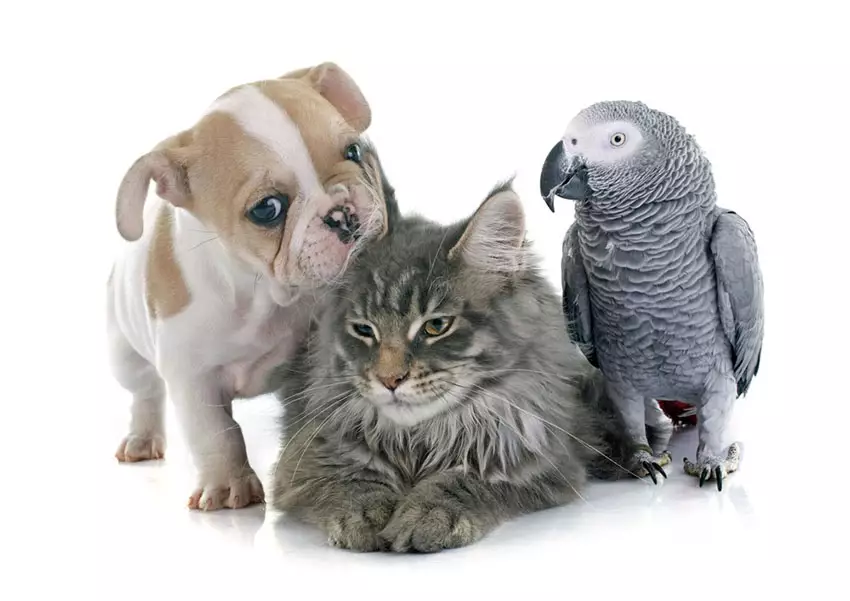

How Parrots Interact With Other Household Pets
Parrots are highly intelligent, socially aware animals, and many of them show genuine curiosity about other animals in the home. However, how parrots interact with other household pets depends far more on human management than on instinct alone. Even the calmest dog, the quietest cat, or the most confident parrot can misinterpret signals across species lines.
This guide explains realistic interaction patterns between parrots and common household pets, the risks involved, and how responsible owners can create a safe, low-stress environment without forcing unnatural “friendships.”
Understanding Parrot Social Psychology
Parrots Are Social—but Not Universal Socializers
In the wild, parrots interact primarily with their own species or flock. Their social intelligence is finely tuned for birds, not mammals. When parrots live with other household pets, they do not instinctively understand their body language, intentions, or boundaries.
Parrots often respond to other pets in one of three ways:
- Curiosity (watching, vocalizing, leaning forward)
- Territorial defensiveness (lunging, alarm calls)
- Avoidance (freezing, retreating, silence)
None of these reactions mean aggression or friendliness on their own—they are information-gathering behaviors.
Why Miscommunication Is Common
Parrots rely on feather position, eye pinning, posture, and vocal tone. Dogs and cats rely on tail movement, ear position, and facial tension. These signals do not translate cleanly between species, which is why supervision is always essential.
Parrots and Dogs: Calm Coexistence Is Possible
Typical Interaction Patterns
Many parrots coexist peacefully with dogs, especially calm or older ones. Dogs often view parrots as background noise once properly trained, while parrots may treat dogs as moving furniture—until boundaries are crossed.
Common parrot reactions to dogs include:
- Vocal alerts when the dog enters the room
- Raised crest or fluffed feathers (alert curiosity)
- Defensive lunging if the dog approaches the cage
Key Safety Rules
- Never allow dogs to approach a parrot’s cage unsupervised
- Do not allow face-to-face interactions
- Train the dog to ignore the bird entirely
Even playful dogs can injure parrots accidentally through sudden movement, breath pressure, or startled reactions.
Parrots and Cats: High Risk, High Management
Why Cats Are Especially Dangerous
Cats are natural predators. Even the most affectionate indoor cat retains instinctive hunting reflexes. More importantly, cat saliva contains bacteria that are extremely dangerous to birds. A single scratch or bite—no matter how small—can be fatal without immediate veterinary care.
Parrots may misread a cat’s stillness as calm, while the cat is actually focused and hunting.
Realistic Expectations
- True “friendship” is unsafe and unrealistic
- Physical separation is strongly recommended
- Visual exposure only, with barriers, is safest
If parrots and cats live in the same home, cages must be secure, elevated, and inaccessible at all times.
Parrots and Small Mammals (Rabbits, Guinea Pigs, Ferrets)
Mutual Stress and Misinterpretation
Small mammals often perceive parrots as aerial threats. Parrots may view small mammals as unpredictable or threatening due to sudden movements.
Potential issues include:
- Stress responses in prey animals
- Defensive biting from mammals
- Startled flight responses from parrots
Ferrets, in particular, should never be allowed in the same space as parrots due to their predatory behavior.
Best Practice
Keep species fully separated, with no direct interaction. Shared airspace is acceptable only under strict supervision and calm conditions.
Parrots and Reptiles or Fish
Minimal Interaction, Minimal Risk
Reptiles and fish generally pose less direct risk due to enclosure separation. However:
- Parrots may become territorial around aquariums
- Reptile heat lamps and humidity setups may conflict with parrot health
- Parrots may chew cords or tank lids
Ensure physical barriers and environmental compatibility.
Reading Parrot Body Language Around Other Pets
Understanding early warning signs prevents accidents.
Signs of Stress or Defensive Readiness
- Eye pinning (rapid pupil dilation)
- Raised crest or flared neck feathers
- Low growling or sharp alarm calls
- Leaning forward with open beak
If any of these appear, increase distance immediately.
Signs of Calm Observation
- Relaxed feathers
- Gentle vocalizations
- Sideways head tilting
- Neutral posture
Calm observation does not mean invitation—it simply means tolerance.
Cage Placement and Household Layout
Strategic Environment Design
How your home is arranged plays a major role in safety.
Best practices include:
- Elevated cage placement
- At least one wall behind the cage for security
- No cages on the floor
- Separate pet zones
Parrots feel safer when they can observe without being approached.
Why Forced Interaction Is Harmful
Social Media vs. Reality
Videos showing parrots cuddling cats or dogs often mask stress signals or rely on heavily controlled situations. These interactions are not models to copy.
Forced interaction can lead to:
- Chronic stress in parrots
- Sudden predatory incidents
- Loss of trust between parrot and owner
Ethical care prioritizes safety over novelty.
Training Humans, Not Animals
The Owner’s Role
Successful multi-pet homes depend on human consistency, not animal tolerance.
Owners must:
- Supervise at all times
- Set firm boundaries
- Avoid complacency
- Respect species differences
Parrots thrive when they feel protected, not tested.
Long-Term Coexistence: What “Success” Really Looks Like
Healthy coexistence does not mean shared play or physical contact. It means:
- No fear responses
- Predictable routines
- Secure spaces for every animal
- Calm household energy
Many parrots live long, stable lives alongside other pets without ever touching them—and that is the ideal outcome.
Final Thoughts
Understanding how parrots interact with other household pets requires realism, not optimism. Parrots are intelligent, sensitive beings who depend entirely on human judgment to keep them safe. When boundaries are respected and environments are designed thoughtfully, parrots can live confidently in multi-pet homes without stress or danger.
The goal is not friendship—it is safety, trust, and long-term well-being for every animal under your care.