
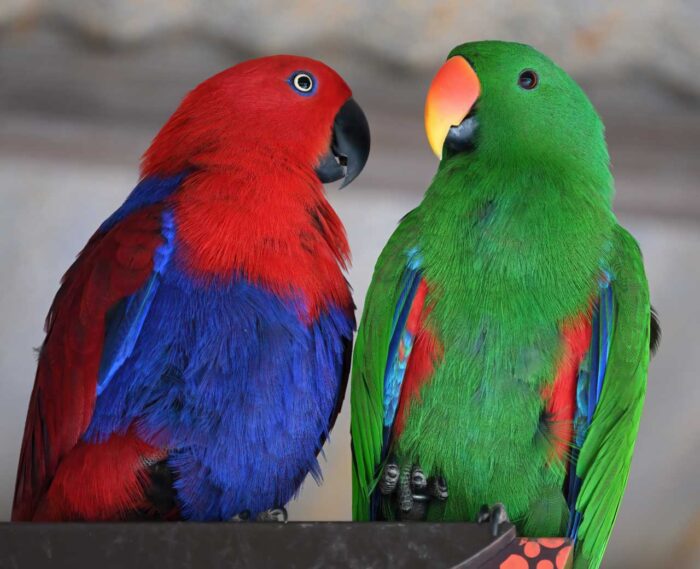

Male or Female Eclectus Parrot
Choosing between a male or female Eclectus parrot is one of the most important decisions you will make before bringing this species home. The question male or female Eclectus parrot: which is better for you? has no universal answer—because the right choice depends entirely on your lifestyle, experience level, environment, and expectations.
Eclectus parrots are one of the most sexually dimorphic parrot species in the world. Males and females are not only visually different, they also differ in temperament, hormonal patterns, environmental sensitivity, and long-term management needs. Many ownership challenges arise not because the bird is “difficult,” but because the sex of the parrot was not matched thoughtfully to the owner.
This guide offers a realistic, experience-based comparison of male and female Eclectus parrots to help you decide which one fits you best—before commitment, not after problems appear.
Why Sex Matters More in Eclectus Parrots Than Other Species
Extreme Differences Go Beyond Color
In many parrot species, sex differences are subtle. In Eclectus parrots, they are foundational.
Differences affect:
- Daily behavior
- Hormonal cycles
- Handling tolerance
- Environmental needs
- Stress sensitivity
Understanding why sex matters when choosing an Eclectus parrot prevents mismatched expectations.
Evolution Shaped Their Behavior Differently
In the wild, female Eclectus parrots control nest sites and resources, while males travel and forage widely. These evolutionary roles still influence captive behavior today.
Visual Differences: Easy to Identify, Easy to Misjudge
Male Eclectus Parrots
- Bright green body
- Red and blue underwing feathers
- Orange upper beak
Their softer coloration often leads people to assume they are calmer—but behavior matters more than looks.
Female Eclectus Parrots
- Deep red body
- Purple/blue chest
- Black beak
Females look bold and striking, and their behavior often matches that confidence.
Temperament Comparison: Calm vs Controlled
Male Eclectus Parrot Temperament
Males are generally:
- More socially flexible
- More tolerant of change
- Easier for first-time owners
- Less territorial
They often adapt more easily to:
- New environments
- Multiple people
- Routine adjustments
This makes males a popular choice for owners seeking predictability.
Understanding male Eclectus parrot temperament traits helps set realistic expectations.
Female Eclectus Parrot Temperament
Females tend to be:
- More assertive
- Highly observant
- Environmentally sensitive
- Strong-willed
They form deep bonds but expect consistency and respect.
Understanding female Eclectus parrot temperament traits is essential before choosing a hen.
Hormonal Behavior: A Major Deciding Factor
Hormones in Male Eclectus Parrots
Males experience hormonal changes, but these are usually:
- Milder
- Shorter
- Easier to manage
Behavioral shifts are often subtle and temporary.
Hormones in Female Eclectus Parrots
Females are significantly more affected by hormones.
Possible challenges include:
- Territorial aggression
- Nesting behaviors
- Egg laying (even without a mate)
- Mood changes
Managing females requires strict control of:
- Light cycles
- Diet composition
- Environmental triggers
Understanding hormonal differences between male and female Eclectus parrots is critical for long-term success.
Talking Ability: Is One Better?
Male Talking Tendencies
Males are more likely to:
- Talk earlier
- Build larger vocabularies
- Speak more consistently
They often use speech contextually and calmly.
Female Talking Tendencies
Females can talk, but often:
- Speak less frequently
- Prefer non-verbal communication
- Use speech selectively
Talking ability should never be the sole deciding factor, but expectations matter.
Understanding talking differences between male and female Eclectus parrots helps avoid disappointment.
Bonding Style: Flexible vs Selective
How Males Bond
Males typically:
- Bond more evenly
- Accept interaction from multiple people
- Show less possessiveness
They often suit families or shared households better.
How Females Bond
Females often:
- Choose one primary person
- Guard their space
- React strongly to inconsistency
Their bonds can be incredibly deep—but less flexible.
Understanding bonding differences in male vs female Eclectus parrots is essential for household harmony.
Environmental Sensitivity
Males and Environmental Change
Males usually tolerate:
- Cage rearrangements
- New toys
- Visitors
- Routine changes
They still need calm environments, but adapt more easily.
Females and Environmental Change
Females are more sensitive to:
- New objects
- Cage changes
- Noise
- Disrupted routines
Environmental instability often triggers stress or hormonal behavior.
Understanding environmental sensitivity in female Eclectus parrots helps prevent avoidable issues.
Diet Sensitivity: Both Need Precision
Shared Dietary Needs
Both sexes require:
- Fresh vegetable-based diets
- Minimal fortified pellets
- Careful vitamin management
Diet mistakes affect both sexes—but consequences often show faster in females due to hormonal load.
Space and Housing Considerations
Housing Males
Males generally:
- Use space cooperatively
- Display fewer territorial behaviors
They still need large cages, but less defensive space management.
Housing Females
Females require:
- Extra space
- Visual escape routes
- Careful nest-trigger avoidance
Small cages or nest-like spaces dramatically increase aggression risk.
Experience Level: Who Should Choose Which?
Males Are Often Better For:
- First-time Eclectus owners
- Multi-person households
- Owners with variable schedules
- People new to hormone management
Females Are Better For:
- Experienced parrot owners
- Very stable households
- Owners comfortable managing hormones
- People who value strong one-on-one bonds
Understanding which Eclectus parrot sex fits your experience level prevents regret.
Common Mistakes When Choosing Sex
Choosing Based on Color Alone
Color does not predict ease.
Underestimating Female Hormonal Needs
This is the most common cause of rehoming female Eclectus parrots.
Expecting All Males to Be “Easy”
Individual personality still matters.
So… Which Is Better for You?
Choose a Male Eclectus Parrot If:
- You want adaptability
- You prefer calmer hormone cycles
- You live in a shared household
- You want a smoother learning curve
Choose a Female Eclectus Parrot If:
- You can provide strict routine
- You understand hormone management
- You want a powerful one-person bond
- You accept assertive behavior
Ethical Perspective on Choosing Sex
The Right Match Prevents Rehoming
Many Eclectus parrots are surrendered not because they are “bad birds,” but because their sex-specific needs were ignored.
Understanding ethical responsibility when choosing an Eclectus parrot protects lifelong welfare.
Final Thoughts
Asking male or female Eclectus parrot: which is better for you? is the right question—and the answer should be honest, not aspirational.
Males generally offer flexibility, stability, and ease for a wider range of homes. Females offer depth, intelligence, and intensity—but demand structure, experience, and consistency.
Neither is better universally. The best Eclectus parrot is the one whose natural traits align with your real life, not your ideal one. When sex, environment, and expectations align, Eclectus parrots become extraordinary companions for decades.