
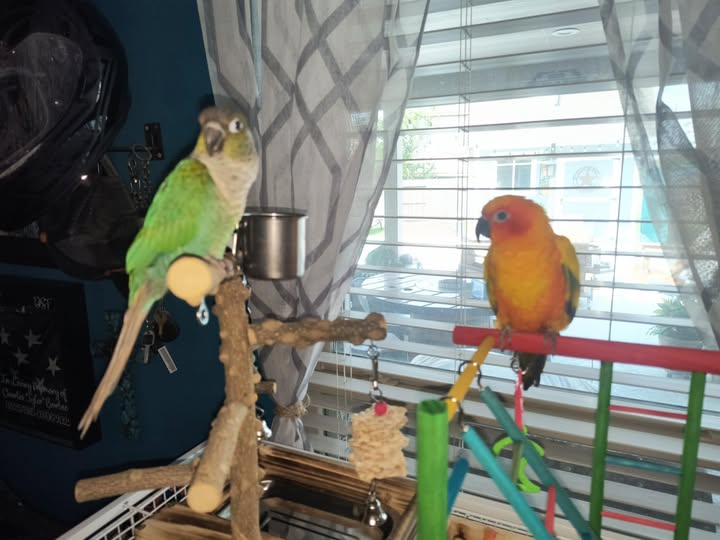

Managing Bonded Parrots
Managing bonded parrots requires a different mindset from caring for a single bird. Bonded parrots function as an emotional unit. Their behaviors, routines, communication, and stress responses are deeply interconnected. When their bond is respected and supported, bonded parrots are calmer, more confident, and emotionally resilient. When mismanaged, however, even strong bonds can turn into jealousy, territorial behavior, or chronic stress.
This guide explains how to manage bonded parrots responsibly, including daily routines, human boundaries, training approaches, housing setup, and how to prevent common problems without damaging the pair bond.
Why Managing Bonded Parrots Is Different
Bonded parrots rely on each other for:
- Emotional regulation
- Social reassurance
- Stress recovery
- Communication
Because of this, they do not respond well to care strategies designed for single parrots.
Understanding managing bonded parrots helps to:
- Reduce jealousy and aggression
- Prevent emotional imbalance
- Support long-term bond stability
- Improve household harmony
These principles are foundational in ethical Parrot Care Guides.
Understanding the Bond Before Managing It
A bonded pair is not simply “two parrots living together.”
A true bond includes:
- Mutual choice
- Voluntary proximity
- Coordinated behavior
- Emotional co-regulation
Disrupting these elements—intentionally or accidentally—often causes behavioral fallout.
This dynamic is explored in depth in Parrot Pair Social Dynamics.
Daily Routines for Managing Bonded Parrots
Predictability Creates Security
Bonded parrots thrive on routine.
A predictable daily rhythm:
- Reduces competition
- Lowers anxiety
- Improves emotional regulation
This is why structure is emphasized in Setting a Daily Parrot Routine.
Feeding Routines for Bonded Pairs
Food is a common source of conflict if poorly managed.
Best practices include:
- Multiple feeding stations
- Identical food access
- Simultaneous feeding times
Never force parrots to share bowls.
Human Boundaries When Managing Bonded Parrots
Avoid Becoming a Third “Mate”
One of the biggest mistakes in managing bonded parrots is competing with the bond.
Humans should:
- Avoid exclusive affection
- Respect pair-only time
- Interact calmly and neutrally
Over-involvement often leads to jealousy and stress.
Respect Pair Autonomy
Bonded parrots need uninterrupted time together.
Constant interruption:
- Weakens the bond
- Increases anxiety
- Encourages territorial behavior
Healthy management supports—not replaces—the bond.
Training While Managing Bonded Parrots
Yes, Bonded Parrots Can Be Trained
Training bonded parrots is possible and beneficial when done correctly.
Training should be:
- Short
- Calm
- Individualized
Reward-based methods outlined in Positive Reinforcement Training for Parrots work best.
Preventing Competition During Training
To avoid rivalry:
- Train birds separately or in parallel
- Use identical rewards
- Avoid favoritism
Competition undermines trust within the pair.
Managing Jealousy and Resource Guarding
Why Jealousy Happens
Jealousy usually stems from:
- Unequal attention
- Limited resources
- Inconsistent routines
It is rarely a personality flaw.
How to Reduce Jealousy
Effective strategies include:
- Equal interaction time
- Predictable schedules
- Duplicate toys and perches
Environmental changes solve most jealousy issues.
Housing Setup for Bonded Parrots
Space Is Non-Negotiable
Bonded parrots need more space, not less.
Ideal housing includes:
- Large shared enclosures
- Multiple perches at different heights
- Retreat zones for each bird
Crowding causes friction—even in strong bonds.
Out-of-Cage Time
Out-of-cage time should allow:
- Shared exploration
- Individual choice
- Calm interaction
Never force separation during free time unless safety requires it.
Reading Body Language in Bonded Parrots
Bonded parrots communicate constantly through body language.
Watch for:
- One bird withdrawing
- Feather tension
- Avoidance
- Displacement behaviors
Respecting these cues prevents conflict and aligns with Understanding Parrot Body Language.
Managing Hormonal Periods in Bonded Pairs
What Changes During Hormonal Phases
During breeding seasons, bonded parrots may:
- Become more territorial
- Reduce tolerance of humans
- Increase vocalization
These changes are temporary but require management.
How to Support Stability
During hormonal periods:
- Reduce stimulation
- Maintain routine strictly
- Avoid nest-like environments
Stability prevents escalation.
When Bonded Parrots Should Not Be Separated
Separating bonded parrots often results in:
- Depression-like withdrawal
- Chronic screaming
- Feather plucking
- Appetite loss
Separation should occur only for:
- Medical necessity
- Immediate safety
Even then, it must be handled carefully.
Signs of Healthy Bond Management
Well-managed bonded parrots typically show:
- Calm proximity
- Mutual grooming
- Balanced interaction with humans
- Minimal competition
- Emotional stability
These signs indicate successful management.
Common Mistakes When Managing Bonded Parrots
- Favoring one bird
- Competing with the bond
- Forcing separation
- Ignoring subtle stress signals
- Overstimulating during hormonal periods
Most problems arise from human interference, not the bond itself.
Bonded Parrots vs Human Attachment
Bonded parrots still benefit from gentle human interaction.
However:
- Humans are companions, not replacements
- The pair bond comes first
- Respect builds trust
This balance is essential for emotional health and connects to Understanding Parrot Social Dynamics.
Long-Term Benefits of Properly Managing Bonded Parrots
When bonded parrots are managed correctly, they are more likely to:
- Remain emotionally stable
- Show fewer behavioral issues
- Require less constant human attention
- Adapt better to change
This is why ethical programs offering Exotic Birds for Sale increasingly prioritize keeping bonded pairs together and educating owners thoroughly.
External Welfare Insight
Avian behavioral studies consistently show that bonded parrots housed and managed appropriately demonstrate lower stress markers and improved emotional resilience. Educational sources such as avian behavior research publications emphasize that stable pair management is a key factor in preventing chronic behavioral disorders.
Managing bonded parrots is therefore a responsibility—not an optional skill.