
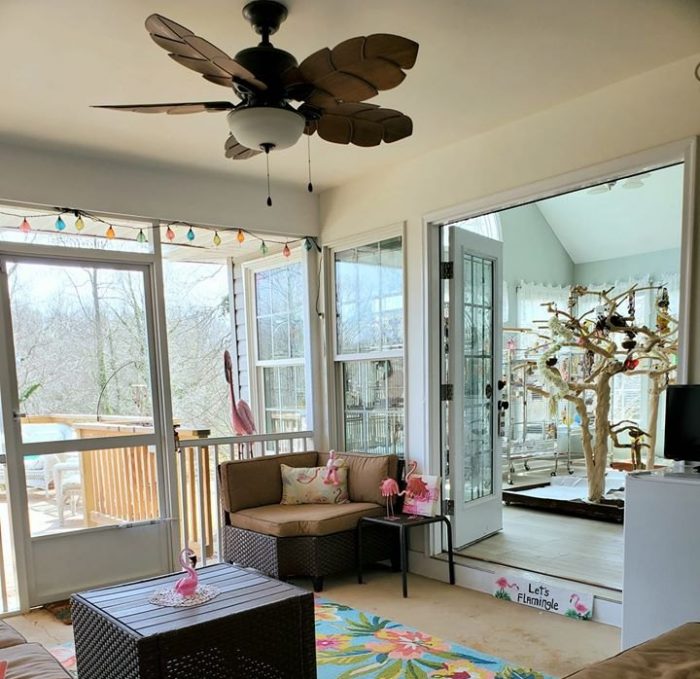

Setting Up a Parrot-Friendly Home Environment
Setting up a parrot-friendly home environment is one of the most important steps in ensuring a parrot’s physical safety, emotional balance, and long-term wellbeing. Parrots are highly sensitive to their surroundings, and the home environment directly influences their behavior, confidence, and health. When the living space is thoughtfully designed around a parrot’s natural needs, many common issues—such as screaming, fear, and destructive behavior—are significantly reduced. This guide explains how to create a parrot-friendly home environment that supports comfort, stimulation, and trust.
Why a Parrot-Friendly Home Environment Matters
A parrot’s home is not just a cage or room—it is their entire world. In the wild, parrots live in complex environments filled with movement, sound, choice, and social interaction. Captive parrots rely on humans to recreate these elements safely.
A well-planned parrot-friendly home environment helps:
- Reduce stress and anxiety
- Encourage natural behaviors
- Improve emotional stability
- Support training and learning
- Strengthen human–parrot relationships
These principles form the foundation of responsible ownership discussed in modern Parrot Care Guides.
Choosing the Right Location for a Parrot-Friendly Home Environment
Avoid Isolation, Avoid Chaos
The cage or main living area should be placed where the parrot can observe daily life without being overwhelmed. Kitchens, hallways, or areas with constant foot traffic are usually unsuitable.
A balanced parrot-friendly home environment allows:
- Visual access to people
- Predictable noise levels
- Protection from drafts and direct heat
Parrots thrive when they feel included but not overstimulated.
Cage Setup in a Parrot-Friendly Home Environment
Cage Size and Placement
The cage should allow full wing extension and movement. A cramped cage undermines even the best parrot-friendly home environment.
Key placement rules:
- One side of the cage against a wall for security
- Eye-level or slightly below
- Away from windows with direct sun exposure
Perches and Interior Layout
Natural wood perches of different diameters support foot health and comfort. Avoid uniform perches, which can cause strain.
Rotate perch positions to encourage movement while maintaining familiarity.
Lighting and Sleep in a Parrot-Friendly Home Environment
Parrots are deeply affected by light cycles. Artificial lighting and late-night activity can disrupt hormones and emotions.
A healthy parrot-friendly home environment includes:
- 10–12 hours of uninterrupted sleep
- Consistent day/night rhythm
- Use of cage covers or quiet rooms at night
Poor sleep is a major cause of irritability and behavioral issues.
Safety Essentials for a Parrot-Friendly Home Environment
Parrots explore with their beaks. What seems harmless to humans can be dangerous to birds.
Remove or manage:
- Non-stick cookware fumes
- Candles and incense
- Open water sources
- Toxic plants
- Exposed electrical cords
A truly parrot-friendly home environment prioritizes prevention over reaction.
Enrichment: The Heart of a Parrot-Friendly Home Environment
Mental stimulation is not optional for parrots—it is essential.
Toys and Foraging
Rotate toys regularly to prevent boredom. Include:
- Foraging toys
- Chewable materials
- Puzzle feeders
These activities simulate natural problem-solving and reduce frustration.
Daily Interaction
Even the best physical setup cannot replace social engagement. Interaction should be predictable and respectful, reinforcing calm behavior rather than demand-driven attention.
This approach works best when combined with methods outlined in Positive Reinforcement Training for Parrots.
Sound and Emotional Balance in a Parrot-Friendly Home Environment
Parrots are vocal by nature. Suppressing sound increases stress, while unmanaged noise can overwhelm them.
A balanced parrot-friendly home environment:
- Acknowledges contact calls
- Avoids shouting responses
- Maintains steady background noise
Understanding sound as communication aligns closely with principles explained in Parrot Vocalization Guide resources.
Temperature and Air Quality
Parrots are sensitive to temperature swings and airborne toxins.
Ideal conditions include:
- Stable indoor temperatures
- Good ventilation
- No smoke, aerosols, or strong cleaners
Clean air is a silent but critical part of a parrot-friendly home environment.
Multi-Person Homes and Shared Spaces
In family households, consistency is key. Everyone should follow the same rules regarding handling, feeding, and interaction.
This prevents emotional confusion and supports healthy attachment, a topic often connected to Cockatoo Bonding discussions.
Preparing a Home for a New or Relocated Parrot
New environments are stressful for parrots. When preparing a parrot-friendly home environment for a new arrival:
- Set up the space before arrival
- Keep routines simple at first
- Limit visitors and noise
- Allow observation before interaction
This is especially important for parrots transitioning under International Bird Shipping Policy procedures.
Common Mistakes When Creating a Parrot-Friendly Home Environment
- Overcrowding the cage with toys
- Constantly rearranging the environment
- Allowing unrestricted access to unsafe areas
- Treating the parrot as décor rather than a living being
Stability and respect are more important than visual aesthetics.
Long-Term Benefits of a Parrot-Friendly Home Environment
Parrots raised and maintained in supportive environments tend to:
- Show fewer behavioral issues
- Learn faster
- Vocalize more predictably
- Form healthier social bonds
Ethical aviaries and families offering Exotic Birds for Sale increasingly emphasize home preparation as a key part of responsible ownership.