
Conure Parrot Eggs for sale
-

Conure Fertile Eggs for Sale – Incubation Ready
Read more -
Conure Fertile Eggs for Sale – Same Week Fresh Batch
Read more
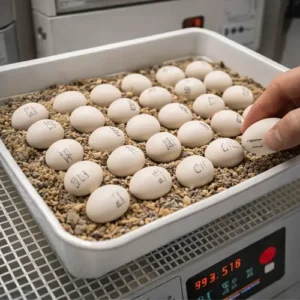

Conure fertile eggs are presented in this category for qualified aviculturists and responsible breeding programs seeking ethically sourced, verified fertile eggs from the conure parrot group. This category brings together all available conure fertile egg offerings collected from mature, bonded parent birds with established laying histories across recognized conure species. All eggs listed here are verified as fertile at the time of collection, while clearly acknowledging that hatch outcomes depend on post-dispatch handling, incubation management, and regulatory compliance beyond the point of shipment.
Understanding Conure Fertile Eggs
Conures belong primarily to the genera Pyrrhura and Aratinga, encompassing popular species such as Green-cheeked, Sun, Jenday, and related conures. While conures vary in size, coloration, and temperament, their egg biology is closely aligned across species, which is why conure fertile eggs are grouped into a single category rather than separated by individual species.
In aviculture, a fertile egg is defined as an egg that has been successfully fertilized prior to laying through natural mating between a compatible male and female. Fertility represents biological potential only, not a guaranteed outcome. Conure fertile eggs in this category originate exclusively from proven, actively laying breeding pairs with documented reproductive consistency. Stable pair bonding and observed breeding behavior are central to fertility verification at the time of collection.
Fertility Verification & Quality Assurance for Conure Eggs
Fertility verification for conure eggs is conducted through evidence-based breeding oversight rather than assumption. Breeding pairs are monitored over time to confirm compatibility, natural mating behavior, and reliable laying cycles. Only eggs collected from pairs with established fertility histories are included in this category.
Verification applies strictly to the moment of collection and dispatch. While fertility is guaranteed at that stage, hatch success cannot be guaranteed, as outcomes depend on variables beyond breeder control, including transport handling, incubation environment, and post-arrival management. This clear distinction supports transparency, buyer confidence, and ethical aviculture standards.
Who Conure Fertile Eggs Are Best Suited For
Conure fertile eggs are best suited for aviculturists and breeders with prior experience handling small to medium parrots. Conures are active, intelligent birds, and responsible breeding requires preparation, patience, and an understanding of aviculture fundamentals.
This category is appropriate for buyers who:
- Have experience with parrots or similar psittacine species
- Understand responsible egg handling and breeder ethics
- Operate within applicable local and international wildlife regulations
- Approach breeding with welfare-focused and long-term objectives
This category is not intended for casual experimentation or impulse purchasing without appropriate preparation.
How Our Conure Egg Batches Are Structured
Within this category, conure fertile eggs may be offered in multiple batch formats to accommodate different breeding and operational needs. Batch structure may vary by collection timing, quantity scale, or accompanying documentation, while egg biology remains consistent across the conure group.
Some batches may be suitable for small-scale breeding programs, while others may support established facilities requiring enhanced traceability. Specific batch attributes, quantities, and documentation notes are provided on individual product listings. This category page provides high-level context, while product pages contain all batch-specific details.
Ethical Sourcing & Breeding Standards
All conure fertile eggs offered in this category originate from welfare-first breeding environments. Parent birds are allowed to form stable, natural pair bonds and reproduce according to natural rhythms, without artificial stimulation, forced production, or stress-based practices.
Breeding programs emphasize health monitoring, clean environments, and appropriate social conditions to support sustainable reproduction over time. Ethical sourcing underpins fertility verification and reflects responsible stewardship of conure species commonly represented in aviculture.
Shipping, Regulations & Buyer Responsibility
Conure fertile eggs are shipped in compliance with applicable international transport standards and species-specific regulatory frameworks. Depending on destination and species, permits or licenses may be required, and buyers are solely responsible for confirming legal eligibility to import, possess, and incubate these eggs.
While fertility is verified at dispatch, factors such as customs handling, transit duration, and post-arrival care can influence viability. This category emphasizes informed purchasing, regulatory awareness, and ethical responsibility on the part of the buyer.
Explore Available Conure Fertile Egg Products
This category serves as a centralized navigation point for all currently available conure fertile egg products. Each product listing provides batch-level information, documentation notes, and availability details to help qualified buyers evaluate options aligned with their breeding objectives and compliance requirements.
Frequently Asked Questions
Are all conure eggs biologically similar?Yes. Conure species share closely aligned egg biology, which is why their fertile eggs are grouped into a single category.
Is fertility guaranteed for eggs in this category?Yes. All eggs listed here are verified as fertile at the time of collection from proven, actively laying breeding pairs.
Does verified fertility guarantee a hatch?No. Fertility confirms fertilization prior to laying. Hatch outcomes depend on incubation management, handling, and environmental conditions after dispatch.
Do I need permits to purchase conure fertile eggs?In some regions, permits or licenses may be required. Buyers are responsible for securing all necessary approvals.
Is this category suitable for beginners?This category is best suited for buyers with basic aviculture knowledge or access to experienced guidance and appropriate facilities.