
Description
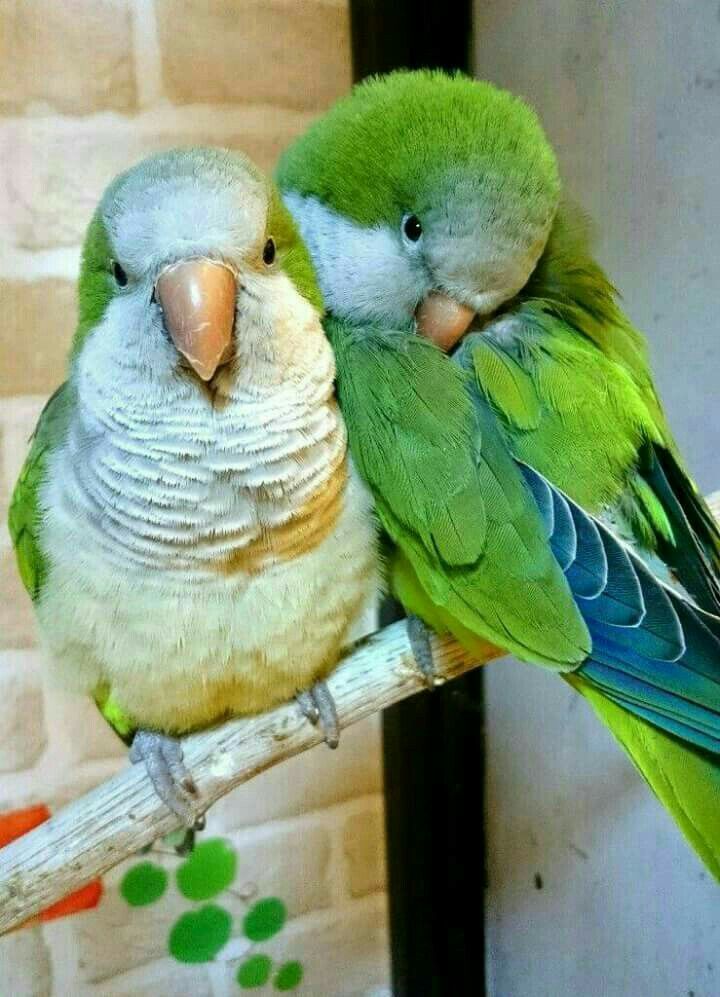
A Young Male + Female Green Quaker Duo With Bright Plumage & Balanced Social Personalities
Aeris and Mylo form a playful, juvenile young quaker duo for sale, raised together but intentionally kept non-bonded, allowing each bird to develop independent trust with humans. Their classic Green mutation presents vibrant emerald feathers, snowy chest accents and expressive facial features. At five months, both birds are entering the ideal learning stage—responsive, emotionally open and highly capable of forming individual bonds with future owners.
They show healthy curiosity, enjoy interactive toys and exhibit cooperative behaviour without developing bonded-pair exclusivity.
Feather Quality, Colour Consistency & Healthy Juvenile Development
Classic Green Plumage
A rich emerald body tone that reflects the pure, natural Quaker phenotype.
Clean Facial Mask
Bright facial contrast creates expressive, animated features.
Smooth Feather Alignment
Indicates strong nutrition and careful early grooming.
Juvenile Body Strength
Balanced posture, clean wing lines and well-developed tail formation.
Social Growth & Behavioural Traits in a Young Quaker Duo
Independent Personalities
Not bonded — they interact together but are comfortable separately.
Gentle Interaction Skills
Both birds step up calmly and respond well to soft handling.
Early Vocal Expression
Produce baby chirps, contact calls and exploratory mimicry.
Playful Curiosity
Enjoy climbing, chewing soft toys and exploring new textures.
Why Families Prefer a Young Quaker Duo for Sale
Families seeking a young quaker duo for sale often choose this option because:
duos adapt well to new homes
easier to train than bonded couples
each bird forms an individual human bond
reduced jealousy and conflict
ideal for households wanting two gentle parrots without breeding focus
Aeris and Mylo offer emotional balance, fun interaction and long-term companionship.
Training Progress, Individual Learning & Growing Cognitive Skills
Step-Up Reliability
Both birds step up confidently and maintain steady grip.
Early Recall Shaping
Short-distance training increases responsiveness and focus.
Sound Recognition
They react to whistles, tapping rhythms and soft call tones.
Enrichment Preferences
They enjoy:
climbing ladders
woven chew balls
colourful rope spirals
natural branch perches
All stimulating coordination and problem-solving.
Global Demand for Young Quaker Parakeet Duos
Green Quakers remain one of the most popular parakeet species worldwide due to their intelligence, speaking potential and bright natural colours. Many families searching for a young quaker duo for sale look specifically for male-female pairs raised together but unbonded. Strong buyer interest comes from United States cities such as Dallas, Atlanta and Phoenix. In Canada, enquiries rise in Edmonton and London (Ontario). In the United Kingdom, demand remains high from Belfast and Sheffield. Across Europe, active markets include Lille (France), Naples (Italy), Toledo (Spain), Larissa (Greece), Porto (Portugal), Poznań (Poland), Innsbruck (Austria) and Luxembourg City (Luxembourg). From Ireland, Cork shows strong interest.
International Interest in Buying Quaker Parakeet Duos
Buyers worldwide actively request trained young Quaker duos for family homes. Strong demand arrives from Norway (Stavanger), Iceland (Akureyri), Denmark (Aarhus), Netherlands (Haarlem), and Switzerland (Basel). Oceania interest continues in Perth (Australia) and Christchurch (New Zealand). Middle Eastern demand is notable in Eilat (Israel), Sharjah (UAE), Hawally (Kuwait), Mesaieed (Qatar), Tutong (Brunei) and Riffa (Bahrain). Saudi Arabia markets such as Tabuk regularly acquire young trained Quakers. Asia contributes buyers from Fukuoka (Japan), Sengkang (Singapore) and Yuen Long (Hong Kong). Island markets like Ponce (Puerto Rico) and Freeport (Bahamas) also frequently request duos.
Daily Activity Flow & Interaction Rhythm
Morning
Light contact calls, gentle stretching and early play.
Afternoon
Toy exploration, climbing and short flights.
Evening
Soft vocalisations and calm settling behaviour.
Nutrition & Health Maintenance
Balanced Feeding
Pellets, leafy greens, sprouts and small-chopped vegetables.
Hydration
Fresh water supports smooth digestion and feather vibrancy.
Supplements
Light calcium + vitamins for bone strength and colour clarity.
Price Range, Duo Value & Long-Term Benefits
Families choosing a young quaker duo for sale appreciate:
two individually trainable birds
reduced risk of dominance issues
no breeding pressure
high companionship value
shared enrichment routines
Aeris and Mylo offer excellent affordability and emotional rewards compared to buying two separate individuals later.
Ethical Rearing, Social Conditioning & Emotional Stability Training
Both birds have been raised with:
gentle daily handling
structured exposure training
early perch conditioning
calm sound environments
This ensures smooth adjustment to new homes.
Ideal Home & Temperament Match
Best For
Families
First-time owners wanting two birds
Calm households
Apartments
Homes wanting active, playful parrots
Care Tips
Offer individual training sessions
Rotate toys weekly
Maintain stable routines
Encourage supervised “free-play” moments
Habitat Setup & Duo-Friendly Environment
Cage
A wide horizontal cage with space for two independent perches.
Perches
Multiple heights and textures encourage natural foot development.
Toys
Foraging toys, ladders, chewable items, rope swings.
Bathing
Shallow bath trays or misting both birds together.
Veterinary Screening & Documentation
Both parrots have completed:
PBFD & Polyoma testing
Respiratory checks
Digestive review
Feather health evaluation
Included
DNA certificates (2)
Vet reports (2)
Feeding plans
Training notes
Hatch records
Travel Conditioning & Duo Transition Support
Both birds have undergone:
Carrier Practice
Short familiarisation sessions for stress-free travel.
Arrival Kit
Bedding
Feeding timeline
Adjustment guide
Duo behaviour notes
Frequently Asked Questions
1. Are young Quaker duos easier to train than bonded pairs?
Yes — duos are far more adaptable and train independently.
2. Can they still bond with humans?
Absolutely — they form strong human bonds since they are not pair-bonded.
3. Do Green Quakers talk well?
Yes — the Green mutation is one of the best talkers.
4. Will they become bonded later?
Possibly — but only if allowed. Training separately maintains balance.
5. Are they suitable for beginners?
Yes — their age, temperament and training make them ideal.
Internal Link
https://exoticbirdsfarm.online/blog/quaker-duo-care-guide
Outbound Links
Monk Parakeet — Wikipedia
https://en.wikipedia.org/wiki/Monk_parakeet
Quaker Parrot Care
https://lafeber.com/pet-birds/quaker-parrot-care/

Reviews
There are no reviews yet.