
Description
Early Beauty, Emotional Softness & the Calm Intelligence of a Baby Female Alexandrine
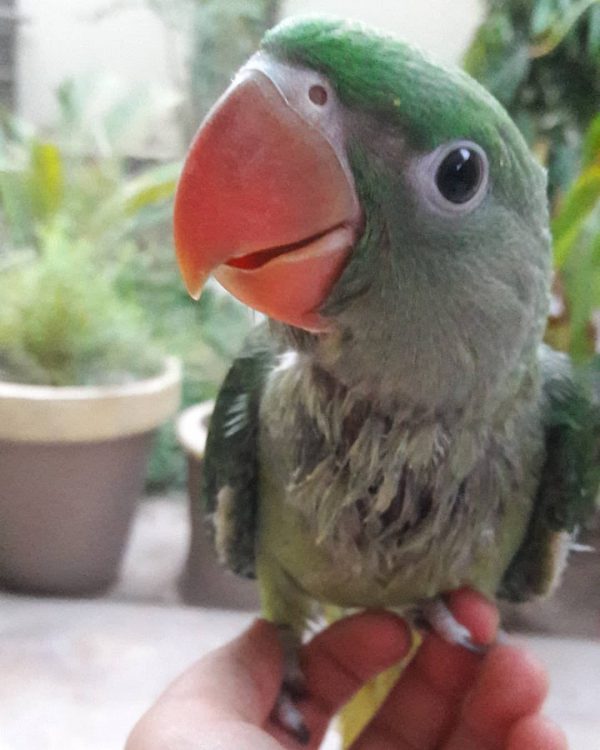
Aria embodies the delicate charm and growing intelligence associated with a well-raised baby female Alexandrine parakeet, although her emotional sensitivity and balanced temperament make her stand out even among her species. Her gentle reactions to human presence show that she has formed strong early bonds through hand-feeding and soft vocal interaction. Because she processes new environments thoughtfully, Aria shows an impressive sense of emotional steadiness for such a young age.
She observes calmly before approaching, tilts her head slightly when listening and maintains soft eye contact during training moments. This thoughtful personality profile makes the baby female Alexandrine parakeet especially suitable for homes seeking a tender, affectionate and easy-to-handle companion.
Developing Plumage, Wing Growth & Elegant Alexandrine Features
Blossoming Jade Body Colors
Aria’s green plumage is transitioning from soft baby fluff to deeper jade tones. This early saturation indicates strong nutrition and natural Alexandrine feather quality.
Wide Wing Structure
Her wings already show the broad formation typical of Alexandrines, giving her a graceful appearance even at a young age.
Growing Tail Feathers
Her tail quills are elongating steadily, maintaining symmetrical growth that reflects healthy skeletal development.
Facial Refinement
Her expressive eyes and smooth facial contours give Aria a gentle, attentive look that enhances her visual appeal.
Calm Behaviour, Learning Response & Social Awareness
Aria’s early habits demonstrate her emotional depth and rising intelligence.
Soft Sound Exploration
She produces gentle, airy chirps and subtle notes as she experiments with early vocalization.
Cautious Curiosity
Unlike bolder babies, Aria evaluates objects carefully before touching them with her beak.
Steady Eye Contact
She responds positively to quiet conversation, tilting her head while absorbing tone and rhythm.
Consistent Comfort Signals
Relaxed chest feathers and gentle foot placement indicate contentment and trust.
Early Training, Juvenile Coordination & Balanced Activity Levels
Soft Step-Up Response
Aria responds gently to guided hand cues and shows eagerness for calm interaction.
Perch Movement Practice
She moves between low perches with improving confidence and foot coordination.
Tone Recognition
When hearing soft whistles, she mirrors pitch changes or responds with tiny chirps.
Object Interaction
She explores enrichment items thoughtfully, gently nudging or lightly tapping them to understand texture and shape.
Daily Structure, Comfort Development & Emotional Rhythm
Morning Calm
She starts her day with soft vocal exercises and slow wing stretches.
Midday Learning
Aria enjoys:
Juvenile-safe chew sticks
Soft woven textures
Mini foraging mats
Smooth baby perches
Late-Day Wind-Down
As the light dims, her grooming time begins—an early sign of healthy self-regulation.
Nutritional Pathway, Weaning Support & Health Foundations
Hand-Feeding Formula
Her high-quality formula supports neural development and early feather growth.
Weaning Stage Foods
She is beginning to accept:
Micro greens
Soft pellets
Light vegetable mash
Occasional seed fragments
Hydration & Digestive Balance
Her hydration is monitored through formula moisture and controlled feeding intervals.
Behaviour, Social Training & Responsible Breeding Standards
As a responsible aviary offering a handfed baby Alexandrine parrot for sale, our emphasis remains on emotional stability, trust-building and gentle conditioning. Aria has been raised with human interaction from her earliest days, forming a strong foundation for ease of handling and future training. Whether new owners seek guidance on juvenile Alexandrine behaviour, socialization methods or long-distance travel preparation, we ensure each baby is emotionally grounded, socially responsive and ready for a seamless transition into a new home.
Ideal Household Types, Care Expectations & Compatibility
Recommended For:
First-time parrot owners
Families with calm routines
Individuals seeking an emotionally gentle parrot
Homes interested in long-term training
Care Notes:
Provide consistent bonding time
Maintain stable room temperature
Rotate toys to support cognitive growth
Safe Habitat Setup, Perch Selection & Comfort Enhancements
Juvenile-Safe Enclosure
A medium-sized cage with soft landing zones supports her developing coordination.
Perch Variety
Use natural wood, baby-safe rope perches and soft-grip surfaces.
Toy Rotation Pattern
Introduce new items every three to five days to encourage exploration.
Light Bathing Routine
Shallow water trays encourage grooming and comfort-building.
Veterinary Screening, Documentation & Owner Assurance
Aria undergoes structured veterinary evaluation including:
PBFD & Polyoma testing
Weight and hydration monitoring
Feather condition assessment
Respiratory check
Documents Provided:
DNA certificate
Hatch record
Veterinary health report
Feeding schedule
Early-training guide
Transport Conditioning, Export Safety & Home Transition Support
Carrier Preparation
Short familiarization sessions help her travel calmly.
Arrival Support Pack
Includes:
Familiar-texture cloth
Feeding instructions
Adjustment guide
Daily routine suggestions
Why Aria Is an Exceptional Baby Female Alexandrine Parakeet
Gentle Emotional Profile
Her sweet temperament makes bonding effortless.
High Intelligence Potential
Shows strong early memory and pattern recognition.
Natural Beauty
Her jade feathers and expressive eyes reflect classic Alexandrine elegance.
Long-Term Compatibility
Aria’s calm nature and intelligence make her ideal for homes seeking a loving, steady companion.
⭐ Buyer Locations Actively Searching for Alexandrine Parakeets
Buyers searching for a baby female Alexandrine Parakeet often prioritize calm development, early bonding, and long-term adaptability. Therefore, interest frequently comes from owners who appreciate the Alexandrine’s composed nature and want to guide personality growth from an early stage.
Across North America, buyer activity appears around Los Gatos Residential Neighborhoods, California, where larger parakeets are raised indoors with structured interaction. Additionally, searches arise from Boone Foothill Communities, North Carolina, where bird keepers often favor Alexandrines for their steady temperament. In Canada, interest becomes visible near Elora–Fergus Residential Zones, Ontario, particularly among owners preparing enrichment-focused home environments.
Within the United Kingdom, buyer intent develops in Stow-on-the-Wold Residential Edges, Gloucestershire, where Alexandrine Parakeets are commonly chosen by owners familiar with medium-sized parrots. Meanwhile, interest across continental Europe grows in Oeiras Hillside Neighborhoods (Portugal), Montepulciano Garden Outskirts (Italy), Baden-Baden Residential Slopes (Germany), Talloires Village Zones (France), and Cadaqués Interior Areas (Spain). Buyers in these regions often compare age, gentleness, and adaptability.
Moreover, searches originate from Kalmar Residential Belt (Sweden), Laren Suburban Estates (Netherlands), Radovljica Residential Zones (Slovenia), Spa Hillside Districts (Belgium), Pezinok Vineyard Areas (Slovakia), and Küsnacht Lakeside Neighborhoods (Switzerland). Consequently, demand remains steady in regions known for thoughtful companion-bird ownership.
Beyond Europe, buyers in Wahroonga Residential Areas, New South Wales (Australia) and Mapua Suburban Zones, New Zealand often search for Alexandrine Parakeets suited for early socialization. Meanwhile, interest in the Middle East appears from Al Safa Residential Communities (UAE), Bayan Suburban Districts (Kuwait), and Al Khor Residential Zones (Qatar), where calm, larger parakeets integrate well into indoor living.
In Asia, buyer searches also originate from Kunitachi Residential Wards (Japan), Upper Thomson Housing Estates (Singapore), and Sai Kung Foothill Districts (Hong Kong). In these markets, female Alexandrine Parakeets are valued for emotional steadiness, intelligence, and long-term companionship potential.
⭐ Frequently Asked Questions — Alexandrine Parakeet (Baby Female Stage)
How does a baby female Alexandrine Parakeet usually behave?
At this stage, behavior appears gentle and observant. Therefore, calm environments help confidence develop naturally.
Are female Alexandrine Parakeets good long-term companions?
They are. Moreover, steady routines often support strong, lasting bonds.
Does a baby Alexandrine need frequent handling?
Yes. However, short and positive sessions work better than long interactions.
Is a baby Alexandrine Parakeet suitable for quieter homes?
Often, yes. Consequently, peaceful environments support smoother adjustment.
Is Aria a good choice for owners new to Alexandrine Parakeets?
Yes. Her age allows patient owners to guide development gradually and confidently.
Internal Link:
https://exoticbirdsfarm.online/blog/baby-female-alexandrine-parakeet-care-guide
Alexandrine Parakeet — Wikipedia
https://en.wikipedia.org/wiki/Alexandrine_parakeet
World Parrot Trust — Species Profile
https://www.parrots.org/encyclopedia/alexandrine-parakeet


Reviews
There are no reviews yet.