
Description
Early Brilliance, Gentle Confidence and Awakening Intelligence in a Baby Indian Ringneck Parakeet
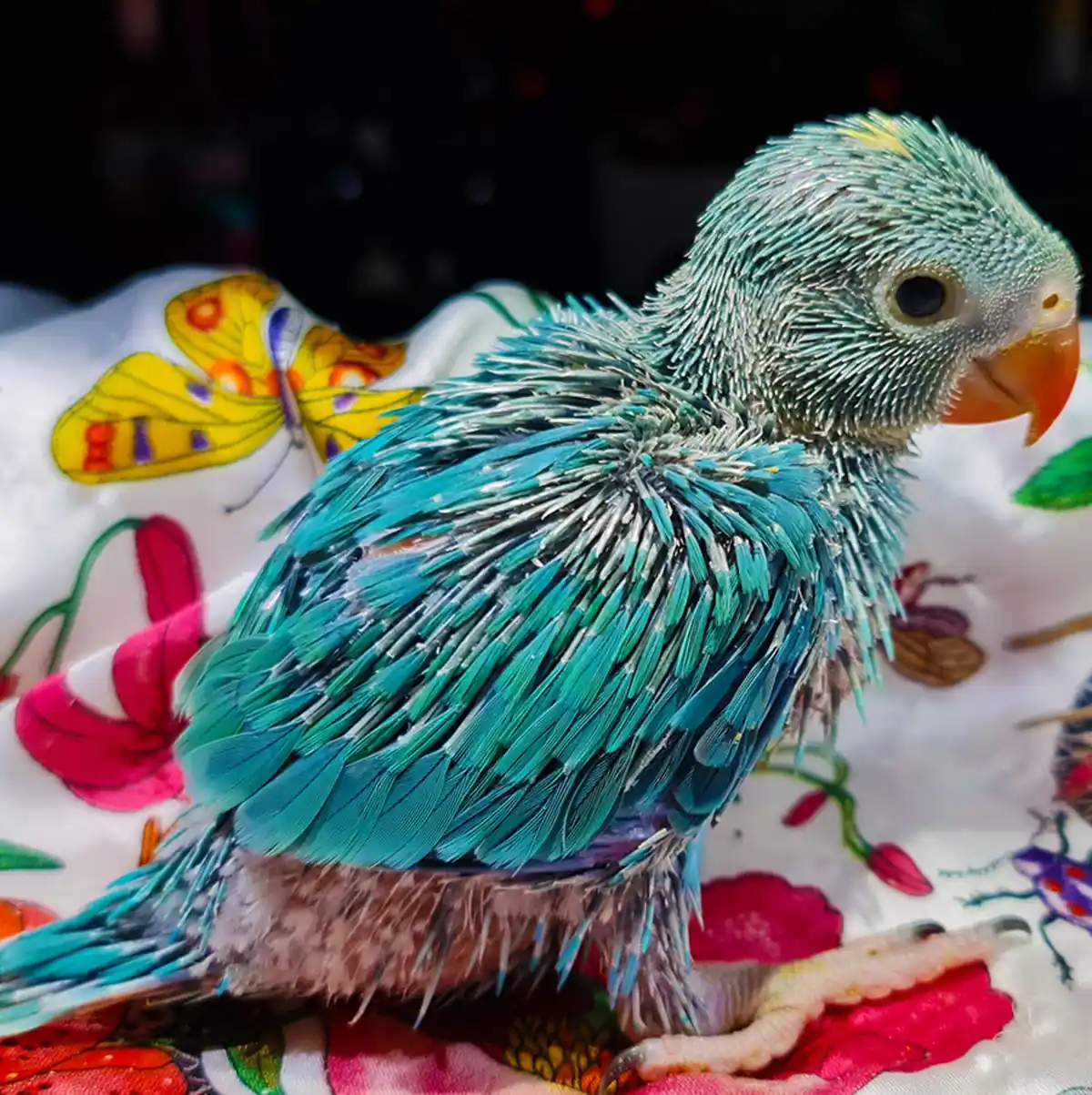
Solen represents the delicate charm and intelligent potential of a baby Indian Ringneck parakeet, bringing together soft behavioral refinement, emerging vocal agility and a strong foundational bond with humans. Right from his earliest days, he responded warmly to soft hand-feeding sessions, rhythmic voice patterns and structured routine, allowing him to develop trust-based interactions that continue to strengthen each day.
Because this baby Indian Ringneck parakeet is still in his imprinting stage, his openness to new voices, textures, enrichment tools and sensory cues is remarkably high, making him exceptionally suited for families or individuals seeking a companion who will grow, learn and adapt within their environment.
Color Development, Feather Structure & Early Glow
Pastel Green Base Coat
Solen’s body currently carries a gentle pastel-green tone that will deepen into a more vibrant emerald as his juvenile feathers transition into their stronger adult layers.
Soft Wing Edges
His wing edges show slight yellow undertones, common in well-fed chicks with strong nutrition pathways.
Tail Development
While still short, his tail feathers display excellent symmetry and growth rate, indicating strong genetic health.
Eye Brightness
His dark, round eyes reveal curiosity and high awareness—key markers for cognitive intelligence in young ringnecks.
Emotional Imprinting, Sensory Learning & Social Bonding Patterns
Because Solen is in the earliest stages of cognitive formation, every interaction shapes his future personality. Consequently, his care routine includes:
Soft-Tone Conditioning
Responds to gentle human speech, tilting his head to follow rhythmic patterns.
Early Trust Anchoring
He has learned to step forward toward the hand during feeding—an early trust marker.
Vocal Exploration
Solen practices short chirps, soft whistles and mimic-ready syllable attempts, showing strong potential for speech development.
Micro-Grooming Behavior
Occasionally preens his wing edges, signaling comfort within a calm environment.
Behavioral Development & Early Training Structure for a Baby Indian Ringneck Parakeet
Initial Step-Up Familiarization
Solen follows gentle finger-guidance and can balance well on a steady perch.
Perch-to-Hand Transition
He transitions from perch to hand with minimal hesitation, especially during morning sessions.
Sound Mirroring
This baby Indian Ringneck parakeet already imitates:
Soft clicks
Short whistles
Repetitive note intervals
Indicating early neural readiness for advanced mimicry.
Glide Confidence
During supervised sessions, he practices short glides that strengthen wing structure and landing accuracy.
Daily Rhythm & Care Routine
Morning
He begins with soft chirps and slow neck stretches before accepting his first feeding session.
Midday
Engages with:
Feather-safe sensory pads
Mini foraging trays
Soft wooden chew blocks
All strategically introduced to stimulate neural growth.
Evening
Solen settles into relaxed breathing, gently ruffling his chest feathers—an indicator of safety and calmness.
Nutrition Supporting Feather Growth, Brain Development & Emotional Balance
Hand-Feeding Formula
High-quality formula ensures gut health, proper calcium levels and consistent feather growth.
Transition Diet
Once weaning begins, Solen will be offered:
Micro greens
Soft pellets
Mashed vegetables
Minimal seeds
Hydration Balance
Hand-feeding ensures proper hydration and stable temperature regulation.
Cognitive Development, Learning Potential & Memory Formation
Pattern Recognition
Solen recognizes repeated sounds and responds with matching pitches.
Early Memory Anchoring
He recalls feeding times, familiar hands and routine cues.
Puzzle Curiosity
He lightly taps objects with his beak, exploring textures and movement.
Ideal Home Requirements for a Baby Indian Ringneck Parakeet
Calm Environment
Baby ringnecks thrive in homes with soft vocal interaction and predictable routines.
Interaction Expectation
Because Solen bonds quickly, daily engagement is ideal—especially during the first month.
Space Planning
Small training stands, soft perches and stable surfaces support proper foot development.
Habitat Layout & Comfort Planning
A safe brooder or infant enclosure
Soft-lining nest pads
Stable temperature control
Low perch height for safety
As he matures, his environment should gradually include climbing branches and small foraging tools.
Bonding, Early Trust Building & Reinforcement Techniques
Soft Handling Sessions
Solen thrives with gentle hands and controlled movement.
Warm Voice Interaction
His neural pathways respond strongly to rhythmic speech.
Reward System
Tiny millet fragments offered sparingly reinforce positive behaviors.
Veterinary Certification, Documentation & Support
Includes:
DNA certificate
Hatch record
Veterinary health check
Feeding schedule
Early-training guide
Solen is screened for PBFD and Polyoma, ensuring strong, verified health.
Travel Preparation & Transition Care
Carrier Conditioning
Brief sessions inside a soft-lined carrier help him remain calm during transport.
Arrival Kit
Includes:
Familiar cloth
Feeding instructions
Comfort guidelines
Why Solen Represents an Exceptional Baby Indian Ringneck Parakeet
Emotional Potential
Highly imprintable, responsive and gentle.
Cognitive Readiness
Shows early signs of speech development and sound imitation.
Visual Brilliance
Beautiful early-plumage structure and symmetrical growth.
⭐ Buyer Locations Actively Searching for Indian Ringneck Parakeets
Buyers searching for an 8-week-old male Indian Ringneck Parakeet typically look for early bonding potential, gentle handling progress, and a bird young enough to shape confidently through routine interaction. Therefore, interest often comes from homes planning hands-on socialization rather than passive ownership.
Across North America, buyer activity appears around Irvine Residential Communities, California, where indoor parrot keeping and early training routines are common. Additionally, searches arise from Cary Suburban Neighborhoods, North Carolina, where families often choose young Indian Ringnecks for their intelligence and adaptability. In Canada, interest becomes visible near Guelph Residential Districts, Ontario, particularly among first-time parakeet owners preparing calm indoor environments.
Within the United Kingdom, buyer intent develops in Stratford-upon-Avon Residential Edges, Warwickshire, where Indian Ringneck Parakeets are frequently selected for their learning ability and manageable size. Meanwhile, interest across continental Europe grows in Cascais Residential Zones (Portugal), Lucca Town Outskirts (Italy), Freiburg Garden Districts (Germany), Colmar Suburban Areas (France), and Sitges Interior Neighborhoods (Spain). Buyers in these regions often compare age, tameness potential, and early responsiveness.
Moreover, searches originate from Uppsala Residential Belt (Sweden), Amstelveen Suburban Estates (Netherlands), Kranj Residential Zones (Slovenia), Namur Garden Districts (Belgium), Trnava Residential Areas (Slovakia), and Winterthur Suburban Neighborhoods (Switzerland). Consequently, demand remains steady in regions known for responsible companion bird ownership.
Beyond Europe, buyers in Hornsby Residential Areas, New South Wales (Australia) and Lower Hutt Suburban Zones, Wellington (New Zealand) often search for Indian Ringneck Parakeets suitable for early training and family interaction. Meanwhile, interest in the Middle East appears from Mirdif Residential Communities (UAE), Salwa Suburban Districts (Kuwait), and Al Wakrah Residential Zones (Qatar), where smaller parrots are favored for indoor living.
In Asia, buyer searches also originate from Setagaya Residential Wards (Japan), Upper Thomson Housing Estates (Singapore), and Tai Wai Residential Districts (Hong Kong). In these markets, Indian Ringneck Parakeets are valued for intelligence, speech potential, and adaptability to apartment living.
⭐ Frequently Asked Questions — Indian Ringneck Parakeet (Baby Male Stage)
What is special about adopting an 8-week-old Indian Ringneck?
At this age, bonding happens quickly. Therefore, consistent interaction helps shape trust and confidence early.
Are baby Indian Ringnecks easy to tame?
Often, yes. However, daily handling and calm routines are essential for success.
Does a young Ringneck require constant attention?
Not constantly. Moreover, short, frequent interaction sessions work best at this stage.
Can an Indian Ringneck learn to talk if started young?
They can. Consequently, early exposure to gentle speech supports vocal development later.
Is Solen suitable for first-time parakeet owners?
Yes. His age and species make him a good match for patient beginners willing to invest time in socialization.
https://exoticbirdsfarm.online/blog/baby-indian-ringneck-parakeet-care-guide
https://indianringneckresource.org/early-development-stages
Reviews
There are no reviews yet.