
Description
Understanding Congo African Grey Fertile Eggs
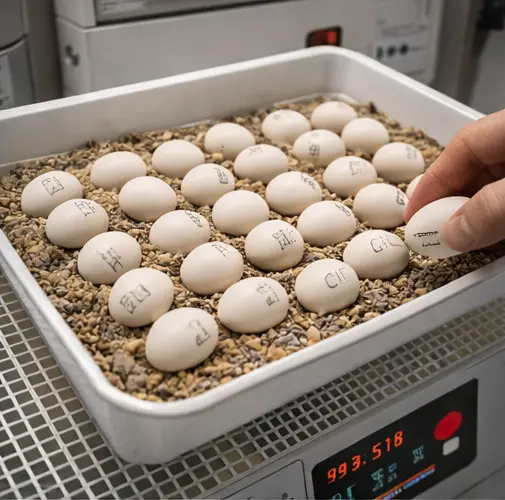
Congo African Grey parrots are globally respected for their intelligence, longevity, and advanced vocal abilities. Fertile eggs from this species reflect careful genetic pairing and disciplined breeding management. A typical Congo African Grey egg is oval, smooth-shelled, and creamy white, with shell thickness that supports proper gas exchange during incubation.
Our breeding adults are mature, health-screened, and paired based on temperament compatibility and reproductive history. These are not first-time breeders; each pair has demonstrated successful fertility across previous clutches. This approach significantly improves the likelihood that eggs are viable at the time of dispatch, while still respecting that fertility cannot be absolutely guaranteed.
Congo African Grey eggs are sensitive to temperature fluctuation and rough handling. For this reason, we follow strict collection protocols immediately after laying to preserve embryo viability from the earliest stage.
Buying Congo African Grey Fertile Eggs Online
If you are looking to buy Congo African Grey fertile eggs online, this core listing is designed for breeders who want ethically sourced eggs from proven pairs without unnecessary marketing claims. Many buyers choose this option when they want to shop African Grey fertile eggs for incubation with transparent handling standards rather than speculative guarantees.
Pricing for this product reflects breeding quality, seasonal availability, and handling care, making it suitable for serious buyers who understand professional incubation requirements.
How Fertility Is Evaluated
Fertility evaluation begins at the breeding level rather than after shipment. We rely on proven pair performance, historical hatch ratios, and post-laying inspection methods to assess egg potential.
Key fertility evaluation steps include:
Breeding Pair Records: Only pairs with consistent fertile clutches are selected.
Initial Visual Assessment: Shell integrity, shape, and texture are checked immediately after collection.
Controlled Rest Period: Eggs are rested briefly in a stable environment before preparation.
Candling (Selective): Used only when appropriate to avoid unnecessary stress to early embryos.
While candling can confirm embryo development, early-stage eggs may not always show visible signs immediately. Therefore, fertility expectation is based on breeding data rather than aggressive testing that could compromise the egg.
Best Incubation Practices for Congo African Grey Eggs
Successful incubation requires precision, patience, and experience. Congo African Grey eggs have specific requirements that differ from smaller parrot species.
Temperature
Maintain a stable incubation temperature between 37.2°C and 37.5°C (99–99.5°F). Fluctuations beyond this range may negatively impact embryo development.
Humidity
Relative humidity should be kept between 50–55% during early incubation, increasing to 65–70% during the final days before hatching. Proper humidity ensures correct moisture loss and prevents membrane dehydration.
Egg Turning
Eggs should be turned 3–5 times daily, ideally using an automatic turning incubator. Turning prevents embryo adhesion to the shell membrane and promotes even heat distribution.
Incubation Duration
Congo African Grey eggs typically hatch between 28–30 days, depending on incubation stability and genetics.
Troubleshooting Common Issues
Early embryo loss: Often linked to temperature spikes or drops
Late-stage failure: Frequently related to incorrect humidity levels
Weak hatchlings: Can result from insufficient turning or improper ventilation
Proper incubator calibration before egg arrival is strongly recommended.
Shipping, Transport & Storage
Transporting fertile parrot eggs requires advanced planning and buyer readiness. Eggs are packed using shock-absorbing materials and insulated containers designed to reduce vibration and temperature fluctuation.
Buyer preparation tips:
Pre-warm incubator before egg arrival
Avoid opening packaging immediately in cold environments
Allow eggs to rest at room temperature for several hours before incubation
Do not wash eggs; follow dry sanitation guidelines only
Temporary storage (if necessary) should be kept between 15–18°C (59–64°F) with moderate humidity and minimal movement.
Ethical & Legal Considerations
We adhere strictly to ethical aviculture standards and international guidelines for egg sales.
Important disclaimers:
Fertile eggs are supplied based on proven breeding performance, not guaranteed hatch success
Hatch outcomes depend heavily on buyer incubation skill, equipment quality, and environmental control
Buyers are responsible for understanding and complying with local wildlife and import regulations
We do not support unethical breeding, overproduction, or improper handling practices. Bird welfare remains central to every stage of our operation.
International Demand for Congo African Grey Fertile Eggs
Congo African Grey fertile eggs attract strong interest from professional breeders, licensed aviaries, and private collectors in regulated international markets. Demand is particularly high in regions with established aviculture infrastructure and controlled import frameworks.
For this product, buyer interest is commonly received from:
New York, USA
Toronto, Canada
London, United Kingdom
Paris, France
Madrid, Spain
Rome, Italy
Dubai, United Arab Emirates
Doha, Qatar
Tel Aviv, Israel
Egg Buyer FAQs
1. Are these eggs guaranteed to hatch?
No. Fertility is based on proven breeding pairs, but hatch success depends on incubation conditions and handling.
2. Can beginners incubate Congo African Grey eggs?
This species is best suited for experienced breeders due to its sensitivity to incubation variables.
3. How fresh are the eggs when shipped?
All eggs are from recent collections, rotated weekly to ensure freshness.
4. Do you provide incubation support?
We provide general guidelines but do not offer real-time incubation monitoring.
5. Are these eggs ethically sourced?
Yes. All breeding pairs are maintained under ethical, welfare-focused standards.
6. What happens if an egg arrives damaged?
Claims must be reported immediately with photographic documentation upon arrival.
7. Can eggs be stored before incubation?
Short-term storage is possible under controlled conditions, but immediate incubation is preferred.
INTERNAL LINKS
African Grey Egg Incubation Guide
Parrot Egg Candling Techniques
Congo African Grey Breeding Overview
OUTBOUND AUTHORITY LINKS
Wikipedia — African Grey Parrot Reproduction
Lafeber Avian Research — Parrot Incubation Basics


Reviews
There are no reviews yet.