
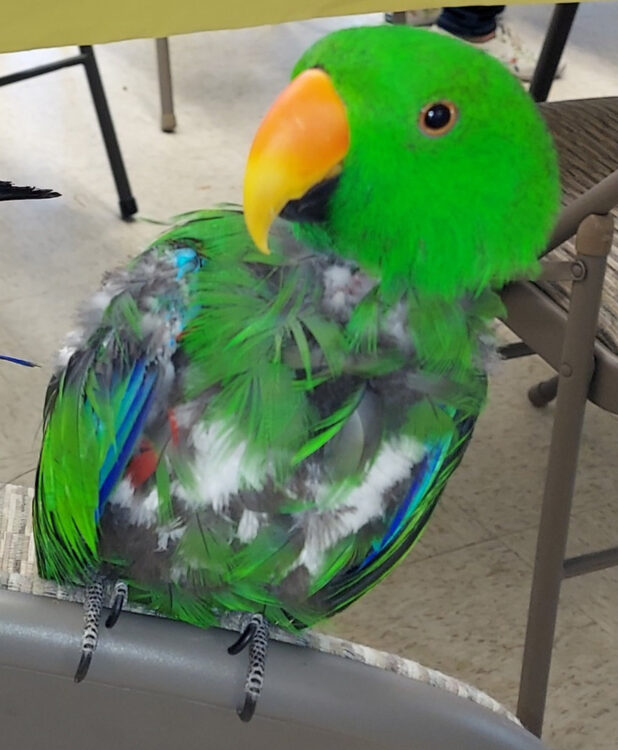

Stress Signs in Eclectus Parrots
Recognizing stress signs in Eclectus parrots you should never ignore is one of the most important responsibilities of ethical ownership. Eclectus parrots are not loud stress-responders. Instead of screaming, thrashing, or acting out dramatically, they often go quiet. They withdraw, freeze, or subtly change behavior—signals that are easy to miss until stress becomes chronic and damaging.
Because Eclectus parrots are biologically and emotionally sensitive, prolonged stress can quickly affect digestion, immunity, hormones, and behavior. This guide explains the non-obvious stress signals, why they appear, how they differ from normal calm behavior, and what owners should do immediately when these signs appear. Early recognition protects both health and trust.
Why Stress Looks Different in Eclectus Parrots
Quiet Birds, Loud Consequences
Eclectus parrots evolved to conserve energy and avoid unnecessary confrontation. As a result, stress rarely shows as explosive behavior. Instead, it appears as restraint.
Common stress responses include:
- Reduced movement
- Stillness and withdrawal
- Avoidance rather than aggression
- Suppressed vocalization
Understanding why Eclectus parrots hide stress helps owners stop misreading silence as contentment.
Stress Accumulates Gradually
Unlike acute fear, stress in Eclectus parrots often builds over days or weeks. Small stressors—diet imbalance, routine changes, overstimulation—stack until the bird’s coping threshold is exceeded.
Behavioral Stress Signs You Should Never Ignore
Sudden Withdrawal or Stillness
One of the most overlooked stress signals is doing less. A stressed Eclectus parrot may:
- Sit motionless for long periods
- Stop exploring or engaging
- Turn away repeatedly
This is often mistaken for a “calm temperament,” when it actually reflects emotional shutdown.
Recognizing withdrawal as a stress sign in Eclectus parrots is critical.
Reduced or Altered Vocalization
Eclectus parrots usually communicate quietly but consistently. Stress may cause:
- Sudden silence
- Loss of usual contact calls
- Reduced speech or sound variety
A drastic change in vocal patterns should always be investigated.
Avoidance of Interaction
A stressed bird may:
- Lean away from hands
- Refuse step-ups
- Move to the far end of the cage when approached
This is a polite request for space. Ignoring it increases stress.
Physical and Postural Stress Signals
Feather Changes Without Molting
Watch closely for:
- Persistent light fluffing while alert
- Tight feathers held close to the body
- Uneven feather posture
These can indicate discomfort or anxiety rather than temperature regulation.
Understanding feather-based stress signals in Eclectus parrots prevents misinterpretation.
Rigid or Frozen Posture
A stiff, upright posture with little movement often indicates heightened vigilance or fear. The bird is assessing risk rather than relaxing.
Excessive Preening or Feather Focus
Stress-related preening may look like:
- Repetitive grooming in one area
- Distracted, intense preening
- Increased feather attention without molting
This can precede feather damage if stress persists.
Digestive and Feeding-Related Stress Signs
Changes in Appetite
Stress often affects digestion first. Signs include:
- Eating less or more than usual
- Selective eating
- Refusing previously enjoyed foods
Because Eclectus parrots are diet-sensitive, stress and nutrition are closely linked.
Recognizing stress-related appetite changes in Eclectus parrots helps prevent secondary health issues.
Changes in Droppings
Stress may cause:
- Smaller droppings
- Increased liquid content
- Irregular timing
While droppings vary naturally, consistent changes warrant attention.
Stress Signals Related to Environment and Routine
Increased Sensitivity to Change
A stressed Eclectus parrot may react strongly to:
- New objects or toys
- Rearranged cages
- Changes in feeding times
- Altered sleep schedules
Their sensitivity to disruption is a core trait, not stubbornness.
This highlights why routine disruption stresses Eclectus parrots more than many other species.
Heightened Startle Response
Stress lowers tolerance. Birds may:
- Startle at familiar sounds
- React defensively to normal movement
- Freeze when approached
Hormonal Stress vs Emotional Stress
When Stress Triggers Hormonal Behavior
Chronic stress often overlaps with hormonal activation. This can lead to:
- Territorial behavior
- Increased defensiveness
- Nest-seeking actions
Managing stress reduces the intensity and duration of hormonal episodes.
Understanding the link between stress and hormones in Eclectus parrots prevents escalation.
Common Causes of Chronic Stress in Eclectus Parrots
Dietary Imbalance
Excessive pellets, fruit, seeds, or fortified foods overstimulate the nervous system and increase stress sensitivity.
Overstimulation
Too much handling, noise, or visual clutter overwhelms Eclectus parrots quickly.
Lack of Predictability
Irregular routines, inconsistent interaction, or changing caregivers increase anxiety.
Ignored Communication
When subtle signals are repeatedly ignored, parrots stop signaling and internalize stress.
Stress Signals Often Confused With “Good Behavior”
Quiet Does Not Always Mean Happy
A bird that never complains may actually feel unheard.
Compliance Is Not Comfort
A parrot that steps up reluctantly or freezes during handling may be tolerating stress rather than trusting the interaction.
Understanding the difference between calm and stressed Eclectus parrots is essential.
What to Do Immediately When You Notice Stress Signs
Step 1: Reduce Stimulation
Lower noise, pause interaction, and give space.
Step 2: Restore Routine
Re-establish consistent:
- Feeding times
- Sleep schedules
- Interaction patterns
Routine is emotional safety for Eclectus parrots.
Step 3: Evaluate Diet
Remove potential triggers:
- Fortified pellets
- Excess fruit
- Seeds and nuts
Shift back to simple, fresh foods.
Step 4: Observe Without Forcing
Let the bird recover without pressure. Improvement often begins with reduced demands.
This approach reflects ethical stress management for Eclectus parrots.
When Stress Becomes a Health Risk
Seek professional advice if stress signs:
- Persist for weeks
- Escalate into aggression or self-damaging behavior
- Are paired with weight loss or lethargy
Chronic stress suppresses immunity and shortens lifespan.
Recognizing when stress becomes dangerous for Eclectus parrots can be lifesaving.
Long-Term Stress Prevention Strategies
Design for Calm
- Minimal cage clutter
- Predictable layout
- Quiet observation spaces
Feed for Balance
Simple, fresh diets stabilize mood and digestion.
Respect Communication
Respond to early signals before escalation.
Build Choice Into Daily Life
Allow voluntary interaction and independence.
Ethical Perspective on Stress
Stress Is Information
Stress signals are not inconveniences—they are messages. Ethical care means listening and adjusting.
Understanding ethical responsibility for stressed Eclectus parrots protects both mental and physical health.
Final Thoughts
Stress signs in Eclectus parrots you should never ignore are often the quietest ones. Stillness, withdrawal, subtle posture changes, and reduced vocalization speak louder than screams ever could. These parrots rely on owners to notice what they cannot shout.
When stress is recognized early and addressed thoughtfully—through routine, diet, environment, and respect—Eclectus parrots recover remarkably well. They return to being what they naturally are: calm, observant, emotionally intelligent companions who thrive when they feel safe.