
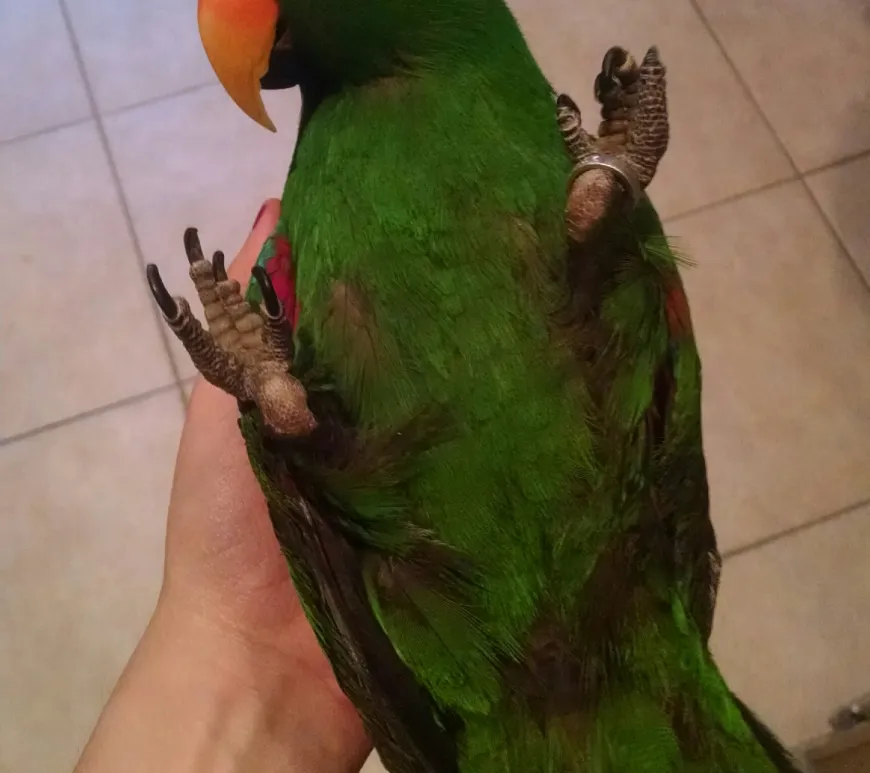

How to Train an Eclectus Parrot
Teaching a parrot to step up is often presented as a basic skill. However, how to train an Eclectus parrot to step up safely requires a very different mindset than training most other parrots. Eclectus parrots are not stubborn, slow, or uncooperative—they are deliberate. They need trust, clarity, and emotional safety before they offer physical cooperation.
When step-up training is rushed or forced, Eclectus parrots may comply briefly, then withdraw, become defensive, or refuse handling altogether. When done correctly, step-up becomes a calm, voluntary behavior that strengthens trust rather than testing it.
This guide explains why Eclectus parrots approach step-up differently, how to prepare the environment, how to read body language during training, and how to teach step-up using ethical, pressure-free methods that actually last.
Why Step-Up Training Is Different for Eclectus Parrots
Step-Up Is a Trust Exercise, Not a Command
For Eclectus parrots, stepping up means surrendering balance and control. It requires the bird to trust:
- Your hands
- Your predictability
- Your respect for boundaries
This is why why step-up training must be trust-based for Eclectus parrots cannot be overstated. Forcing the behavior teaches the bird that communication is ignored.
Compliance Is Not the Same as Comfort
An Eclectus parrot may step up while:
- Holding tight feathers
- Leaning away
- Avoiding eye contact
This is tolerance, not trust. Ethical training aims for relaxed participation, not silent compliance.
Preparing for Step-Up Training
Choose the Right Environment
Step-up training should happen in:
- A quiet room
- Familiar surroundings
- Minimal visual distractions
Avoid training during:
- Hormonal periods
- High household activity
- Immediately after diet or routine changes
This supports setting up a safe training environment for Eclectus parrots.
Timing Matters
The best time to train is when your parrot is:
- Calm but alert
- Not hungry or overly full
- Willing to observe
Short sessions (1–3 minutes) are far more effective than long attempts.
Understanding Body Language Before You Begin
Green Light Signals (Proceed)
Look for:
- Relaxed feathers
- Upright but loose posture
- Soft eye expression
- Interest without tension
These signs indicate readiness.
Yellow Light Signals (Pause)
- Leaning away
- Tight feathers
- Eye pinning
- Stillness without engagement
These mean slow down or stop.
Learning how to read Eclectus parrot body language during training prevents setbacks.
Red Light Signals (Stop)
- Hissing
- Lunging
- Frozen posture
- Turning away repeatedly
Respecting these signals preserves trust.
Step-by-Step: Teaching Step-Up Safely
Step 1: Start With a Neutral Perch
If your parrot is hand-shy, begin with a perch or dowel. This reduces pressure and removes emotional history associated with hands.
Hold the perch steadily at:
- Chest level
- Slightly below the bird’s feet
Say “step up” once, calmly.
This is part of introducing step-up without pressure for Eclectus parrots.
Step 2: Allow the Bird to Decide
Do not push into the bird’s body. Instead:
- Hold the perch still
- Wait quietly
- Remove it if the bird declines
No reaction is better than negative reaction.
Step 3: Reinforce Calm Attempts
Reward:
- One foot placed on the perch
- Weight shifting forward
- Investigating the perch
Rewards can include:
- Calm praise
- A favorite healthy treat
- Ending the session positively
This reinforces positive reinforcement in Eclectus parrot training.
Step 4: Transition From Perch to Hand
Once the bird steps confidently onto a perch, slowly replace the perch with your forearm or hand—positioned the same way.
Keep your hand:
- Stable
- Predictable
- Low pressure
Step 5: Keep It Brief and Predictable
Successful step-ups should be:
- Short
- Calm
- Immediately followed by a safe perch or stand
Avoid carrying the bird around unnecessarily after stepping up.
Common Step-Up Training Mistakes
Pushing the Bird’s Chest
This removes choice and increases defensive responses.
Repeating the Cue
Saying “step up” multiple times teaches the bird the cue is optional background noise.
Training Through Stress
If a bird steps up only to escape pressure, trust erodes.
Understanding common step-up training mistakes with Eclectus parrots helps prevent long-term refusal.
What If My Eclectus Parrot Refuses to Step Up?
Refusal Is Communication
A refusal usually means:
- The bird feels unsure
- The environment feels unsafe
- Trust is not yet sufficient
Refusal is not defiance.
This reflects why refusal during step-up training is normal for Eclectus parrots.
Reset Instead of Pushing
If refusal happens:
- End the session calmly
- Offer space
- Try again later
Trust rebuilds faster when pressure is removed.
Step-Up Training During Hormonal Periods
Adjust Expectations
Hormonal Eclectus parrots may:
- Reduce tolerance for handling
- Become more territorial
- Prefer independence
During these times:
- Use perches more
- Shorten sessions
- Avoid forcing contact
This supports safe step-up training during hormonal phases.
Step-Up Training for Shy or Rescue Eclectus Parrots
Progress May Be Slower—and That’s Okay
Rescue parrots may associate hands with fear. Begin with:
- Distance training
- Neutral objects
- Visual trust building
Celebrate micro-progress.
Consistency Over Speed
Daily calm exposure works better than occasional intense training.
This reinforces building trust before step-up training in Eclectus parrots.
How Long Does Step-Up Training Take?
There is no fixed timeline.
Some Eclectus parrots:
- Learn in days
- Take weeks
- Need months
Speed is irrelevant. Emotional safety is everything.
Understanding how long step-up training takes for Eclectus parrots helps owners stay patient.
Signs of Successful, Ethical Step-Up Training
A well-trained Eclectus parrot will:
- Step up without hesitation
- Maintain relaxed posture
- Step off calmly when asked
- Communicate discomfort clearly
These are signs of trust, not obedience.
When Step-Up Training Improves Behavior Overall
Once step-up is voluntary and calm, owners often notice:
- Reduced aggression
- Increased confidence
- Better communication
- Stronger bonding
This shows how step-up training strengthens the human–Eclectus bond.
Ethical Perspective on Step-Up Training
Choice Builds Cooperation
Ethical training respects:
- Autonomy
- Communication
- Emotional boundaries
For Eclectus parrots, trust is the training tool.
Understanding ethical handling and training for Eclectus parrots protects long-term welfare.
Final Thoughts
Learning how to train an Eclectus parrot to step up safely is not about control—it is about conversation. Step-up works best when the bird feels heard, respected, and emotionally secure.
When owners slow down, read body language, remove pressure, and reward calm participation, Eclectus parrots respond with remarkable trust. Step-up then becomes what it should always be: a shared moment of cooperation, not a test of dominance.