
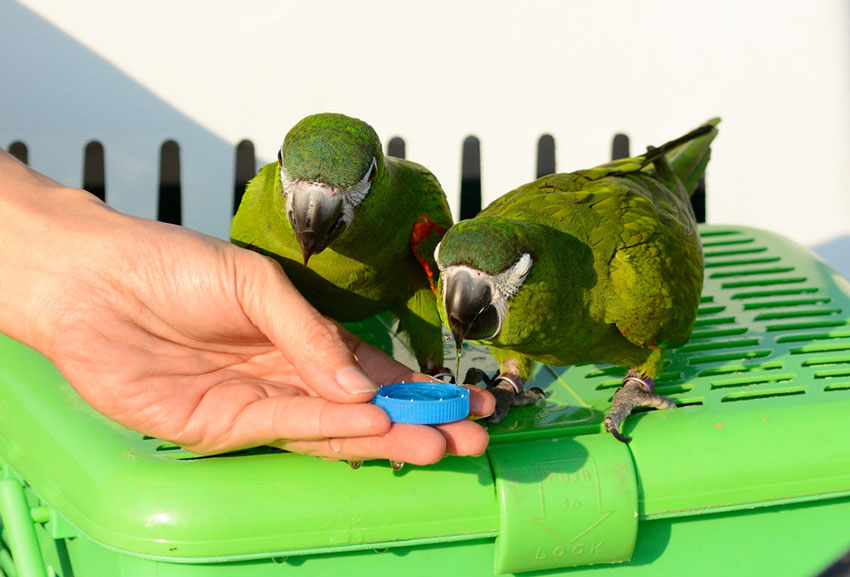

Training Amazon Pairs
Training Amazon pairs is fundamentally different from training a single Amazon parrot. When two Amazons live as a bonded or semi-bonded pair, they function as a social unit. Their learning, emotions, confidence, and reactions influence each other constantly. If training is handled correctly, Amazon pairs become calmer, more cooperative, and emotionally balanced. If handled poorly, however, training can trigger jealousy, competition, aggression, or long-term relationship stress between the birds.
This guide explains how to train Amazon pairs ethically and effectively—covering emotional dynamics, setup, routines, individual vs paired training, common mistakes, and how to strengthen both the pair bond and human trust at the same time.
Why Training Amazon Pairs Is Different
Amazon parrots are highly social, intelligent, and emotionally expressive. When paired, their priorities shift from human-centered interaction to pair-based security.
Understanding training Amazon pairs correctly helps to:
- Prevent jealousy and rivalry
- Reduce aggression and territorial behavior
- Support emotional regulation
- Improve cooperation with humans
- Preserve the parrot–parrot bond
These principles are core to advanced Parrot Care Guides, especially for multi-parrot households.
Understanding Pair Dynamics Before Training
Pair Bonds Come First
For Amazon pairs, the relationship between the two parrots is always primary.
This means:
- One parrot’s stress affects the other
- One parrot’s success can trigger competition
- Human favoritism destabilizes learning
These dynamics are explored in depth in Parrot Pair Social Dynamics.
Bonded vs Non-Bonded Pairs
Not all Amazon pairs are the same.
- Bonded pairs require careful balance to avoid competition
- Compatible but unbonded pairs need gradual, confidence-based training
Understanding where your pair falls is critical before training begins.
Emotional Foundations of Training Amazon Pairs
Emotional Safety Comes Before Commands
Amazon pairs learn best when both birds feel:
- Calm
- Secure
- Unpressured
Training that creates excitement, urgency, or rivalry undermines learning.
This emotional framework aligns closely with Understanding Amazon Parrot Bonding.
Avoid Creating a “Favorite”
Amazon pairs quickly detect unequal attention.
Favoritism leads to:
- Jealousy
- Aggression
- Training resistance
Balanced interaction is essential for success.
How to Structure Training Amazon Pairs
Step 1: Start With Individual Sessions
Before training together, each Amazon should:
- Understand basic cues individually
- Be comfortable training alone
- Show emotional stability during sessions
This foundation prevents confusion and competition.
Individual training principles are outlined in Positive Reinforcement Training for Parrots.
Step 2: Use Parallel Training
Parallel training means:
- Both parrots are present
- Each works with their own cues
- Rewards are delivered equally
This method builds cooperation without rivalry.
Step 3: Keep Sessions Short and Calm
Amazon pairs fatigue emotionally faster together than alone.
Ideal sessions are:
- 3–5 minutes
- Low-arousal
- Ended on success
Stopping early prevents tension.
Training Environment for Amazon Pairs
Space Prevents Conflict
Training Amazon pairs requires adequate space.
Best setup includes:
- Separate perches
- Clear visual boundaries
- Enough distance to prevent competition
Crowded training areas often trigger defensive behavior.
Reduce Environmental Distractions
Background noise, movement, or spectators increase arousal.
Calm environments support focus and emotional regulation.
This stability is reinforced in Setting a Daily Parrot Routine.
Rewards and Reinforcement in Pair Training
Equal Rewards Are Non-Negotiable
Amazon pairs are extremely sensitive to fairness.
Always:
- Use identical rewards
- Deliver rewards simultaneously
- Avoid delaying one bird
Unequal reinforcement damages trust instantly.
Avoid High-Value Food Competition
Highly desirable treats can trigger rivalry.
Instead:
- Use moderate-value rewards
- Rotate treats occasionally
- Maintain calm delivery
The goal is cooperation—not excitement.
Reading Body Language During Pair Training
Amazon pairs communicate discomfort early through:
- Feather tightening
- Eye pinning
- Leaning away
- Increased attention to the other bird
These cues must be respected immediately.
Understanding these signals aligns with Understanding Parrot Body Language.
Common Challenges When Training Amazon Pairs
Jealousy During Training
Jealousy often appears as:
- Interrupting the other bird
- Vocalizing loudly
- Blocking access
The solution is structure, not punishment.
One Parrot Progresses Faster
Skill differences are normal.
To manage this:
- Slow the faster bird
- Reinforce patience
- Celebrate calm waiting
Speed imbalance should never be corrected through pressure.
Training Amazon Pairs Through Routine
Routine Builds Emotional Stability
Amazon pairs thrive on predictability.
Consistent training schedules:
- Reduce anxiety
- Improve cooperation
- Prevent territorial behavior
Routine importance is detailed in Setting a Daily Parrot Routine.
Same Time, Same Place
Training at consistent times and locations:
- Builds confidence
- Reduces resistance
- Improves learning retention
Consistency matters more than frequency.
What NOT to Do When Training Amazon Pairs
Avoid:
- Training only one bird
- Allowing competition
- Raising voice or energy
- Forcing participation
- Using punishment
Most pair-training problems are human-created.
Training Amazon Pairs During Hormonal Periods
Expect Temporary Changes
During hormonal seasons, Amazon pairs may:
- Become more territorial
- Reduce tolerance for training
- Show increased vocalization
These changes are normal.
Adjust Expectations
During these periods:
- Shorten sessions
- Reduce physical proximity
- Focus on calm behavior
Respecting cycles preserves long-term trust.
Long-Term Benefits of Properly Training Amazon Pairs
When training is done correctly, Amazon pairs are more likely to:
- Cooperate calmly with humans
- Maintain a strong pair bond
- Avoid jealousy-driven aggression
- Show emotional resilience
- Adapt to household changes
This is why ethical programs offering Exotic Birds for Sale increasingly prioritize keeping bonded Amazons together and educating owners properly.
External Behavioral Insight
Avian behavioral research consistently shows that paired parrots learn best through cooperative, low-arousal environments that respect social bonds. Educational sources such as avian behavior research publications confirm that equal reinforcement and predictability are essential when training parrot pairs.
Understanding training Amazon pairs transforms training from conflict into cooperation.