

Understanding Parrot Emotions
Understanding parrot emotions is essential for anyone living with, breeding, or caring for parrots. Parrots are not instinct-only animals; they are emotionally complex, socially intelligent beings that experience a wide range of feelings including joy, fear, frustration, curiosity, and attachment. When parrot emotions are misunderstood or ignored, behavioral problems often follow. However, when emotional needs are recognized and respected, parrots become calmer, more confident, and deeply bonded companions.
Learning to read emotional signals is a foundational topic in responsible Parrot Care Guides, and it plays a critical role in welfare, training success, and long-term placement stability.
Why Understanding Parrot Emotions Matters
Parrots evolved as flock animals. In the wild, emotional awareness is essential for survival. Emotional signals help parrots:
- Maintain social bonds
- Avoid danger
- Coordinate flock movement
- Raise offspring
- Resolve conflict
In captivity, parrots bring these same emotional systems into human homes. When emotional needs are unmet, parrots do not “misbehave”—they communicate distress. Understanding parrot emotions allows humans to respond appropriately rather than reactively.
How Parrots Experience Emotions
Scientific observation and behavioral research show that parrots possess advanced emotional processing. Their brains support:
- Emotional memory
- Social recognition
- Empathy-like responses
- Stress anticipation
Parrots remember past experiences and associate emotions with people, places, and routines. A positive interaction builds trust, while a negative one can create long-lasting fear. This emotional memory explains why parrots may react strongly to certain situations long after the original event.
Common Parrot Emotions and What They Look Like
Contentment and Happiness
Signs of emotional comfort include:
- Soft vocalizations or quiet chatter
- Relaxed feathers
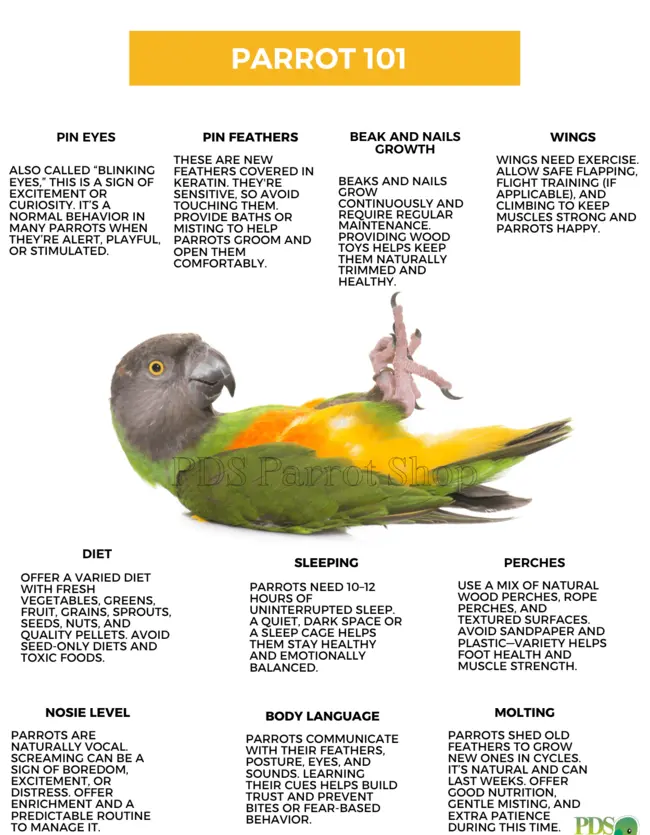
- Gentle eye pinning without tension
- Playful curiosity
- Willing interaction
Emotionally content parrots feel safe and socially fulfilled.
Fear and Anxiety
Fear is one of the most commonly misunderstood parrot emotions. Signs include:
- Freezing or sudden stillness
- Rapid breathing
- Wide eyes or intense eye pinning
- Defensive biting
- Alarm vocalizations
Fear-based behavior should never be punished. It signals a need for reassurance, distance, or environmental adjustment.
Frustration
Frustration often appears when parrots cannot control their environment. Triggers include boredom, inconsistent routines, or mixed signals from humans.
Common signs:
- Repetitive movements
- Loud vocalization
- Cage aggression
- Redirected biting
Many frustration-related behaviors are also discussed in Parrot Vocalization Guide resources because emotional frustration often expresses itself through sound.
Attachment and Affection
Parrots form strong emotional attachments. Healthy attachment includes:
- Seeking interaction without panic
- Accepting short separations
- Comfort with multiple people
Unhealthy attachment, however, can turn into dependency, a topic explored in depth in Cockatoo Bonding behavior studies.
Body Language: The Emotional Language of Parrots
Understanding parrot emotions requires reading body language as much as listening to sound.
Feather Position
- Fluffed feathers may indicate relaxation—or illness, depending on context
- Tight feathers can signal alertness or fear
Eye Pinning
Eye pinning reflects emotional arousal, not always aggression. Context determines whether it signals excitement, curiosity, or stress.
Posture and Movement
- Relaxed stance = emotional comfort
- Leaning away = uncertainty or fear
- Lunging = defensive response, not dominance
Body language often communicates emotion before vocalization does.
The Role of Environment in Parrot Emotional Health
Parrots are highly sensitive to their surroundings. Emotional stability depends heavily on environmental factors such as:
- Predictable routines
- Adequate sleep
- Mental stimulation
- Social interaction
- Calm household energy
Sudden changes—new people, relocation, noise, or inconsistent schedules—can disrupt emotional balance. This is particularly important for parrots transitioning under International Bird Shipping Policy conditions, where emotional stress management is crucial.
How Humans Accidentally Disrupt Parrot Emotions
Many emotional issues arise unintentionally. Common mistakes include:
- Forcing interaction
- Ignoring stress signals
- Reinforcing fear-based behaviors
- Reacting emotionally to vocalization
- Inconsistent boundaries
Parrots respond best to calm, predictable human behavior. Emotional neutrality builds security.
Supporting Healthy Parrot Emotions Through Training
Training is not about control—it is about communication. Ethical, reward-based interaction builds emotional confidence.
Approaches outlined in Positive Reinforcement Training for Parrots help parrots:
- Feel in control of choices
- Predict outcomes
- Build trust
- Reduce anxiety
Emotionally secure parrots learn faster and cooperate more willingly.
Emotional Development at Different Life Stages
Baby and Juvenile Parrots
Young parrots are emotionally flexible. Early experiences shape emotional resilience. Exposure to multiple people, gentle routines, and short separations help prevent future anxiety.
Adult Parrots
Adults may carry emotional history. Patience and consistency allow trust to rebuild over time.
Rehomed Parrots
Rehomed parrots often experience grief and confusion. Respecting emotional pacing is essential for recovery and bonding.
Emotional Awareness in Multi-Person Households
Parrots benefit from balanced social exposure. When only one person meets all emotional needs, dependency can form.
Healthy strategies include:
- Shared caregiving
- Rotating interaction
- Consistent cues from all family members
This balance is critical for families exploring Parrots for Sale Worldwide, as emotional adaptability improves placement success.
When Emotional Changes Signal a Deeper Problem
Sudden emotional shifts may indicate:
- Illness
- Chronic stress
- Environmental conflict
Warning signs include:
- Sudden silence
- Extreme aggression
- Feather plucking
- Withdrawal
In such cases, emotional changes should never be dismissed as “behavioral issues” alone.
Understanding Parrot Emotions and Long-Term Welfare
Emotionally supported parrots live healthier, more stable lives. Emotional understanding reduces surrender rates, improves training outcomes, and strengthens lifelong bonds.
Ethical breeders and aviaries offering Exotic Birds for Sale increasingly emphasize emotional education as part of responsible ownership preparation.
External Behavioral Insight
Modern avian behavioral studies consistently confirm that parrots experience complex emotional states. Educational resources such as avian behavior research publications highlight emotional intelligence as a defining trait of parrots, reinforcing the importance of empathy-based care.