
Understanding Parrot Social Dynamics
Understanding parrot social dynamics is essential for anyone who lives with, breeds, or works closely with parrots. Parrots are not solitary animals. They are highly social, flock-oriented birds whose behavior, emotions, and communication are shaped by complex social rules. When these dynamics are misunderstood, parrots may develop anxiety, aggression, screaming, or emotional instability. However, when parrot social dynamics are respected and supported, parrots become calmer, more cooperative, and emotionally balanced.
This guide explains how parrot social dynamics work, how parrots form relationships and social roles, and how understanding parrot social dynamics improves behavior, bonding, and long-term wellbeing.
Why Understanding Parrot Social Dynamics Matters
In the wild, parrots survive through social cooperation. Flocks provide safety, learning opportunities, emotional security, and structure. These instincts do not disappear in captivity. Instead, parrots recreate social systems within human homes.
Understanding parrot social dynamics helps to:
- Prevent aggression and fear-based behavior
- Reduce screaming and attention-seeking
- Improve training and communication
- Support emotional health
- Create stable, predictable relationships
These principles are consistently emphasized in ethical Parrot Care Guides, because social misunderstanding is one of the most common causes of behavioral problems.
The Natural Social Structure of Parrots
Parrots live in layered social systems rather than rigid dominance hierarchies.
Flock-Based Living
Most parrot species live in flocks that may range from small family groups to large communal gatherings. Within these flocks:
- Long-term pair bonds form
- Social roles develop organically
- Cooperation is more important than dominance
Understanding parrot social dynamics means recognizing that parrots value cooperation, communication, and predictability more than control.
Pair Bonds Within the Flock
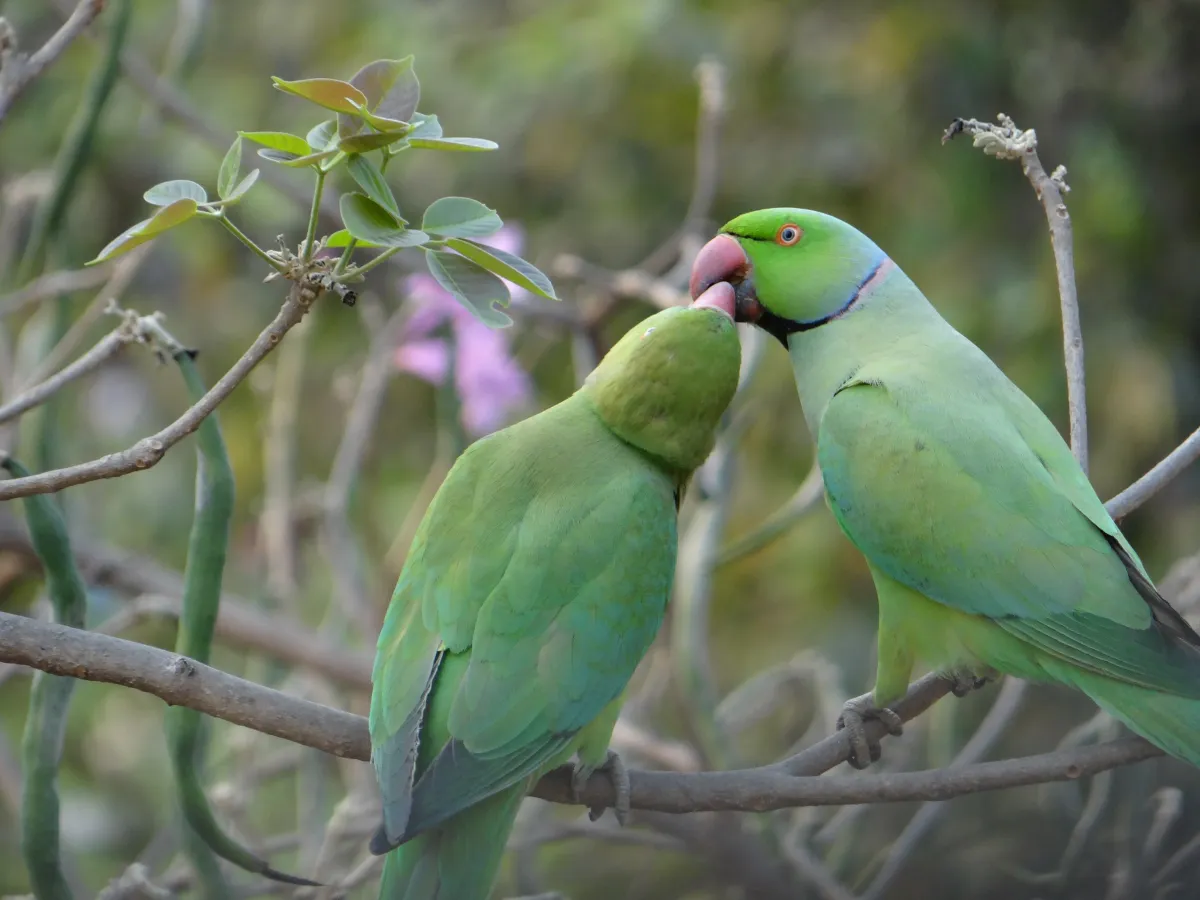
Many parrots form strong pair bonds, sometimes lasting a lifetime. These bonds exist within the larger flock structure and provide emotional anchoring.
This is why topics such as Cockatoo Bonding and pair living are so important—bonding is not optional for parrots; it is biological.
How Parrots Establish Social Relationships
Parrots do not instantly trust or accept others. Social relationships develop gradually through observation and interaction.
Observation Before Interaction
Parrots often watch before engaging. This allows them to assess safety, predict behavior, and understand social cues.
Rushing interaction disrupts social trust and creates confusion.
Trust-Based Interaction
Trust forms when interactions are:
- Predictable
- Respectful
- Non-threatening
Understanding parrot social dynamics requires patience. Trust is built through consistency, not force.
Understanding Parrot Social Dynamics in Human Homes
When parrots live with humans, they adapt their social instincts to a new “flock.”
Humans as Flock Members
Parrots do not automatically see humans as leaders. Instead, they evaluate humans as social partners.
Parrots respond best to humans who:
- Communicate calmly
- Respect boundaries
- Behave predictably
Trying to “dominate” a parrot often leads to fear or aggression rather than respect.
One-Person vs Multi-Person Social Bonds
Parrots may gravitate toward one individual if that person meets most of their social needs. While bonding is natural, exclusive attachment can cause problems.
Balanced social exposure prevents:
- Over-dependence
- Aggression toward others
- Separation anxiety
This balance is especially important in family households and shared spaces.
Social Hierarchy vs Social Roles in Parrots
A common misconception is that parrots operate under strict dominance hierarchies. In reality, parrot social dynamics are role-based rather than rank-based.
Role-Based Interaction
Parrots assign roles based on:
- Predictability
- Trustworthiness
- Consistency
For example, one human may be associated with feeding, another with play, and another with calm interaction. This role clarity reduces conflict and stress.
Why Dominance Theory Fails With Parrots
Dominance-based approaches create fear and confusion because parrots are prey animals. Fear undermines trust and destabilizes social relationships.
Understanding parrot social dynamics means replacing dominance with cooperation.
Social Communication Within Parrot Groups
Parrots communicate socially through a combination of sound, posture, and movement.
Vocal Communication
Social vocalization maintains flock cohesion. Contact calls, chatter, and mimicry all play roles in social bonding.
Understanding social sound patterns aligns closely with principles explained in Parrot Vocalization Guide education.
Body Language in Social Context
Posture, eye movement, feather position, and distance all signal social intent.
Reading these cues correctly is essential and closely related to topics discussed in Understanding Parrot Body Language.
Social Stress and Conflict in Parrots
Social tension arises when expectations are unclear or needs are unmet.
Common Triggers of Social Stress
- Inconsistent routines
- Forced interaction
- Lack of enrichment
- Competition for attention
- Environmental chaos
These stressors disrupt parrot social dynamics and often lead to behavioral escalation.
Early Signs of Social Conflict
- Avoidance behavior
- Increased vocalization
- Feather tension
- Lunging or snapping
Recognizing these signs early allows intervention before conflict intensifies.
The Role of Routine in Parrot Social Dynamics
Routine provides social stability. Predictable schedules help parrots understand when interaction, rest, and independence will occur.
A structured routine:
- Reduces social anxiety
- Prevents attention-seeking behavior
- Supports emotional regulation
These benefits are strongly supported by principles outlined in Setting a Daily Parrot Routine resources.
Bonded Pairs and Parrot Social Dynamics
Benefits of Social Pairing
Bonded parrots often regulate each other’s emotions, reducing reliance on humans for constant reassurance.
This dynamic is explored further in Benefits of Keeping Bonded Parrots, where social companionship improves welfare outcomes.
Managing Human Interaction With Bonded Parrots
Bonded parrots can still enjoy human interaction. However, caretakers should avoid:
- Forcing separation
- Jealousy-based responses
- Disrupting established bonds
Respecting pair dynamics supports harmony.
Training Within Parrot Social Systems
Training is most effective when it respects social relationships.
Using reward-based methods described in Positive Reinforcement Training for Parrots allows:
- Individual training within social groups
- Clear communication without conflict
- Trust-based cooperation
Training should never compete with or threaten social bonds.
Social Dynamics Across Life Stages
Juvenile Parrots
Young parrots are socially flexible. Early exposure to multiple people and experiences builds resilience.
Adult Parrots
Adults often have established social preferences. Consistency and patience are essential when introducing change.
Rehomed or Relocated Parrots
Social disruption is common after relocation. Establishing predictable social routines helps rebuild trust, especially for parrots transitioning under International Bird Shipping Policy procedures.
Common Human Mistakes That Disrupt Parrot Social Dynamics
- Treating parrots as dominant or submissive
- Forcing affection
- Inconsistent rules between people
- Reacting emotionally to behavior
- Ignoring early social signals
Correcting these mistakes restores social balance.
Long-Term Benefits of Understanding Parrot Social Dynamics
Parrots whose social needs are understood tend to:
- Show fewer behavioral problems
- Communicate more clearly
- Form healthier bonds
- Adapt better to change
Ethical breeders and families offering Exotic Birds for Sale increasingly prioritize social education to ensure long-term placement success.
External Behavioral Insight
Avian behavioral research consistently confirms that parrots are socially complex animals. Educational sources such as avian behavior research publications highlight social stability as a key factor in reducing chronic stress and improving overall welfare.
Understanding parrot social dynamics is therefore essential for ethical, informed parrot care.