
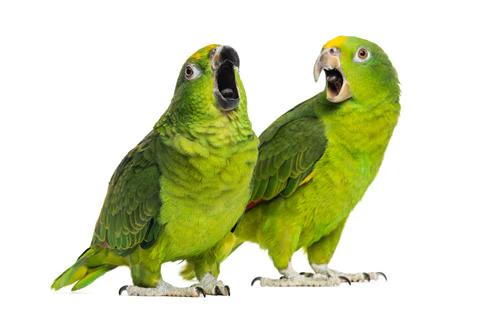

Which Parrots Talk the Most?
If you’re researching parrots, one of the first questions you’ll likely ask is: which parrots talk the most? Talking ability is fascinating—and in some species, remarkably advanced. However, speech should never be the only reason to choose a parrot. Birds are intelligent, emotional, long-lived companions, and their communication skills come with complex care needs.
In this guide, we’ll explore which parrots are known for exceptional talking ability, what “talking” really means, how vocabulary differs between species, and what owners must understand before choosing a bird based on speech alone.
What Does “Talking” Actually Mean in Parrots?
Before ranking species, it’s important to clarify something: parrots do not “talk” the way humans do. Instead, they:
- Mimic sounds
- Associate words with context
- Repeat phrases for attention or interaction
- Use learned sounds as social tools
Some species demonstrate contextual speech use, while others primarily mimic without deeper association.
Understanding how parrots learn to talk prevents unrealistic expectations.
The Parrot Species Known to Talk the Most
While individual variation always exists, certain species consistently stand out.
🥇 African Grey Parrot – The Most Advanced Talker
African Greys are widely regarded as the most skilled talking parrots in the world.
Why African Greys Rank First
- Large vocabularies (hundreds of words in some cases)
- Clear pronunciation
- Contextual use of words
- Ability to mimic household sounds with precision
Some African Greys can even distinguish colors, shapes, and numbers when properly trained.
However, strong talking ability comes with heightened sensitivity. African Greys require stable routines, mental stimulation, and calm environments. Without that, anxiety-related behaviors may appear.
Understanding African Grey talking ability and care needs is essential before choosing this species.
🥈 Amazon Parrot – Confident and Expressive Speakers
Amazon parrots are powerful vocal communicators.
What Makes Amazons Excellent Talkers
- Clear, loud speech
- Strong personality behind words
- Natural inclination to vocalize
- Frequent repetition
Amazons often “perform” when excited, making them highly entertaining companions.
However, they can also be loud and hormonally expressive. Owners must be prepared for high energy and strong personalities.
Understanding Amazon parrot speech patterns helps balance expectations.
🥉 Eclectus Parrot – Calm and Contextual Communicators
Eclectus parrots may not always have the largest vocabularies, but they often speak clearly and meaningfully.
Eclectus Talking Traits
- Clear pronunciation
- Calm tone
- Contextual word use
- Moderate frequency
Unlike some high-energy talkers, Eclectus parrots tend to use speech thoughtfully rather than constantly.
However, their talking ability varies by individual, and environmental stability plays a major role in encouraging speech.
Understanding Eclectus parrot talking potential requires recognizing their emotional sensitivity.
🐦 Budgerigar – Small Bird, Huge Vocabulary
Many people are surprised to learn that Budgerigars (Budgies) can develop exceptionally large vocabularies.
Why Budgies Can Talk So Much
- High vocal frequency
- Strong social mimicry instinct
- Fast repetition learning
Some Budgies have recorded vocabularies exceeding larger parrots.
However, their voices are softer and less clear compared to Greys or Amazons. Still, for owners in smaller homes, Budgies are often underrated talkers.
Understanding Budgerigar speech ability reveals why size doesn’t determine vocabulary.
Other Notable Talking Parrots
While not always topping vocabulary charts, these species also talk well:
- Indian Ringneck Parakeet – Clear, crisp voices
- Yellow-Naped Amazon – Especially skilled among Amazons
- Cockatoo – Some individuals talk well, but personality dominates
- Macaw – Can speak, but not usually top-tier talkers
Talking ability varies greatly between individuals.
Factors That Influence Talking Ability
Even within top species, not every bird talks. Speech depends on:
1️⃣ Individual Personality
Some parrots simply prefer:
- Whistling
- Environmental sounds
- Silence
Speech is not guaranteed.
2️⃣ Social Environment
Parrots learn through repetition and interaction. Birds exposed to:
- Clear speech
- Consistent words
- Positive reinforcement
are more likely to talk.
Understanding how to encourage parrots to talk improves success rates.
3️⃣ Emotional Security
Parrots under stress often:
- Reduce speech
- Become quiet
- Withdraw
Stable environments support vocal learning.
4️⃣ Age
Younger parrots often learn faster, but adults can still develop speech with patience.
Talking vs. Screaming: A Reality Check
High talking ability does not eliminate natural vocalizations. Parrots are flock animals, and vocalizing loudly is normal behavior.
Owners asking which parrots talk the most should also ask:
- Which parrots scream the loudest?
- Which parrots are most noise-tolerant?
Speech and volume are not the same thing.
Should You Choose a Parrot Based on Talking Ability?
Talking ability should be considered—but never prioritized over:
- Noise tolerance
- Space availability
- Emotional compatibility
- Dietary needs
- Lifespan commitment
A silent parrot can still be deeply rewarding. A highly verbal parrot can be overwhelming if its needs are unmet.
Quick Comparison Summary
| Species | Vocabulary Potential | Clarity | Volume | Emotional Sensitivity |
|---|---|---|---|---|
| African Grey | Very High | Very Clear | Moderate | High |
| Amazon | High | Clear | Loud | Moderate |
| Eclectus | Moderate–High | Clear | Moderate | High |
| Budgerigar | High | Softer | Low | Moderate |
Individual birds vary widely.
Final Thoughts
So, which parrots talk the most? African Greys consistently rank first in vocabulary and contextual speech. Amazons follow closely with confident, expressive talking. Eclectus parrots speak clearly and thoughtfully, while Budgerigars often surprise owners with impressive word counts despite their small size.
However, speech is only one aspect of parrot companionship. The best parrot for you is not necessarily the one that talks the most—but the one whose temperament, energy level, and care needs align with your lifestyle.
When expectations are realistic and care is responsible, talking becomes a bonus—not a requirement.