
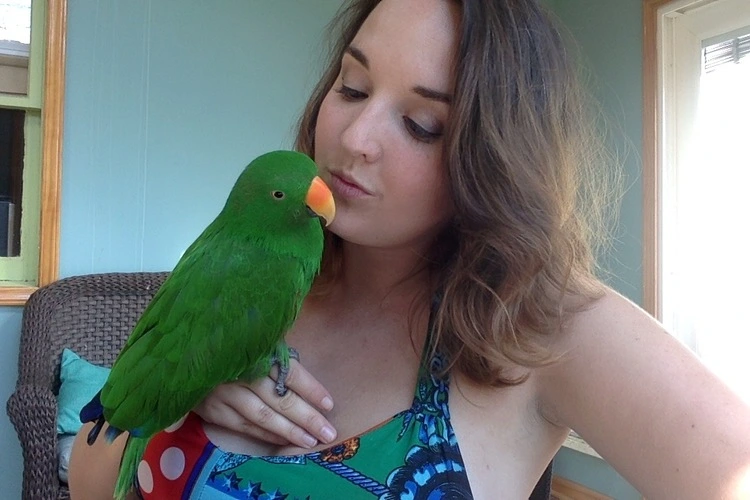

Why Early Bonding Shapes Your Parrot for Life
Why early bonding shapes your parrot for life is not a theory—it is a well-documented reality in avian behavior and development. The first weeks and months of a parrot’s life form the emotional blueprint that influences confidence, trust, stress tolerance, communication style, and future behavior. Early bonding does not mean constant handling or forced affection. Instead, it refers to how safely, predictably, and respectfully a parrot learns to relate to humans and its environment during critical developmental windows.
This guide explains why early bonding shapes your parrot for life, how bonding works neurologically and emotionally, what healthy bonding looks like, and how to avoid mistakes that can create lifelong behavioral challenges.
Why Early Bonding Shapes Your Parrot for Life From Day One
Parrots are highly intelligent prey animals. In the wild, early social experiences determine survival. These instincts carry directly into captive life.
Early bonding teaches a young parrot:
- Whether humans are safe
- How stress is resolved
- What predictability feels like
- How communication works
- Whether independence is supported
Because of this, why early bonding shapes your parrot for life is rooted in biology, not opinion.
These principles are consistently emphasized in professional Parrot Care Guides.
The Science Behind Early Bonding in Parrots
Brain Development and Emotional Wiring
During early life stages, a parrot’s brain is rapidly forming neural pathways. Experiences during this period are stored as emotional “defaults.”
If early interactions are:
- Calm
- Predictable
- Respectful
…the parrot’s nervous system learns safety.
If early interactions are:
- Chaotic
- Forced
- Inconsistent
…the parrot learns hypervigilance or fear.
This is the core reason why early bonding shapes your parrot for life.
Stress Regulation Is Learned Early
Young parrots do not know how to self-regulate. They learn emotional regulation by observing how caregivers respond to stress.
When caregivers respond calmly, parrots learn calm responses. When caregivers react emotionally, parrots learn escalation.
What Early Bonding Really Means (And What It Does Not)
Healthy Early Bonding Means:
- Choice-based interaction
- Respect for body language
- Predictable routines
- Calm handling
- Gradual independence
Early Bonding Does NOT Mean:
- Constant physical contact
- Exclusive one-person attachment
- Forcing affection
- Preventing independence
Misunderstanding bonding is one of the most common causes of future behavior problems.
Why Early Bonding Shapes Your Parrot for Life Emotionally
Emotional Security Becomes the Default
Parrots bonded early in a healthy way tend to:
- Recover faster from stress
- Show less fear-based aggression
- Adapt more easily to change
Emotional security learned early becomes the baseline for life.
Trust Is Either Built or Damaged Early
Parrots remember early experiences vividly. Trust violations—such as forced handling or ignored distress signals—can take years to undo.
This long-term impact explains why early bonding shapes your parrot for life more than later training efforts.
Early Bonding and Future Behavior Patterns
Reduced Risk of Behavioral Disorders
Parrots with healthy early bonds are less likely to develop:
- Chronic screaming
- Feather plucking
- Self-mutilation
- Aggression toward humans
These behaviors are often symptoms of early emotional instability rather than “bad temperament.”
Improved Communication Skills
Early bonded parrots learn that communication works.
As a result, they:
- Use body language clearly
- Escalate less often
- Trust warning signals will be respected
This directly connects to Understanding Parrot Body Language.
Early Bonding Through Feeding and Care
Feeding as Emotional Education
Feeding is one of the earliest bonding experiences.
When feeding is:
- Calm
- Predictable
- Gentle
…the parrot learns safety.
Improper feeding can create anxiety and distrust, which is why feeding practices are closely tied to Baby Parrot Feeding Guide principles.
Consistency Builds Emotional Stability
Routine teaches parrots what to expect.
Predictable daily rhythms:
- Reduce anxiety
- Support emotional regulation
- Prevent attention-seeking behaviors
This structure aligns strongly with Setting a Daily Parrot Routine.
Why Early Bonding Shapes Your Parrot for Life Socially
Learning Social Boundaries
Young parrots learn:
- When interaction begins
- When it ends
- How to respect space
These lessons prevent future aggression and frustration.
Preventing Over-Bonding
One of the greatest risks during early bonding is emotional over-dependence.
Over-bonding occurs when:
- One person meets all emotional needs
- Independence is discouraged
- Separation is avoided
This often leads to anxiety and aggression later, a pattern explored further in Understanding Parrot Social Dynamics.
Species Sensitivity to Early Bonding
While all parrots are affected by early bonding, some species are especially sensitive.
- Cockatoos: Extremely emotionally imprinting
- African Greys: Deep trust-based bonding
- Macaws: Confidence-driven bonding
- Conures: Social, playful bonding
For emotionally intense species, early bonding mistakes can be particularly damaging.
Early Bonding vs Training: Understanding the Difference
Training teaches skills. Bonding teaches emotional safety.
A parrot can be trained without being emotionally secure—but behavior will eventually collapse under stress.
This is why early bonding must come before advanced training techniques like those in Positive Reinforcement Training for Parrots.
Common Early Bonding Mistakes That Shape Problems for Life
- Forcing handling
- Ignoring body language
- Rewarding fear-driven vocalization
- Overhandling young parrots
- Inconsistent routines
- Encouraging exclusive attachment
Most adult parrot behavior problems trace back to these early mistakes.
Why Early Bonding Shapes Your Parrot for Life During Transitions
Parrots with healthy early bonds:
- Handle rehoming better
- Adapt to new environments more easily
- Cope with routine changes calmly
This resilience is especially important for parrots transitioning under International Bird Shipping Policy procedures.
Long-Term Benefits of Healthy Early Bonding
Parrots bonded correctly early in life are more likely to:
- Trust humans calmly
- Communicate clearly
- Avoid chronic behavioral issues
- Adapt to change
- Form stable lifelong relationships
Ethical breeders and families offering Exotic Birds for Sale increasingly prioritize early bonding education because it directly affects lifelong outcomes.
External Behavioral Insight
Avian behavioral research consistently confirms that early social experiences shape long-term emotional stability. Educational sources such as avian behavior research publications emphasize that early predictability, calm interaction, and respect for autonomy are the strongest predictors of successful adult behavior.
Understanding why early bonding shapes your parrot for life is therefore a responsibility—not just good advice.