
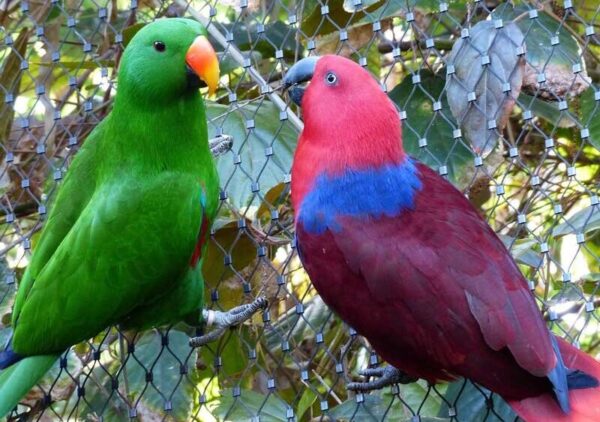

Why Eclectus Parrots Are More Sensitive Than Other Parrots
Many people discover this only after bringing one home: Eclectus parrots respond differently to food, environment, routine, and handling than most other companion parrots. Why Eclectus parrots are more sensitive than other parrots is not a matter of weakness or fragility—it is the result of unique biology, evolution, and social structure that demand a more thoughtful, intentional approach to care.
Eclectus parrots are exceptionally intelligent, emotionally aware, and physically specialized. These traits make them extraordinary companions when understood correctly, but challenging when treated like generic parrots. This article explains why Eclectus parrots are more sensitive, how that sensitivity shows up in daily life, and how owners can adapt their care ethically and successfully.
Sensitivity Is a Biological Feature, Not a Flaw
Evolution Shaped a Different Kind of Parrot
Eclectus parrots evolved in environments where food was abundant but dispersed, social roles were specialized, and energy conservation mattered. Unlike parrots that evolved to compete aggressively for resources, Eclectus parrots evolved to observe, wait, and choose carefully.
This evolutionary background explains much of their sensitivity:
- They process food differently
- They react strongly to environmental inconsistency
- They communicate subtly rather than loudly
Understanding Eclectus parrot biological sensitivity reframes their behavior as adaptive rather than problematic.
Digestive System Differences Play a Major Role
Longer Intestinal Tract, Higher Absorption
Eclectus parrots have a longer digestive tract than most parrots. As a result, they extract more nutrients from the same amount of food.
This means:
- Vitamins are absorbed more efficiently
- Synthetic additives remain in the body longer
- Over-supplementation happens easily
What another parrot species tolerates without issue may overwhelm an Eclectus parrot’s system.
This explains why Eclectus parrots are diet-sensitive compared to other parrots.
Vitamin Sensitivity Is Not Optional to Address
Many parrots thrive on fortified pellets. Eclectus parrots often do not. Excess synthetic vitamins commonly lead to neurological and behavioral symptoms rather than visible illness.
This sensitivity forces owners to:
- Prioritize fresh foods
- Avoid routine supplementation
- Read labels carefully
Dietary mistakes show up faster and more clearly in Eclectus parrots than in many other species.
Emotional Sensitivity and Environmental Awareness
High Emotional Intelligence
Eclectus parrots are emotionally perceptive. They notice:
- Changes in tone of voice
- Disruptions in routine
- Household tension
- Inconsistent interaction patterns
They do not “tune out” chaos the way some parrots do. Instead, they internalize it.
This explains Eclectus parrot emotional sensitivity and why calm, predictable homes suit them best.
Stress Shows Quietly, Not Dramatically
Unlike parrots that scream or lash out when stressed, Eclectus parrots often:
- Withdraw
- Become unusually still
- Reduce vocalization
- Avoid interaction
These subtle responses are frequently misunderstood as good behavior or calm temperament, when they may signal emotional overload.
Sensitivity to Routine and Predictability
Routine Is Emotional Security
Eclectus parrots depend heavily on predictable patterns. Feeding times, lighting schedules, and interaction routines anchor their emotional stability.
When routines change frequently:
- Stress hormones rise
- Digestive issues may appear
- Behavioral changes follow
This highlights why routine matters more for Eclectus parrots than for many other species.
Sudden Changes Have Outsized Effects
Small changes that barely affect other parrots—new feeding times, rearranged cages, irregular sleep—can significantly impact Eclectus parrots.
Gradual change is essential. Abrupt change often leads to withdrawal or irritability.
Sensitivity to Overstimulation
Less Is More for Eclectus Parrots
Eclectus parrots do not thrive in constantly busy, noisy, or visually cluttered environments. While some parrots seek stimulation, Eclectus parrots prefer balance and order.
Overstimulation may include:
- Too many toys
- Constant handling
- Loud environments
- Frequent novelty
Understanding Eclectus parrot sensitivity to stimulation prevents burnout and stress-related behaviors.
Calm Engagement Builds Trust
They respond best to:
- Quiet interaction
- Gentle training
- Observational companionship
High-energy play styles that work for other parrots often overwhelm Eclectus parrots.
Hormonal Sensitivity and Environmental Triggers
Hormones React Strongly to Environment
Lighting, diet, and perceived nesting opportunities influence hormonal behavior more strongly in Eclectus parrots than in many other species.
Triggers include:
- Long daylight hours
- Rich or fatty foods
- Nest-like spaces
Managing these factors is critical for emotional stability.
This explains why hormonal balance is more delicate in Eclectus parrots.
Social Sensitivity and Bonding Style
Selective, Deep Bonding
Eclectus parrots tend to form fewer but deeper bonds. They may:
- Choose one or two trusted people
- Prefer quality interaction over quantity
- Become stressed by forced socialization
This is not antisocial behavior—it is selective attachment.
Understanding Eclectus parrot bonding sensitivity prevents misunderstandings in multi-person households.
Respect for Choice Is Essential
Forced interaction damages trust quickly. Eclectus parrots need the ability to opt in or out of contact without pressure.
Comparison With Other Parrot Species
Why Other Parrots May Seem “Easier”
Many parrots tolerate:
- Pellets and supplements
- Irregular routines
- High stimulation
- Busy households
Eclectus parrots do not tolerate these as easily—not because they are weaker, but because their biology and psychology demand precision.
This comparison clarifies why Eclectus parrots require more specialized care than other parrots.
Common Misinterpretations of Sensitivity
“They Are Fragile”
False. Eclectus parrots are resilient when cared for correctly.
“They Are Difficult”
Also false. They are specific, not difficult.
“They Are Moody”
Their behavior usually reflects environmental input, not random mood swings.
Ethical Implications of Eclectus Parrot Sensitivity
Care Must Be Intentional
Ethical ownership means adjusting human habits to the bird’s needs rather than forcing adaptation.
Ethical care includes:
- Diets designed for their biology
- Predictable routines
- Respect for subtle communication
- Calm, stable environments
Understanding ethical care for sensitive parrot species is especially important with Eclectus parrots.
How Sensitivity Becomes a Strength
Exceptional Companionship When Understood
When their sensitivity is respected, Eclectus parrots often display:
- Stable behavior
- Strong emotional bonds
- Clear communication
- Long-term health
Sensitivity allows for deeper connection, not weaker resilience.
Final Thoughts
Why Eclectus parrots are more sensitive than other parrots comes down to biology, evolution, and emotional intelligence—not fragility. They are finely tuned animals that thrive under thoughtful, consistent care and struggle under generic approaches.
For owners willing to learn and adapt, this sensitivity becomes a gift. Eclectus parrots respond to respect with trust, to consistency with calm, and to understanding with deep companionship. When treated as the unique species they are, they are not difficult at all—they are extraordinary.