
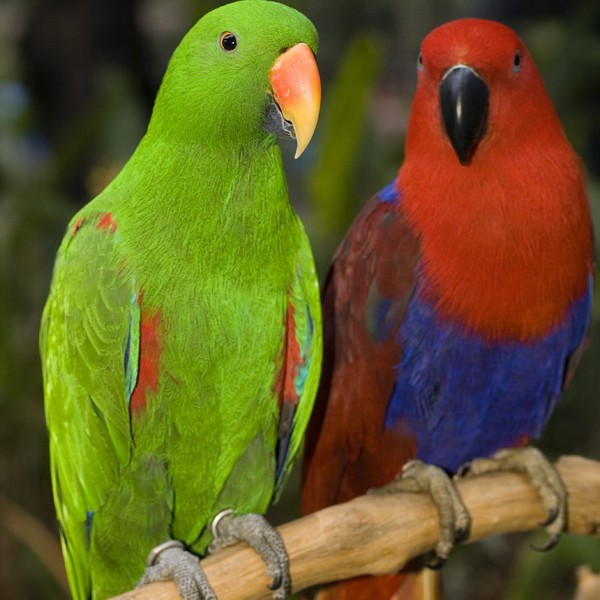

Why Eclectus Parrots Evolved Sexual Dimorphism
Few parrots in the world raise as many questions as the Eclectus. One of the most common—and most misunderstood—is why Eclectus parrots evolved sexual dimorphism so extreme that males and females look like completely different species. Bright green males and deep red-and-purple females are not an accident of aesthetics. They are the result of very specific evolutionary pressures tied to survival, reproduction, and resource control.
Understanding this evolutionary background does more than satisfy curiosity. It explains modern Eclectus behavior, hormonal sensitivity, territorial instincts, and even why males and females require different management in captivity. This article explores the science, ecology, and behavioral evolution that shaped Eclectus parrots into one of the most sexually dimorphic parrots on Earth.
What Sexual Dimorphism Means in Eclectus Parrots
More Than Just Color Differences
Sexual dimorphism refers to physical and behavioral differences between males and females of the same species. In Eclectus parrots, this dimorphism is extreme and includes:
- Completely different coloration
- Distinct behavioral roles
- Different hormonal pressures
- Different ecological functions
Understanding sexual dimorphism in Eclectus parrots requires looking beyond feathers and into evolutionary survival strategies.
Why Eclectus Dimorphism Is Unusual Among Parrots
Most parrot species show minimal color differences between sexes. Eclectus parrots stand out because natural selection favored maximum visual contrast rather than similarity.
This makes them a rare case study in avian evolution.
The Ecological Environment That Shaped Eclectus Parrots
Scarce Nesting Sites Changed Everything
Eclectus parrots evolved in environments where:
- Suitable nesting hollows were rare
- Nest sites were highly valuable
- Females often controlled nest access
Unlike species where nesting sites are abundant, Eclectus females competed intensely for safe hollows. This pressure reshaped mating systems entirely.
Understanding nest scarcity and Eclectus parrot evolution is key to understanding sexual dimorphism.
Females Became Nest Guardians
Once a female secured a nest hollow, she:
- Remained inside for extended periods
- Defended the site aggressively
- Controlled access to reproduction
This created evolutionary pressure for females to be highly visible, intimidating, and unmistakable.
Why Female Eclectus Parrots Are Red and Purple
High-Contrast Coloration as a Survival Tool
Female Eclectus parrots evolved bold red and blue-purple plumage because:
- Bright coloration signals dominance
- Red is highly visible in dark tree hollows
- Strong color discourages rival females
Inside a nest cavity, visibility matters more than camouflage.
Understanding why female Eclectus parrots are red reframes their coloration as a functional adaptation, not decoration.
Color as a Territorial Warning
Female coloration serves as:
- A warning signal to other females
- A deterrent against nest takeovers
- A visual declaration of ownership
This explains why female Eclectus parrots often show territorial behavior in captivity.
Why Male Eclectus Parrots Are Green
Camouflage Was Essential for Survival
Male Eclectus parrots evolved green plumage because they:
- Traveled long distances to forage
- Needed camouflage in dense foliage
- Faced higher predation risk while flying
Green feathers allowed males to blend seamlessly into forest canopies.
Understanding why male Eclectus parrots are green explains their calmer, less territorial nature.
Foraging Efficiency Shaped Male Behavior
Males often fed:
- Multiple females
- Chicks at different nest sites
This required:
- High mobility
- Social flexibility
- Reduced territorial aggression
Their coloration supports this role.
Polyandry: The Hidden Driver of Dimorphism
A Rare Mating System
Eclectus parrots evolved a system where:
- One female may mate with multiple males
- Males provide food rather than territory
- Females control reproduction
This system is known as polyandry and is rare among parrots.
Understanding polyandry in Eclectus parrots is central to explaining their extreme sex differences.
How Polyandry Reinforced Color Differences
Because:
- Females stayed at nests
- Males competed through provisioning, not fighting
There was no evolutionary pressure for males to be flashy. Instead, males evolved efficiency, camouflage, and adaptability.
How Sexual Dimorphism Influences Modern Eclectus Behavior
Female Behavioral Traits Explained by Evolution
Female Eclectus parrots today often show:
- Territorial instincts
- Strong environmental sensitivity
- Nest-seeking behavior
These traits are not “problem behaviors.” They are evolutionary survival strategies expressed in captivity.
Understanding female Eclectus behavior through evolution helps owners manage hens ethically.
Male Behavioral Traits Explained by Evolution
Male Eclectus parrots tend to be:
- More socially flexible
- More tolerant of change
- Less territorial
These traits align with their historical role as roaming foragers.
Understanding male Eclectus behavior through evolution explains why males are often easier for first-time owners.
Why Sexual Dimorphism Persists Today
Evolution Doesn’t Disappear in Captivity
Even though Eclectus parrots live in homes now:
- Their instincts remain intact
- Their hormonal systems still respond to ancient cues
- Their behaviors still follow evolutionary logic
Sexual dimorphism persists because it is genetically encoded.
Mismatch Between Evolution and Captivity
Problems arise when:
- Female nesting instincts are unintentionally triggered
- Males lack appropriate foraging outlets
- Owners expect identical behavior from both sexes
Understanding evolutionary mismatch in captive Eclectus parrots prevents common management errors.
What Sexual Dimorphism Teaches Owners and Breeders
One Species, Two Management Styles
Because males and females evolved for different roles:
- Housing needs differ
- Hormonal management differs
- Social expectations differ
Ignoring these differences leads to stress and behavioral issues.
Ethical Implications for Breeding and Ownership
Ethical care requires:
- Respecting sex-based differences
- Avoiding “one-size-fits-all” advice
- Matching birds to appropriate homes
Understanding ethical implications of Eclectus sexual dimorphism protects long-term welfare.
Common Myths About Eclectus Sexual Dimorphism
“Females Are Aggressive by Nature”
In reality, females are defensive, not aggressive.
“Males Are Just Easier Birds”
Males still require structured care—just different challenges.
“Color Has Nothing to Do With Behavior”
In Eclectus parrots, color and behavior are evolutionarily linked.
Why This Evolutionary Knowledge Matters Today
Better Care Through Understanding
When owners understand why Eclectus parrots behave differently by sex, they:
- Respond with patience
- Adjust environments proactively
- Reduce stress-related problems
Evolutionary literacy leads to better outcomes.
Final Thoughts
Understanding why Eclectus parrots evolved sexual dimorphism reveals one of the most fascinating stories in avian evolution. Their dramatic color differences are not random, ornamental, or superficial. They are the visible result of nest scarcity, polyandry, territorial defense, and foraging specialization shaped over thousands of generations.
These evolutionary forces still influence Eclectus parrots today—in their behavior, hormonal sensitivity, and environmental needs. Owners who respect this biological history care for their birds more ethically, manage challenges more effectively, and build deeper, more stable relationships.
In Eclectus parrots, evolution is not ancient history. It lives in every feather.